Why Comprehensive Exams Matter
Comprehensive dental exams are the cornerstone of preventive care. By examining gums, teeth, bite, TMJ, and soft tissues, the dentist can spot early signs of decay, gum disease, oral cancer, or systemic conditions such as diabetes and heart disease before symptoms appear. Early detection lets the clinician intervene with minimally invasive treatments, saving time, discomfort, and money. The detailed findings also enable a personalized treatment plan—tailored hygiene instructions, fluoride applications, sealants, or orthodontic referrals—so each patient receives care that matches their risk profile. Repeating these thorough exams every six months builds a longitudinal record, strengthening the dentist‑patient relationship and ensuring long‑term oral health and a confident smile. It also gives the dentist insight into lifestyle factors that affect oral health.
Early Detection Saves Money and Pain
| Benefit | Description |
|---|---|
| Early detection | Identifies cavities, gum disease, oral cancer, bite/TMJ issues before pain or costly treatment. |
| Cost savings | Simpler, less invasive procedures lower out‑of‑pocket expenses. |
| Preventive cleaning | Professional plaque/tartar removal reduces future decay and periodontal breakdown. |
| Personalized guidance | Tailored oral‑hygiene, dietary tips, and restoration monitoring. |
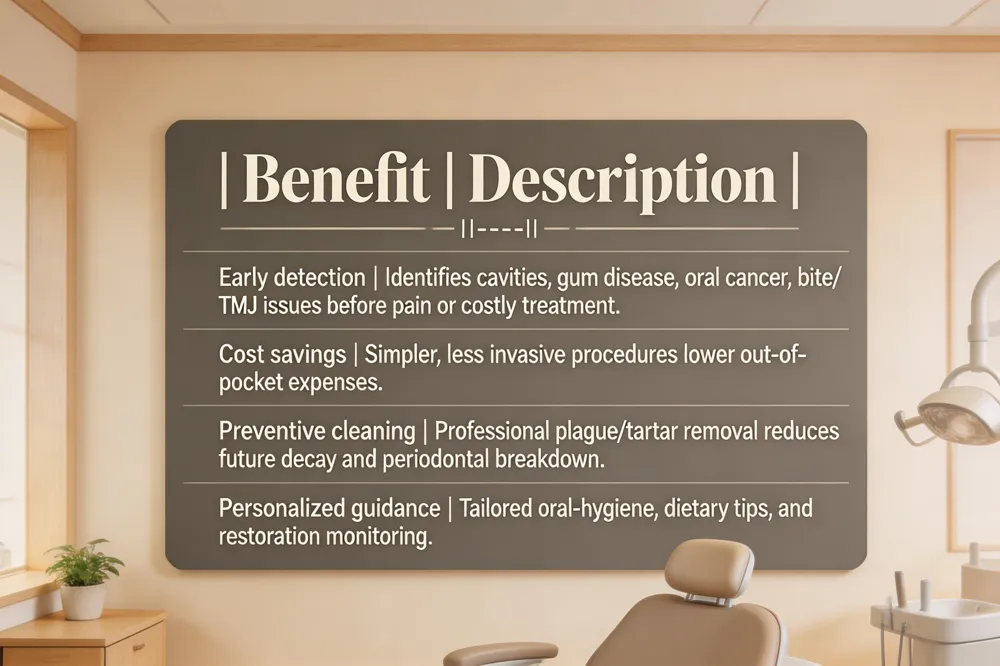 A dental check‑up is more than a quick look at your teeth; it is a systematic scan for cavities, gum disease, oral cancer, and bite or TMJ problems. By probing gum pockets, taking digital X‑rays, and performing a visual exam, the dentist can spot decay or inflammation before they become painful or costly. Early removal of plaque and tartar during the professional cleaning also reduces the risk of new cavities and periodontal breakdown.
What are the benefits of a dental check‑up? The visit lets the dentist catch early signs of decay, gum disease, oral cancer, or bite misalignment, allowing simple, less invasive, and more affordable treatment. You receive personalized oral‑hygiene guidance, dietary tips, and monitoring of existing restorations, keeping your smile healthy and confident.
Is comprehensive dental worth it? Absolutely. Comprehensive care blends prevention, early detection, and coordinated treatment, saving time, discomfort, and money. Advanced tools like digital imaging and TM‑ray reveal hidden issues, while thorough exams of bite and TMJ function prevent future joint pain and orthodontic complications. Investing in regular, thorough exams supports overall health and a lasting, bright smile.
Personalized Care Tailored to Your Risk
| Risk Factor | Recommended Exam Frequency |
|---|---|
| Average adult (no major risk) | Every 6 months |
| History of periodontal disease, frequent cavities, orthodontic appliances, hormonal changes, tobacco use | Every 3–4 months |
| Children (age 1‑7) | First visit by age 1, then every 6 months; Rule of 7 checks exfoliation & permanent eruption |
| High‑risk systemic conditions (e.g., diabetes) | Every 3–4 months or as directed by dentist |
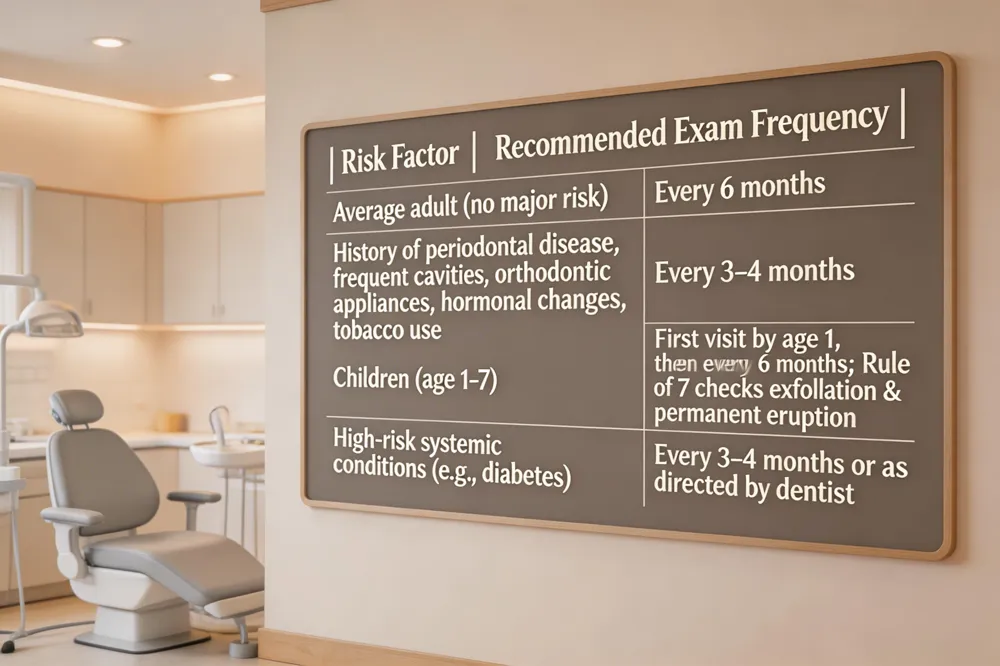 A comprehensive dental exam is typically recommended every six months for most patients, allowing the team to catch cavities, gum disease, oral‑cancer signs, and bite problems early. If you have risk factors such as a history of periodontal disease, frequent cavities, orthodontic appliances, hormonal changes (pregnancy, diabetes), or tobacco use, exams may be spaced closer—often every three to four months—to prevent progression. Children should have their first dental visit by age one and continue on a six‑month schedule to establish good habits and monitor development. The Rule of 7 guideline advises that by age seven all primary teeth should have exfoliated and the permanent dentition should be emerging, signaling normal jaw growth. Following this pediatric rule helps dentists identify early decay, bite issues, or developmental concerns before they become serious. Your dentist will fine‑tune the exam frequency based on your unique health profile and risk factors.
Insurance Made Simple
| Coverage Tier | Typical Coverage | Example (Health Partners) |
|---|---|---|
| Preventive (cleanings, exams, X‑rays, sealants) | 100 % (no co‑pay) | 100 % |
| Basic (fillings, simple extractions, root canals) | 70‑80 % of UCR fee | ~80 % |
| Major (crowns, bridges, dentures, implants) | 40‑50 % of cost, often with annual max | ~50 % |
| Annual payout limit | $1,000‑$2,000 (varies) | $1,000‑$2,000 |
| Waiting periods | May apply to major work | Yes, per plan |
 Understanding dental insurance can seem daunting, but breaking it down into three coverage tiers makes it easier. Preventive services—cleanings, exams, X‑rays, and sealants—are usually covered at 100 % with no co‑pay. Basic restorative care such as fillings, simple extractions, and root‑canal work is typically reimbursed at 70‑80 % of the UCR fee, leaving a modest patient share. Major procedures—crowns, bridges, dentures, implants—receive lower coverage, often 40‑50 % of the cost, and may be subject to annual maximums and waiting periods.
Health Partners offers dental plans that follow this tiered model: 100 % for preventive, ~80 % for basic, and ~50 % for major services, with annual limits of $1,000‑$2,000. They also provide optional supplemental benefits for Medicare‑eligible members.
Medicaid through Health Partners covers preventive care at $0 copay and limited basic restorative work like fillings; crowns, bridges, and implants are generally excluded or require prior authorization.
Restorative care limits: most plans cap annual payouts at $1,000‑$1,500 and may impose waiting periods for major work. Review your specific policy or ask our staff to maximize benefits and minimize out‑of‑pocket expenses.
Beyond the Chair: Lifestyle and Technology
| Technology / Lifestyle Insight | Purpose |
|---|---|
| Digital radiography | Low‑dose images reveal hidden decay, bone loss, early cancer lesions |
| Intra‑oral cameras | Real‑time visualization for patient education and precise diagnosis |
| Saliva flow assessment | Detects dry‑mouth risk, supports enamel protection |
| TMJ & bite analysis | Identifies malocclusion, bruxism, joint strain before pain |
| Nutrition & systemic health review | Links gum inflammation to diabetes, heart disease; guides dietary counseling |
| Evidence‑based brushing guideline | Twice daily, 2 minutes with fluoride toothpaste |
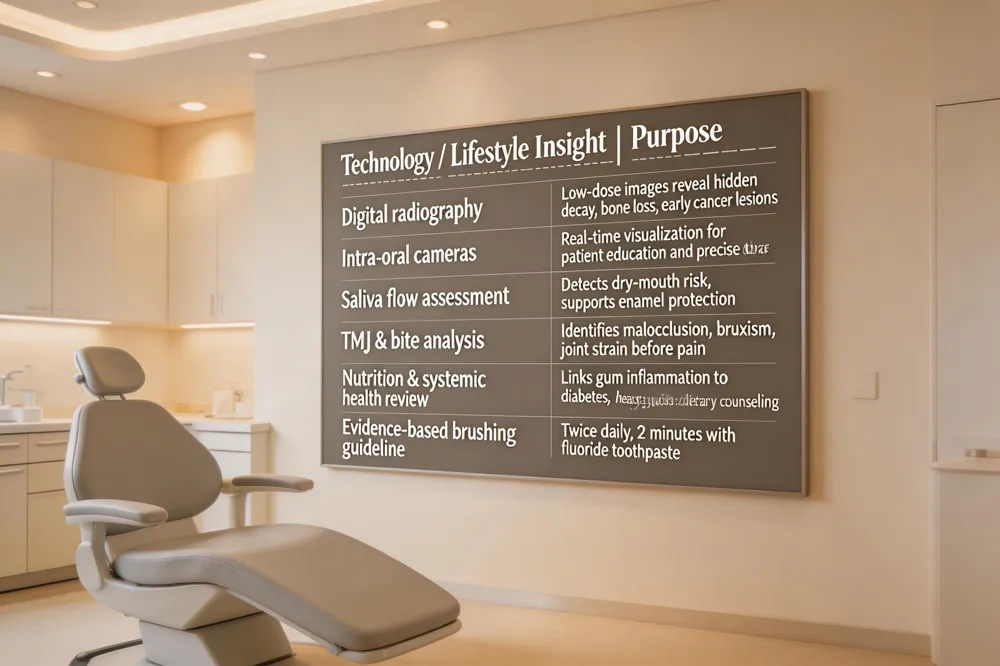 Patients often hear the 3‑3‑3 rule—brush three times a day for three minutes and wait three hours before sleep. While it encourages diligence, evidence‑based guidelines recommend brushing twice daily for two minutes with fluoride toothpaste, complemented by daily flossing and regular check‑ups. Modern exams leverage digital radiography and intra‑oral cameras, delivering low‑dose images that reveal hidden decay, bone loss, and early oral‑cancer lesions. Saliva flow assessment is also routine; adequate saliva neutralizes acids and protects enamel, while reduced flow flags risk for cavities and systemic issues. A thorough TMJ and bite analysis detects malocclusion, bruxism, and joint strain before they cause pain or tooth wear. Finally, dentists evaluate nutrition and systemic health links—gum inflammation can signal diabetes or heart disease, and dietary counseling helps curb acidic attacks on enamel. Together, these lifestyle insights and cutting‑edge tools create a proactive, personalized oral‑health strategy.
Extra Perks You Might Not Expect
| Extra Benefit | What It Involves |
|---|---|
| Soft‑tissue & tonsil inspection | Checks for swelling, infection, early systemic signs |
| TMJ function check | Evaluates jaw movement and sounds to prevent future pain |
| Saliva flow evaluation | Ensures natural cleansing; flags dry‑mouth conditions |
| Personalized hygiene instruction | Tailored brushing, flossing, and diet recommendations |
| Trust & anxiety reduction | Builds rapport, encourages regular visits for long‑term oral health |
 Beyond the usual scaling and polishing, a comprehensive dental exam offers several hidden benefits. Dentists often inspect the tonsils and soft‑tissue areas for swelling or infection, catching early signs of systemic issues. A TMJ function assessment checks jaw movement and sounds, helping prevent future joint pain or headaches. Saliva flow is evaluated to ensure natural cleansing and to flag dry‑mouth conditions that can accelerate decay. Patients receive personalized oral‑hygiene instruction—tailored brushing, flossing, and diet tips that reinforce good habits at home. Finally, the thorough, caring approach builds trust and reduces anxiety, encouraging regular visits and a long‑term partnership for optimal oral health.
Your Path to a Confident Smile
Booking a comprehensive dental exam is the first step toward a healthier mouth and a more confident smile. During the visit the dentist performs a thorough visual inspection, digital X‑rays, gum‑probing, oral‑cancer screening, bite and TMJ assessment, and a professional cleaning that removes plaque and tartar. Findings are turned into a personalized care plan—tailored brushing techniques, flossing habits, diet advice, fluoride or sealant treatments, and recommendations for night guards or orthodontic options. By committing to regular preventive appointments every six months (or more often if risk factors exist), you catch decay, gum disease, and systemic warnings early, reducing costly interventions and supporting overall health. Schedule your exam today and empower your smile with expert, individualized guidance for lasting oral wellness.