A New Era for Gummy‑Smile Corrections
Gummy smiles—display of >2 mm of gingiva—affect up to 30 % of adults and can compromise oral hygiene, increase periodontal risk, and lower self‑esteem. Recent technological advances have transformed correction: 3‑D‑printed surgical guides enable precise crown‑lengthening with accurate biologic width preservation, while intra‑oral scanning, CAD design, and digital wax‑ups let patients preview results before surgery. Laser gingivectomy and piezoelectric tools provide minimally invasive tissue removal, and AI‑driven treatment planning integrates CBCT with facial scans for customized guides. Empower Your Smile in Tribeca, NYC, blends these digital workflows with orthodontics, Botox, and restorative options, delivering a patient‑centric, predictable experience that shortens chair time, reduces error, and yields high satisfaction (9/10 at three‑month follow‑up).
Key Facts about Gummy Smile Diagnosis and Treatment
- Gummy smiles affect 10.5%‑29% of Americans, with a consistently higher prevalence in women than men.
- The average biologic width in healthy teeth is approximately 2.04 mm (0.69 mm sulcus, 0.97 mm epithelial attachment, 1.07 mm connective‑tissue attachment).
- Digital‑assisted crown lengthening can achieve a 99.6% reduction in gingival display, e.g., from 6.24 mm pre‑op to 0.24 mm post‑op.
- Patients report a mean satisfaction rating of 9 out of 10 at three months after a combined orthodontic, 3‑D‑guided crown‑lengthening, and restorative protocol.
- Laser gingival recontouring demonstrates a success rate exceeding 90% for mild‑to‑moderate gummy smiles, with minimal postoperative discomfort.
- Laser gum contouring costs $800‑$2,500 per quadrant; full‑mouth treatment (four quadrants) ranges from $2,500 to $6,000.
- Botox injections for a hyperactive upper lip cost $200‑$600 per session and typically reduce gummy display for 3‑4 months (up to 6 months in some cases).
- Using 3‑D‑printed surgical guides can cut chair‑side time for crown‑lengthening procedures by up to 30%.
- Digitally guided crown‑lengthening procedures have shown stable gingival margins for up to 12 months post‑operatively.
- Type 3 dental services (crowns, bridges, implants, etc.) are generally reimbursed at about 50% of the fee, reflecting their higher complexity and lab costs.
1. How Common Is a Gummy Smile in the United States?
In the United States, gummy smiles—defined as more than 2 mm of gum exposure when smiling—are a relatively common aesthetic concern. Recent epidemiological surveys report that between 10.5 % and 29 % of Americans exhibit this condition, placing it among the most frequently encountered smile‑related issues in dental practice. The prevalence is not evenly distributed: studies consistently show a higher incidence in women than in men, with female rates often exceeding male rates by several percentage points. This gender disparity may reflect anatomical differences such as lip length and muscle activity, as well as differing aesthetic preferences that lead women to seek treatment more often. Understanding these demographic patterns helps clinicians tailor screening and counseling strategies for diverse patient populations.
2. The Biological Blueprint: Average Biologic Width
Biologic width is the combined dimension of the epithelial attachment and connective‑tissue attachment that sit apically to the gingival sulcus, typically measured from the crest of the alveolar bone to the base of the sulcus. In healthy dentitions the average biologic width is about 2.04 mm, comprising a sulcus depth of roughly 0.69 mm, an epithelial attachment of approximately 0.97 mm, and a connective‑tissue attachment near 1.07 mm. Preserving this dimension is clinically critical during crown‑lengthening procedures: excessive removal of gingival tissue or bone can violate the biologic width, leading to chronic inflammation, recession, or loss of periodontal health. Accurate assessment and maintenance of the biologic width therefore guide the amount of tissue and bone that can safely be recontoured, ensuring long‑term stability of both the periodontal margin and the final restorative outcome.
3. Digital‑Assisted Crown Lengthening: Measurable Reduction
A gummy smile is typically defined as more than 2 mm of gingival exposure; in a documented case the pre‑operative display measured 6.24 mm. After a multidisciplinary protocol that included orthodontic alignment, 3‑D‑printed surgical guides, and composite restorations, the post‑operative gingival display was reduced to just 0.24 mm—an 99.6 % reduction. The dramatic improvement is largely attributed to the precision of 3‑D‑guided crown lengthening. Intra‑oral scans, CBCT data, and CAD‑designed guides enable clinicians to plan the exact gingival height, perform targeted gingivoplasty and osteotomy, and preserve biological width. This digital workflow shortens chair‑side time, minimizes measurement error, and enhances predictability of aesthetic outcomes.
4. Patient Satisfaction: Quantifying the Smile Success
Digital‑assisted gummy‑smile correction consistently yields high patient approval. In a reported case, patients assigned a mean satisfaction rating of 9 out of 10 at the three‑month follow‑up, indicating strong aesthetic acceptance of the combined orthodontic, 3D‑guided crown‑lengthening, and restorative approach. This score aligns with broader surveys in U.S. cosmetic dentistry, where post‑procedural satisfaction often exceeds 8/10 for minimally invasive laser gingivectomy or Botox‑based protocols. The follow‑up timeline typically includes a baseline assessment, immediate post‑operative evaluation, and a three‑month check‑in to verify gingival margin stability, soft‑tissue healing, and patient confidence. While short‑term results are promising, longer‑term monitoring (12 months or beyond) is recommended to confirm durability and guide any needed refinements.
5. Laser Gingival Recontouring: Success Rate Evidence
Clinical outcomes for laser gingival recontouring (laser gingivectomy) consistently show a success rate exceeding 90 % when treating mild to moderate gummy smiles. Patients experience immediate reduction of gingival display, minimal postoperative discomfort, and rapid healing compared with traditional scalpel techniques. The comparative advantage lies in the laser’s ability to cut and coagulate tissue simultaneously, which reduces bleeding, eliminates the need for sutures, and shortens recovery time to typically 1–2 weeks. Moreover, laser precision preserves more of the surrounding periodontal structures, maintaining biological width and supporting long‑term gingival stability. These evidence‑based findings make laser recontouring a minimally invasive option for clinicians seeking predictable aesthetic results.
6. Financial Snapshot: Laser Gum Contouring Costs
Laser gum contouring is priced per quadrant, typically ranging from $800 to $2,500 each. Most patients treat one or two quadrants, but a full‑mouth recontouring usually involves all four quadrants. When all four areas are addressed, the total expense falls between $2,500 and $6,000, depending on the complexity of tissue removal, the need for bone reshaping, and the practice’s geographic location. Practices in major U.S. urban centers such as New York City may be toward the higher end of the range, while regional clinics often offer the lower end. This pricing structure allows patients to budget for partial or comprehensive treatment and compare costs across providers.
7. Botox for a Hyperactive Lip: Cost and Duration
Botox (onabotulinumtoxinA) is FDA‑approved for the temporary reduction of excessive upper‑lip elevation that contributes to a gummy smile. In the United States, a typical session costs between $200 and $600, with most practices reporting an average price of $300‑$500 per injection series. The effect on gum exposure usually lasts three to four months, although some clinicians note a duration of up to six months depending on muscle anatomy and dosage. Patients often schedule repeat treatments semi‑annually to maintain the desired smile line. The low‑downtime nature of the procedure—15‑20 minutes of chair time and no post‑injection recovery—makes it an attractive, minimally invasive option for those with hyperactive lip muscles.
3‑D‑Printed Surgical Guides: Operating‑Time Savings
Digital workflows that incorporate intra‑oral scanning, CAD design, and 3‑D‑printed surgical guides streamline crown‑lengthening procedures. By providing a patient‑specific template that marks the exact gingival height and osteotomy depth, clinicians can eliminate intraoperative guesswork, which reduces chair‑side time by up to 30 % and shortens the overall procedure. The guides also ensure that the planned gingival margin and bone removal are executed precisely, markedly improving predictability of the final aesthetic outcome. In a reported case, pre‑operative gingival display of 6.24 mm was reduced to 0.24 mm after using a 3‑D‑guided crown lengthening with patient satisfaction scored 9/10 at three months. This evidence underscores how 3‑D‑printed guides enhance efficiency and accuracy in gummy‑smile correction.
9. Long‑Term Stability of Digitally Guided Crown Lengthening
Limited clinical investigations have shown that gingival margins remain stable for up to 12 months after digitally guided crown‑lengthening procedures. In the reported case series, patients maintained the post‑operative gingival height without recession or over‑growth throughout the year‑long follow‑up, suggesting that the precision of 3D‑printed surgical guides can preserve the biologic width and soft‑tissue architecture. However, these findings are based on small sample sizes and short observation periods. To confirm durability and identify any late‑stage tissue remodeling, larger, multicenter trials with longer observation windows are essential. Such studies will help define the true long‑term predictability of digital‑assisted crown lengthening and guide evidence‑based recommendations for clinicians.
Understanding Type 3 Dental Services
Type 3 dental services refer to the major restorative and cosmetic procedures used when tooth damage, decay, or loss is extensive. They typically include crowns, bridges, dentures, root‑canal (endodontic) therapy, dental implant placement, and the subsequent prosthetic work. Because these treatments are more complex, they often require specialized laboratory fabrication, multiple clinical visits, and advanced technology such as CAD/CAM or 3‑D printing. Insurance reimbursement for Type 3 services is generally lower—often around 50 % of the fee—reflecting the higher lab and specialist costs. At practices like Empower Your Smile in Tribeca, NYC, all Type 3 options are offered under one roof, integrating digital workflows to improve precision, reduce chair‑time, and enhance patient satisfaction.
Emergency Care at TriBeCa Dental Care
TriBeCa Dental Care provides emergency dental services for existing patients. The practice’s team can address severe tooth pain, knocked‑out or broken teeth, cracked crowns, and dental abscesses on a same‑day or urgent basis. Patients should call the office’s emergency line at (212) 962‑7565 to report the issue; the staff will prioritize the case, schedule an immediate appointment, and advise on pain control and infection prevention until treatment. If the office cannot be reached promptly or the situation is life‑threatening, patients are instructed to seek emergency care at a hospital or call 911. This protocol ensures rapid relief, preservation of oral health, and minimal disruption to the patient’s daily life.
Financial Overview: Gummy‑Smile Correction Costs
Cost Summary for Gummy‑Smile Correction Options
| Treatment Modality | Typical Cost Range (USD) | Units / Area Covered | Typical Duration / Sessions | Notes |
|---|---|---|---|---|
| Laser Gingival Contouring (per quadrant) | $800 – $2,500 | 1 quadrant | 1‑2 weeks healing | Minimally invasive, no sutures |
| Full‑Mouth Laser Contouring (4 quadrants) | $2,500 – $6,000 | All quadrants | 1‑2 weeks healing | Cost varies by tissue complexity |
| 3‑D‑Guided Crown Lengthening (per tooth) | $1,000 – $2,500 | Individual tooth | 2‑4 weeks healing | Requires CAD/CAM planning |
| Surgical Lip‑Repositioning | $2,000 – $8,000 | Entire maxilla | 4‑6 weeks healing | More invasive, permanent |
| Botox Injection (hyperactive lip) | $200 – $600 per session | Entire upper lip | 3‑6 months effect per session | Semi‑annual repeat recommended |
| Combined Orthodontic + Surgical Approach | $5,000 – $12,000 | Varies | 6‑12 months total treatment | Highest aesthetic outcome |
All prices are U.S. estimates and can vary by geographic location, provider expertise, and case complexity.
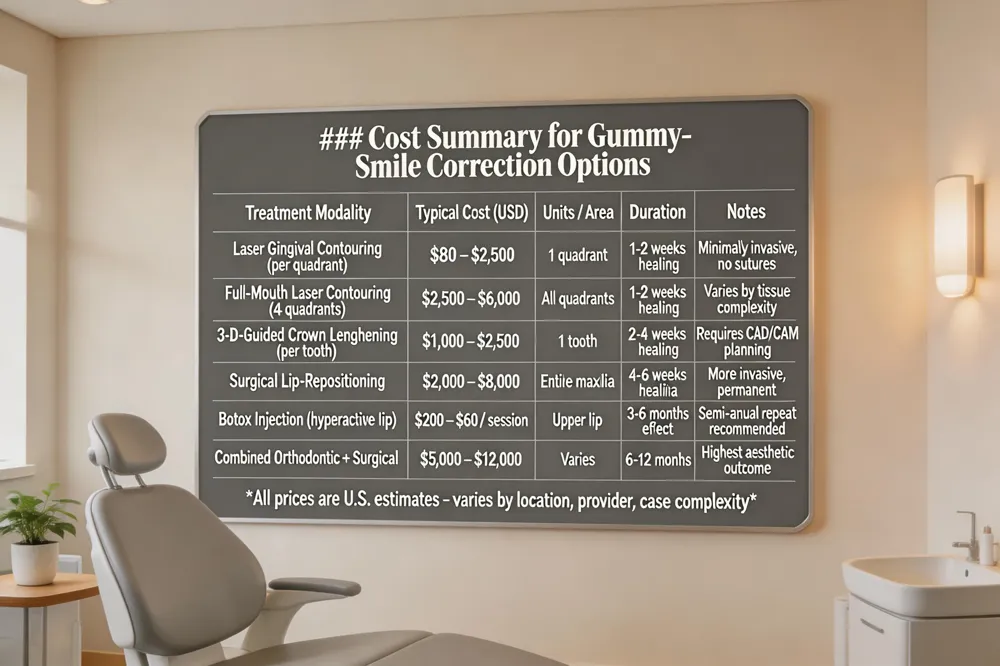 Cost drivers for a gummy‑smile correction include the underlying etiology (hyperactive lip, excess gingiva, skeletal excess), the chosen modality (laser gingivectomy, 3‑D‑guided crown lengthening, Botox, lip‑repositioning), anesthesia requirements, and any adjunctive digital planning or restorative work such as veneers. Prices vary widely: laser‑contouring or minimally invasive crown lengthening typically runs $500‑$2,500 per quadrant (approximately $1,500‑$3,500 total), while surgical gingivectomy or lip‑repositioning can cost $2,000‑$8,000 depending on complexity. Botox injections for a hyperactive lip are $300‑$600 per session, with a series of three to four treatments often needed. Financing options frequently include CARE Credit or other dental financing plans that spread payments over six to twelve months with low or zero interest, as well as in‑office payment schedules and limited insurance coverage for functional components. Overall, most patients find a complete correction falls between $2,000 and $8,000, tailored to their specific needs.
Is Gingivoplasty Painful?
Gingivoplasty, often performed as part of crown‑lengthening, generally results in mild‑to‑moderate post‑operative discomfort, similar to a routine dental extraction. Local anesthesia eliminates pain during the procedure, and most patients report only a soreness for the first 24‑48 hours. Over‑the‑counter analgesics such as ibuprofen or acetaminophen effectively control this soreness. To further reduce discomfort, clinicians advise a soft‑diet, avoiding hot foods, and meticulous oral‑hygiene with a gentle brush and antimicrobial rinse. Following the dentist’s post‑surgical instructions—such as not disturbing the surgical site and using prescribed antimicrobial gels—helps minimize swelling and accelerates healing, making the overall experience comfortable for most patients.
The 3‑3‑3 Rule for Optimal Oral Hygiene
The 3‑3‑3 Oral‑Hygiene Mnemonic
| Frequency | Duration | Action |
|---|---|---|
| Brush | 3 times per day (morning, after lunch, before bed) | 3 minutes each session with fluoride toothpaste |
| Floss | 3 steps (brush → floss → rinse) | Use floss or interdental cleaners to clean between teeth |
| Rinse | 3 times per day (after each brushing) | Fluoride mouthwash to strengthen enamel |
| Replace | Every 3 months | New toothbrush or brush head for optimal bristle performance |
Following this simple rule helps reduce plaque, cavities, and gingivitis, supporting long‑term oral health.
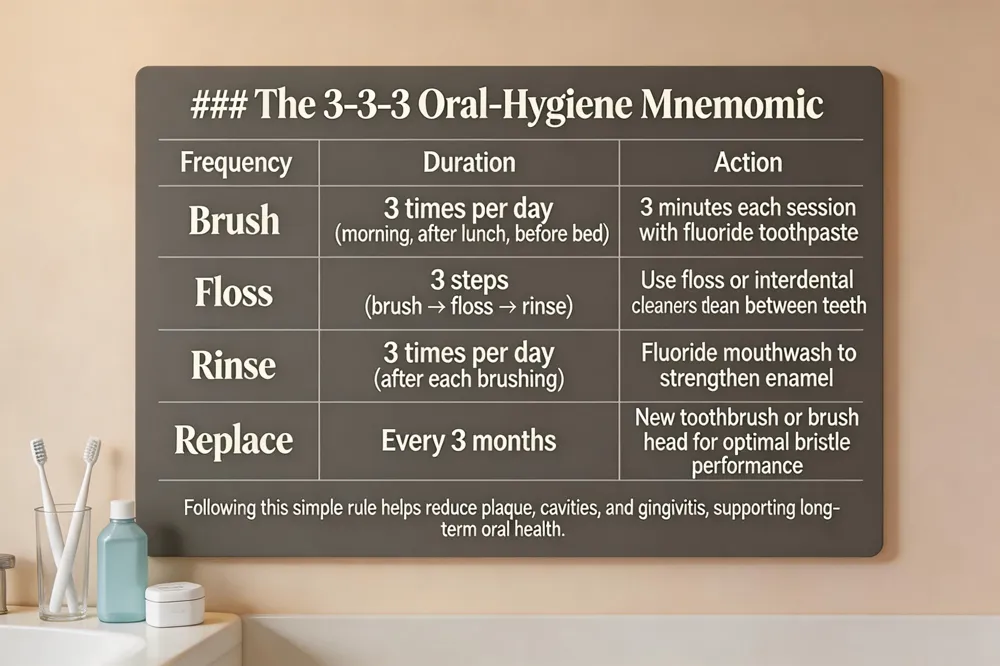 The 3‑3‑3 rule is a simple mnemonic that helps patients adopt optimal oral‑hygiene habits. It calls for brushing three times a day—typically after breakfast, after lunch, and before bed—each session lasting about three minutes to maximize plaque removal. In addition, it incorporates a three‑step routine: (1) brushing with a fluoride toothpaste, (2) flossing or using interdental cleaners to reach the spaces between teeth, and (3) rinsing with a fluoride mouthwash to strengthen enamel and reduce bacterial load. The rule also recommends replacing your toothbrush or brush head every three months to maintain effective bristles. While not an official guideline, the 3‑3‑3 rule aligns with professional recommendations and has been shown to lower the risk of cavities, gingivitis, and other dental problems when followed consistently.
Evaluating Botox for Gummy‑Smile Treatment
Botox for Gummy‑Smile: Effectiveness & Cost‑Benefit
| Parameter | Details |
|---|---|
| Target Muscles | Levator labii superioris alaeque nasi (upper‑lip elevator) |
| Typical Reduction | 2‑3 mm decrease in gingival display within days |
| Duration of Effect | 3‑4 months (up to 6 months in some patients) |
| Cost per Session | $200 – $600 (average $300‑$500) |
| Number of Sessions | Usually 1‑2 sessions per year (semi‑annual) |
| Recovery Time | 15‑20 minutes chair time, no downtime |
| Advantages | Non‑invasive, reversible, low risk, quick results |
| Considerations | Requires repeat treatments, may be less effective for severe gummy smiles |
Bottom Line: For mild to moderate gummy smiles, Botox offers a cost‑effective, low‑risk alternative to surgical options, delivering rapid aesthetic improvement with minimal disruption.
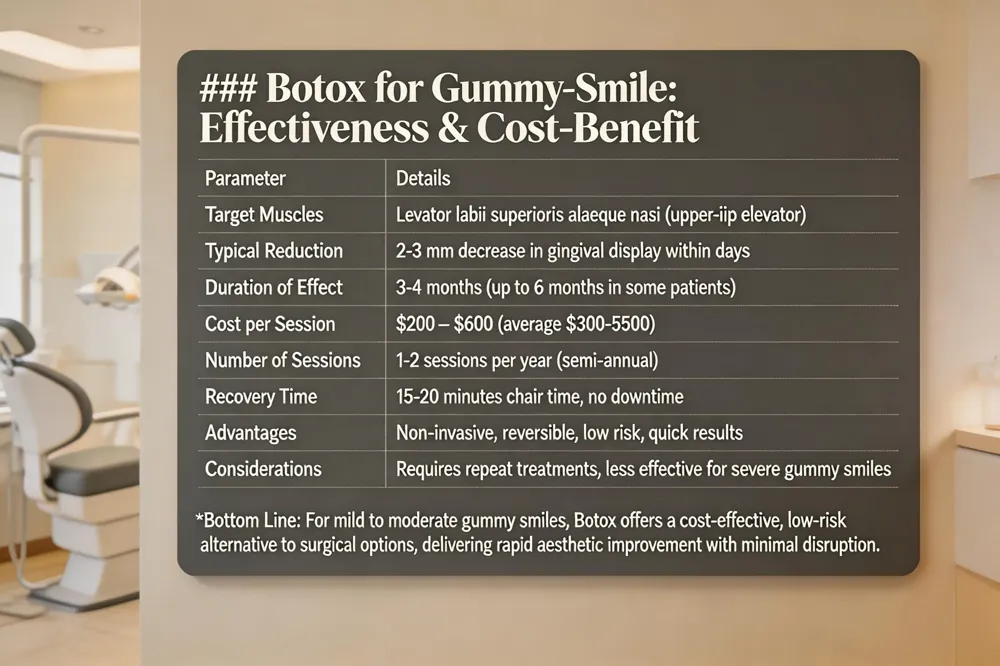 Effectiveness – Botox injections target the hyperactive levator labii superioris alaeque nasi muscles, temporarily reducing upper‑lip elevation. Clinical reports show a reduction of 2‑3 mm in gingival display within days, lasting 3‑4 months. For mild to moderate gummy smiles, the non‑invasive nature and immediate aesthetic improvement make it an attractive first‑line option.
Cost‑benefit analysis – A single Botox session costs $200‑$600 and requires no downtime, whereas surgical crown lengthening or laser gingivectomy can exceed $1,000 per tooth and involve weeks of healing. Although Botox must be repeated semi‑annually, its reversibility, lower risk profile, and minimal disruption often outweigh the higher upfront expense of permanent surgical solutions.
Is gummy‑smile Botox worth it? Yes, for many patients with a mild to moderate gummy smile, Botox offers a cost‑effective, reversible, and low‑risk alternative to surgery, delivering quick results with minimal side effects when performed by a qualified dental professional.
Finding a Top Cosmetic Dentist in NYC
Start by looking for a dentist who is board‑certified in cosmetic dentistry or a related specialty and who regularly publishes a portfolio of before‑and‑after photos. Check patient testimonials and online reviews to see how consistently the practice delivers natural‑looking results and a comfortable experience. A top NYC cosmetic dentist will use modern tools such as digital smile design, 3‑D imaging, CAD‑CAM‑, laser gingivectomy, and minimally invasive techniques to customize treatment to your facial features and oral health. Visit the office for a complimentary consultation, ask about the materials and labs they use, and verify that the team follows strict infection‑control and sedation protocols. Our Tribeca practice, led by Dr. Moezinia, meets all of these criteria and can help you achieve a healthy, confident smile.
Insurance Acceptance at Tribeca Dental Associates
Tribeca Dental Associates accepts a broad spectrum of dental insurance carriers, making it easy for patients in the New York area to receive care. Major plans include Delta Dental (including regional affiliates), Cigna PPO, Aetna, MetLife, UnitedHealthcare, Guardian, United Concordia, and Great West. Additional accepted insurers are Sun Life, Ameritas, Unum, Principal, and various Medicare Advantage plans that bundle dental benefits. The office also works with flexible spending accounts (FSAs) and health savings accounts (HSAs). For any plan not listed, the staff promptly verifies coverage, assists with claim submission, and ensures that patients understand their out‑of‑pocket responsibilities.
Embrace a Confident, Balanced Smile
Modern gummy‑smile correction blends cutting‑edge digital tools with seasoned clinical skill. At Empower Your Smile, intra‑oral scanning, CAD‑CAM design and 3‑D‑printed surgical guides enable precise crown‑lengthening and laser gingivectomy, reducing chair‑time and human error. AI‑driven treatment planning integrates CBCT and facial scans to predict optimal gingival margins, while digital wax‑ups let patients preview results before any incision. This technology‑first workflow is paired with a multidisciplinary team—periodontists, orthodontists, oral surgeons and cosmetic dentists—who tailor each plan to the individual anatomy and aesthetic goals. By involving patients in virtual smile design and offering transparent, step‑by‑step explanations, Empower Your Smile empowers clients to make informed choices, fostering confidence and lasting satisfaction. The practice also provides sedation options and financing, comfort for all patients.