Introduction
Good oral health is the foundation of overall well‑being, influencing nutrition, speech, confidence, and even systemic conditions such as heart disease and diabetes. Everyday habits that seem harmless—brushing too hard, using teeth as tools, or neglecting floss—can erode enamel, trigger gum disease, and set the stage for costly dental problems. At Empower Your Smile in Tribeca, NYC, the team emphasizes proactive prevention: gentle soft‑bristled brushing, daily flossing, regular professional cleanings, and personalized counseling to correct these common mistakes before they damage your smile.
Understanding Types of Oral Hygiene
Oral Hygiene Types
| Type | Description | Key Tools / Examples |
|---|---|---|
| Mechanical | Physical removal of plaque via brushing and interdental cleaning. | Soft‑bristled toothbrush, circular 45° angle, floss, interdental brushes, water flossers. |
| Chemical | Use of agents that strengthen enamel or reduce bacterial load. | Fluoride toothpaste, alcohol‑free fluoride mouthwash, therapeutic antimicrobial rinses. |
| Professional | In‑office cleanings and treatments performed by dental professionals. | Scaling, root planing, fluoride varnish, sealants, regular six‑month check‑ups. |
| Adjunctive | Additional tools that support saliva flow and neutralize acids. | Sugar‑free chewing gum, saliva stimulants, oral irrigators. |
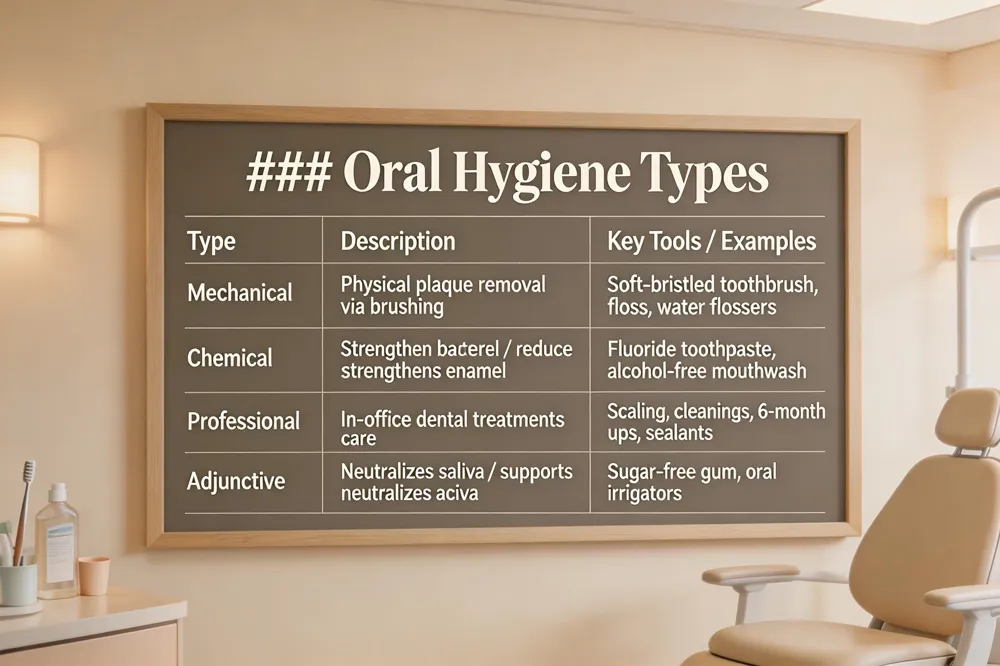 Oral hygiene can be divided into several key types that work together to keep the mouth clean and disease‑free. Mechanical hygiene involves daily brushing with a soft‑bristled toothbrush and gentle circular motions—using gentle circular motions at a 45‑degree angle to the gumline—and flossing daily or interdental brushes to disrupt plaque on tooth surfaces and between teeth. Water flossers and oral irrigators are useful adjuncts that reach deep pockets where string floss may miss. Chemical hygiene relies on fluoride toothpaste and therapeutic mouthwashes; fluoride strengthens enamel and reduces demineralization, while antimicrobial rinses lower bacterial load and help control halitosis. Alcohol‑free mouthwashes are preferred to avoid drying the oral tissues. Professional hygiene is delivered by dentists or hygienists during regular six‑month cleanings, scaling, and root planing that remove hardened plaque (tartar) and prevent gingivitis from progressing to periodontitis. In‑office fluoride varnishes or sealants add another layer of protection. Finally, adjunctive tools such as sugar‑free chewing gum stimulate saliva flow, which naturally neutralizes acids and aids remineralization. Together, these mechanical, chemical, professional, and adjunctive approaches create a comprehensive oral‑care regimen that supports healthy teeth and gums.
Common Mistakes and Their Consequences
Common Mistakes & Consequences
| Mistake | Potential Consequence | Prevention |
|---|---|---|
| Misdiagnosing decay (skipping X‑rays) | Unnecessary procedures, wrong fillings, extractions | Ensure proper imaging and thorough examination before treatment. |
| Brushing too hard | Enamel wear, gum irritation | Use a soft brush, gentle circular motions, 45° angle. |
| Using teeth as tools (opening packages, biting nails) | Chips, cracks, enamel loss | Use proper tools; avoid using teeth for mechanical tasks. |
| High sugary/acidic diet & frequent snacking | Enamel erosion, cavities, increased bacterial load | Limit sugary drinks/foods, rinse with water after intake, maintain balanced diet. |
| Tobacco use | Stained teeth, bad breath, gum disease, oral cancer, tooth loss | Quit tobacco; seek professional cessation support. |
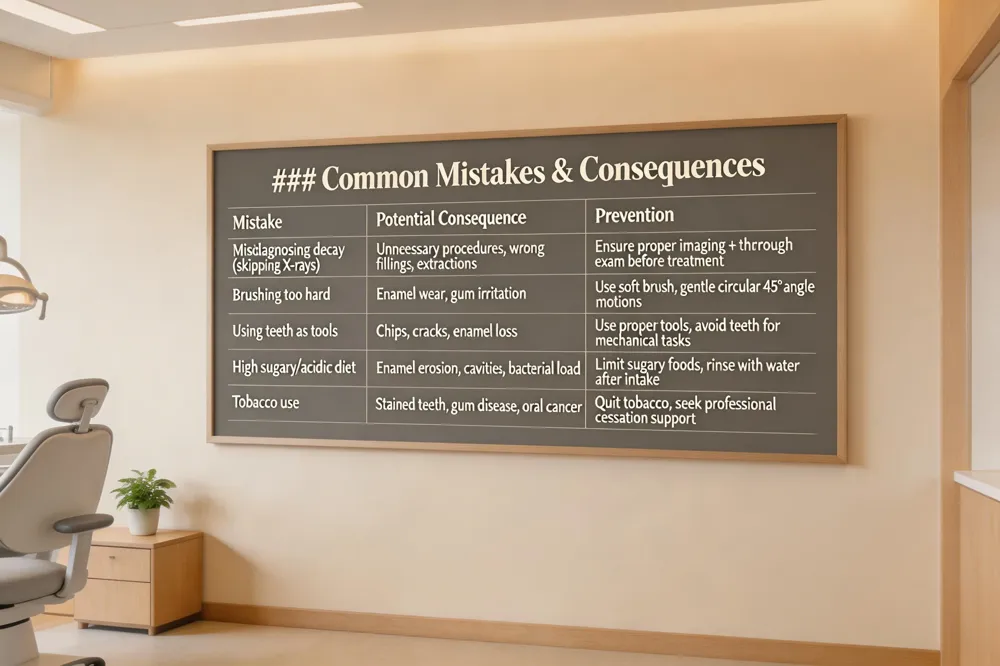 The most common error in dentistry is misdiagnosing tooth decay, often due to insufficient imaging or skipping needed X‑rays. This oversight can lead to unnecessary procedures, wrong fillings, or even extractions. Other frequent mistakes include brushing too hard, which wears enamel and irritates gums, and using teeth as tools to open packages or bite nails, which can chip or crack teeth. An acidic and sugary diet fuels plaque‑producing bacteria, eroding enamel and increasing cavity risk, especially when combined with frequent snacking. Tobacco use stains teeth, causes bad breath, and dramatically raises the odds of gum disease, oral cancer, and tooth loss. Together, these habits undermine oral health and can trigger costly, invasive dental work.
Practical Daily Care: 10 Ways to Keep Teeth Healthy
10 Daily Practices for Healthy Teeth
| # | Action | Details |
|---|---|---|
| 1 | Brush twice daily | Soft‑bristled brush, fluoride toothpaste, 45° angle, short circular motions; replace brush every 3‑4 months. |
| 2 | Floss or water‑floss daily | Remove plaque between teeth and below gumline. |
| 3 | Balanced diet rich in vegetables, fruits, nuts, dairy | Cheese provides casein; limit sugary/acidic foods. |
| 4 | Adequate water intake | Rinse food particles, support saliva, maintain neutral oral pH. |
| 5 | Regular dental check‑ups (every 6 months) | Early detection of decay, gum disease, oral cancer. |
| 6 | Avoid tobacco | Prevent stains, bad breath, gum disease, oral cancer. |
| 7 | Manage medical conditions (dry mouth, diabetes) | Discuss preventive measures with dentist. |
| 8 | Clean tongue or use scraper | Reduce bacteria, improve breath. |
| 9 | Chew sugar‑free gum after meals | Stimulate saliva, neutralize acids. |
| 10 | Do not use teeth as tools | Prevent chips, cracks, enamel wear. |
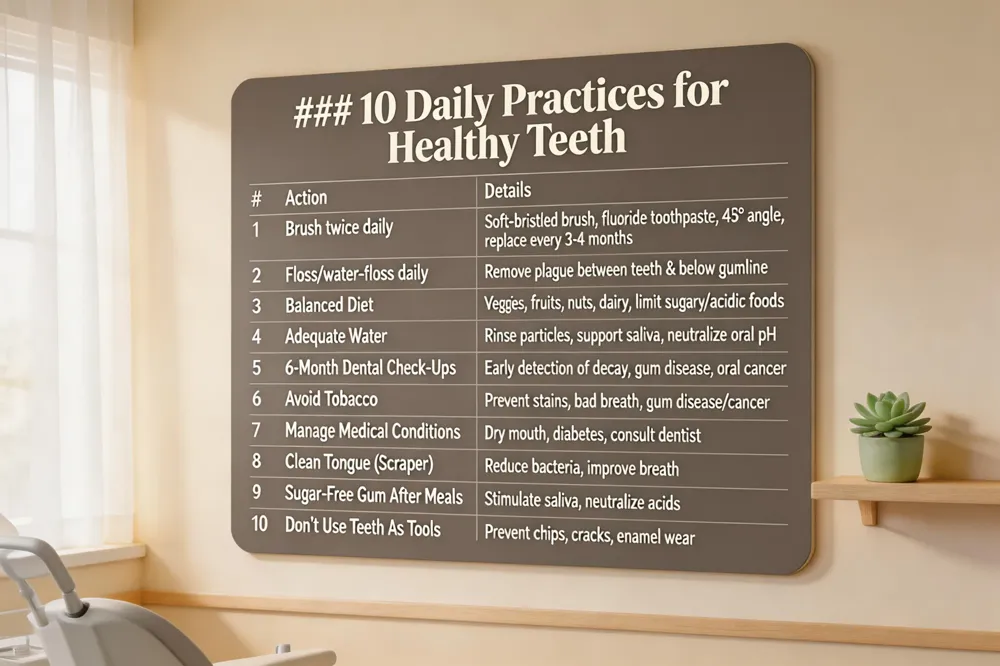
- Brush teeth twice daily with a soft‑bristled toothbrush and fluoride toothpaste. Use gentle, short circular motions at a 45‑degree angle to the gum line and replace the brush every three to four months or sooner if bristles are frayed.
- Floss daily or use a water‑flosser at least once daily to remove plaque and food particles from between teeth and below the gumline—areas a brush cannot reach.
- Follow a balanced diet rich in vegetables, fruits, nuts, and dairy (especially cheese, which supplies casein that inhibits cavity‑producing bacteria). High consumption of sugary and acidic foods and drinks promotes plaque formation, cavities, and enamel erosion; rinsing with water afterward can help neutralize acids.
- Adequate water intake helps rinse food particles, supports saliva production, and maintains balanced oral pH, contributing to overall oral health. After meals, rinse with plain water or a fluoride mouth‑rinse, but avoid rinsing with mouthwash immediately after brushing to preserve fluoride’s protective effect.
- Regular dental check‑ups and professional cleanings are crucial for detecting early signs of decay, gum disease, and other oral health issues. Early detection of decay, gum disease, or oral cancer can prevent costly, invasive procedures.
- Tobacco use stains teeth, causes bad breath, and significantly increases the risk of gum disease, oral cancer, and tooth loss.
- People with dry mouth, diabetes, or other medical conditions may be at higher risk for decay and gum disease and should discuss preventive measures with their dentist.
- Clean your tongue or use a scraper to reduce bacteria and bad breath.
- Chewing sugar‑free gum after meals can help neutralize acids and stimulate saliva, offering a protective effect until brushing.
- Using teeth as tools (e.g., opening packages) can cause chips, cracks, or enamel wear, leading to costly dental repairs.
Building a Consistent Routine: 6 Essential Steps
6‑Step Oral Hygiene Routine
| Step | Action | Key Points |
|---|---|---|
| 1 | Floss / interdental brush | Dislodge plaque between teeth before brushing. |
| 2 | Brush (2 min) | Soft‑bristled brush, 45° angle, gentle circular motions covering all surfaces. |
| 3 | Water flosser (optional) | Flush remaining debris after brushing. |
| 4 | Therapeutic mouthwash (alcohol‑free fluoride) | Use after brushing; wait ~30 min before eating/drinking. |
| 5 | Tongue cleaning | Scrape or brush tongue to remove bacteria and freshen breath. |
| 6 | Dental visit (every 6 months) | Professional cleaning, exam, early problem detection. |
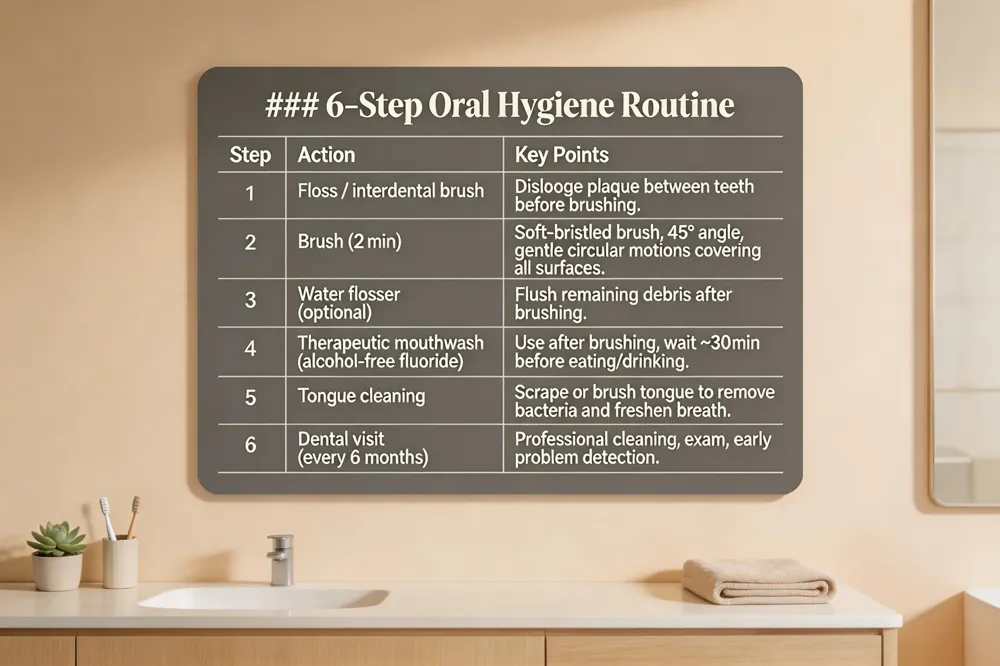 Order of oral hygiene routine – Start with flossing (or an interdental brush) to dislodge plaque between teeth and below the gum line. Follow with a two‑minute brush using a soft‑bristled brush at a 45° angle, covering all surfaces and the tongue. If you use a water flosser, run it after brushing to flush remaining debris. Adjunctive tools – Interdental brushes, floss picks, and water flossers enhance cleaning where a brush can’t reach; replace your toothbrush every 3‑4 months or sooner if bristles fray. Mouthwash timing – An alcohol‑free fluoride mouthwash should be used after brushing, but wait ~30 minutes before eating or drinking to let fluoride act on enamel. Tongue cleaning – Gently scrape or brush the tongue each routine to remove bacteria that cause bad breath and plaque. Regular dental check‑ups – Schedule professional cleanings and exams every six months for early detection of decay, gum disease, and oral cancer.
6 ways to take care of your teeth – Brush twice daily with a soft‑bristled, and fluoride toothpaste, Floss daily, use fluoride mouthwash, limit sugary/acidic foods, stay hydrated, and quit tobacco.
Steps of oral hygiene – Floss → brush (45° angle, 2 min) → water flosser (optional) → therapeutic mouthwash → tongue clean → dental visit.
Teeth care tips at home – Follow the above sequence, replace brushes regularly, chew sugar‑free gum after meals, and maintain a balanced diet rich in calcium and vitamin D.
Addressing Smile Insecurity and Advanced Care
Smile Insecurity & Advanced Care Options
| Issue | Common Cause | Advanced Solution |
|---|---|---|
| Yellow / stained teeth | Coffee, tea, tobacco, sugary snacks | Professional whitening, at‑home bleaching kits. |
| Spaced or misaligned teeth | Natural spacing, orthodontic drift | Clear aligners, braces, cosmetic contouring. |
| Chipped teeth | Using teeth as tools, trauma | Veneers, bonding, crowns. |
| Visible gums (gummy smile) | Overgrowth of gum tissue, smile | Gum contouring, laser gingivectomy. |
| General insecurity | Combined aesthetic concerns | Comprehensive cosmetic plan (whitening + veneers + aligners). |
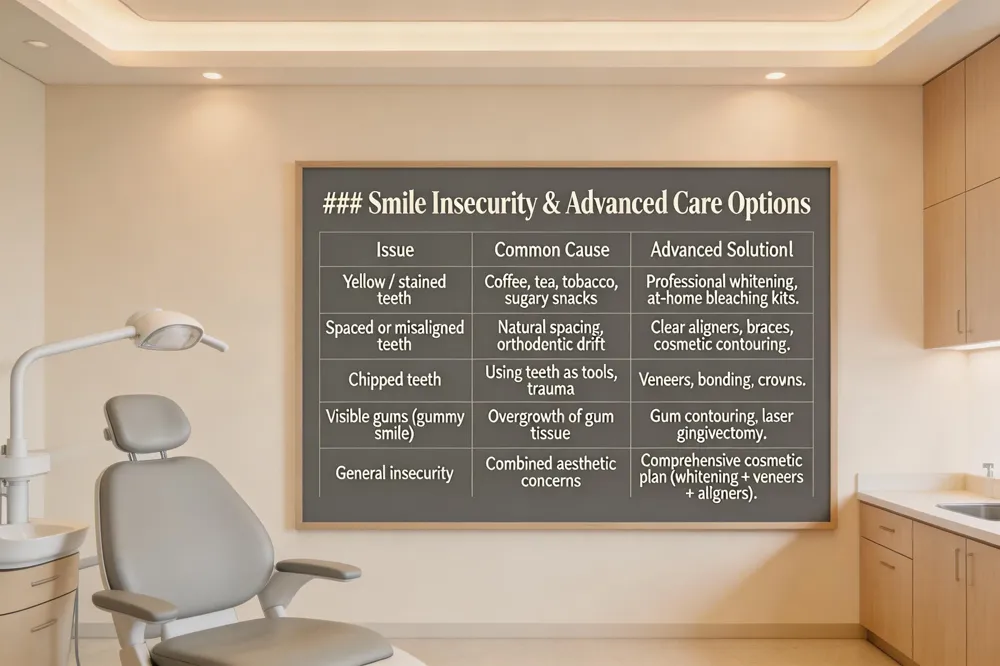 Why am I so insecure about my smile? Yellow, stained, spaced, chipped teeth or visible gums often stem from coffee, tea, tobacco or sugary snacks and can lower confidence. Whitening, veneers, clear aligners, gum contouring can restore a smile.
What is the 3‑3‑3 rule? Brush three times a day, spend three minutes each session (≈45 seconds per quadrant), replace brush three months. This controls bacteria and keeps bristles effective.
Oral hygiene PDF Our downloadable guide outlines brushing, flossing, fluoride use, water intake and diet tips to prevent plaque, cavities and gum disease.
Best practices for dental hygiene Brush twice with fluoride toothpaste at a 45° angle using gentle circular motions, floss, limit sugary/acidic foods, stay hydrated, see the dentist six months, and avoid tobacco.
Dental hygiene definition The care of teeth, gums and oral tissues through brushing, flossing, mouthwash and professional cleanings to remove plaque, prevent decay and support overall health.
Conclusion
Key takeaways: Brushing too hard, using the wrong brush, skipping floss, and neglecting post‑acid brushing erode enamel and invite gum disease. Habitual errors such as using teeth as tools, chewing ice, and excessive sugar or acid intake further sabotage oral health. Empower Your Smile prioritizes prevention—offering personalized assessments, gentle soft‑bristled brushing techniques, daily flossing guidance, and ADA‑approved fluoride products—while delivering aesthetic solutions like veneers and whitening that complement a healthy foundation. For a healthier, more confident smile, schedule a six‑month check‑up, replace your toothbrush every three months, adopt a two‑minute twice‑daily brushing routine with a 45° angle, floss daily, stay hydrated, and consider a night guard if you grind. These steps together create lasting oral health and a radiant smile.