Understanding the Link Between Sensitive Teeth and Dental Crowns
Tooth sensitivity typically arises when enamel wears away or gums recede, exposing the dentin layer whose microscopic tubules transmit temperature, pressure, or acidic stimuli directly to the nerve. Common triggers include aggressive brushing, acidic foods, decay, cracked teeth, gum disease, and recent dental work that removes tooth structure. A dental crown acts as a full cap that seals the prepared tooth, covering exposed dentin and creating a barrier that blocks external stimuli. By restoring shape and strength, the crown also distributes chewing forces evenly, reducing irritation of the pulp. Crowns are the preferred option when sensitivity is linked to enamel loss, large cavities, cracks, or post‑root‑canal teeth where treatments such as fillings or desensitizing toothpaste cannot adequately protect the dentin.
How Dental Crowns Reduce Sensitivity and What to Expect
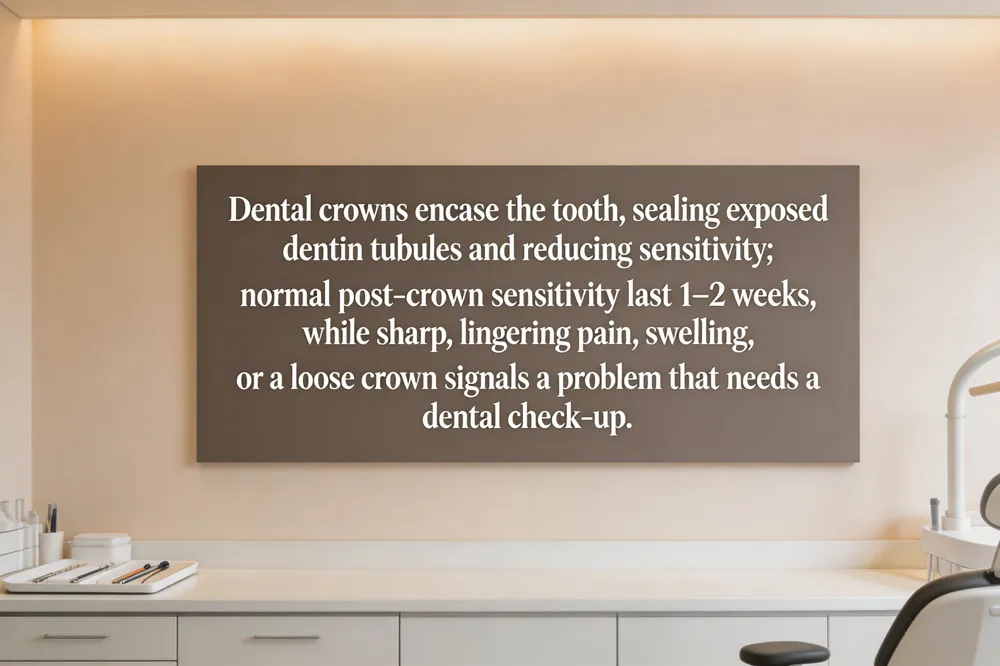 Dental crowns protect a sensitive tooth by encasing the entire surface with a custom‑made ceramic or metal‑based cap, sealing exposed dentin tubules and preventing temperature or pressure from reaching the nerve. After placement, a brief adjustment period of 1–2 weeks is typical; mild cold or hot sensations usually fade as the pulp settles and the cement fully sets. Normal post‑crown sensitivity is short‑lived, limited to a brief “zing” after hot or cold drinks, and resolves within a week or two. Abnormal signs include sharp pain that worsens, sensitivity lasting beyond two weeks, swelling, a loose or high crown, or pain when biting—these require a dental check‑up.
Should you crown a sensitive tooth? Persistent discomfort that signals significant enamel loss or underlying decay may merit a crown, which shields the tooth and restores comfort.
Why does it take 2 weeks to make a crown? The crown is fabricated in a lab from impressions or digital scans; technicians need time to design and mill a precise fit.
How long should a crown be sensitive to cold? Mild cold sensitivity is normal for the first 24‑48 hours and usually eases within a week to two weeks; lasting beyond that suggests an ill‑fit or exposed dentin.
Crown sensitive to cold after 2 months? Ongoing cold pain may stem from a high bite, marginal gap, gum recession, or grinding. Schedule a visit for adjustment, desensitizing treatment, or nightguard therapy.
Quick Relief: Desensitizing Toothpaste and At‑Home Remedies
 Desensitizing toothpaste works by sealing the microscopic tubules in exposed dentin with active agents such as potassium nitrate, stannous fluoride, or strontium chloride. When brushed twice daily for two minutes, these ingredients form a protective barrier that blocks temperature, pressure, and sweet‑taste stimuli from reaching the tooth’s nerve, often delivering noticeable relief within one to two weeks.
Immediate home remedies for sudden pain include a warm salt‑water rinse (½ tsp salt in a cup of warm water) for 30 seconds to calm inflammation, a cold compress on the cheek for 10‑15 minutes to numb the area, and a dab of clove oil (eugenol) on the painful spot for fast anesthetic effect. Switch to a soft‑bristled toothbrush and use a desensitizing paste without rinsing, and avoid extreme hot, cold, sweet, or acidic foods for a few hours.
If sensitivity persists beyond a few days, worsens, or is accompanied by swelling, discoloration, or a loose crown, seek professional help promptly. A dentist can evaluate the fit of the crown, apply fluoride varnish, sealants, or prescribe a stronger desensitizing agent, and address any underlying decay or nerve irritation.
When Sensitivity Persists: Warning Signs and Dental Intervention
 Even after a crown is placed, some patients continue to feel discomfort beyond adjustment period. Persistent post‑crown pain that lasts beyond a few weeks often signals an underlying problem such as exposed dentin, an ill‑fitting restoration, or lingering pulp inflammation. When the crown is high, loose, or does not align with bite, pressure during chewing can trigger sharp pain, especially when biting down. This bite‑related issue is resolved by an occlusal adjustment, but if the crown is loose or tooth is cracked, a replacement may be required.
If sensitivity remains a month after placement, tooth may not have fully adjusted, or decay at margin could be allowing bacteria to reach pulp. A cold response a year after crown often points to new decay, cement breakdown, or gum recession exposing root. Six‑month cold sensitivity is similarly concerning and may involve micro‑leakage or crack. Dentist will perform bite check, take radiographs, and evaluate the seal; treatment can range from re‑cementing or adjusting the crown to root‑canal therapy if nerve is inflamed.
Professional Options for Managing Sensitive Teeth
 Beyond crowns, dentists use desensitizing toothpaste, fluoride varnish, sealants, bonding agents, and night guards to ease pain. Identifying the root cause—enamel loss, brushing, gum recession, cavities, cracks, or recent work—is essential. An exam enables targeted treatment such as a sealant on exposed dentin, gum‑graft surgery, or a root‑canal pulp infection. Preventive care includes daily brushing, regular flossing, and avoiding acidic foods.
Sensitivity in teeth treatment: We start with an exam, then applies desensitizing agents, fluoride, sealants, night guards, gum‑graft, crowns, or root‑canal needed.
Root canal: This procedure removes infected pulp, cleans and fills canals, and seals the tooth, preserving function and relieving sensitivity.
Why are my teeth sensitive sudden: Sudden sensitivity means enamel or gum tissue from acidic foods, brushing, recession, cavities, cracks, or recent work; a dentist will diagnose and treat.
Why is my crown sensitive sudden: Crown sensitivity may stem from cement set, gaps, nerve irritation, material, exposed dentin, poor fit, or careful bite misalignment; pain needs immediate thorough long‑term professional evaluation.
Choosing the Right Crown: Materials, Cost, and Longevity
 Material properties and thermal conductivity – Metal or gold crowns transmit heat and cold efficiently, which can heighten temperature‑related pain, while porcelain, all‑ceramic and zirconia crowns have low thermal conductivity and act as an insulating barrier, reducing sensitivity. Typical lifespan and maintenance – With proper oral hygiene and regular check‑ups, crowns last 10‑15 years (zirconia and all‑ceramic often 12‑15 years, metal up to 20). Brush gently with a soft‑bristled brush, floss daily, avoid extreme temperatures for the first few weeks, and consider a nightguard if you grind. Financial considerations and insurance – In the United States a crown costs $1,000‑$2,500 depending on material (porcelain, zirconia, metal‑ceramic) and lab fees. Private insurance usually covers about half, with annual maximums of $1,000‑$2,500, leaving $500‑$1,250 out‑of‑pocket plus any exam, X‑ray, core buildup or temporary restoration fees. How much does a crown cost? Approximately $1,000‑$2,500, with insurance covering roughly 50 %. Can tooth sensitivity go away? Yes—many cases resolve with gentle brushing, desensitizing toothpaste and avoiding acidic foods, but persistent pain warrants a dental visit. Permanent crown sensitive to hot and cold? Mild, temporary sensitivity is normal for up to two weeks; longer or worsening pain may signal an ill‑fit crown or pulp irritation and needs professional adjustment. Why does it take 2 weeks to make a crown? The custom crown is fabricated in a dental laboratory after impressions or digital scans are sent, requiring time for design, milling and finishing to ensure a precise fit.
Your Path to Comfort and Confidence
Dental crowns protect sensitive teeth by replacing lost enamel, sealing dentin tubules, and insulating against temperature changes, which often eliminates sharp pain. However, deciding whether a crown is right for you requires a professional evaluation: the dentist will assess the extent of enamel loss, underlying decay, gum health, and overall oral condition before recommending the appropriate material and design. At Empower Your Smile we combine imaging, CAD/CAM crowns, and a consultation to create a restoration that fits comfortably, matches your aesthetic goals, and delivers lasting relief. Our team also provides post‑crown care instructions and follow‑up visits to ensure optimal outcomes.