Why Gum Grafting Matters
Nearly half of U.S. adults over age 30 experience gum recession, and the figure rises to 88 % in seniors. Receding gums expose tooth roots, increasing sensitivity, risk of decay, and accelerating periodontal disease, while also compromising the smile’s appearance. This article aims to give readers a concise overview of how successful gum‑grafting procedures are, drawing on recent long‑term studies, clinical trials, and emerging technologies such as connective‑tissue grafts, collagen matrices, and AI‑guided planning. By summarizing success rates, key influencing factors, and the latest advancements, we help patients make informed decisions about restoring oral health and aesthetics and long‑term confidence.
Success Rates and Factors Influencing Outcomes
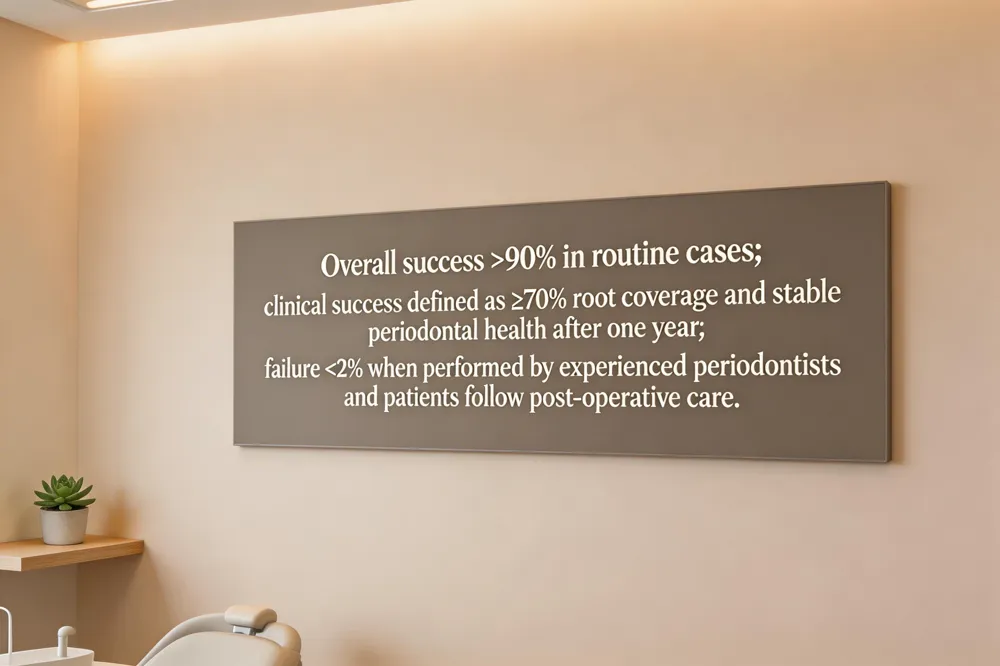 Overall gum‑grafting success exceeds 90 % in routine cases. Clinical studies define success as ≥70 % root coverage and stable periodontal health after one year; free‑gingival grafts report >90 % success, while connective‑tissue grafts achieve average root‑coverage rates of 98 % in long‑term follow‑up. Failure is rare—under 2 % when performed by experienced periodontists and when patients follow post‑operative care.
Donor (allograft) grafts, such as acellular dermal matrices, show comparable outcomes, with 80‑90 % root‑coverage success and overall graft survival above 90 % when proper technique and hygiene are maintained. They may experience slightly more shrinkage than autografts but remain stable long term.
Long‑term data (up to 20 years) demonstrate that grafted sites retain coverage, reduced sensitivity, and decreased recession risk for many years, often a lifetime, provided patients avoid smoking, control systemic health, and practice gentle oral hygiene. Key predictors of success include recession type (interdental tissue loss reduces odds), gum thickness, smoking status, and clinician experience. Proper case selection and diligent after‑care are essential for durable results.
Costs and Emerging Technologies
 Typical price range for conventional grafts
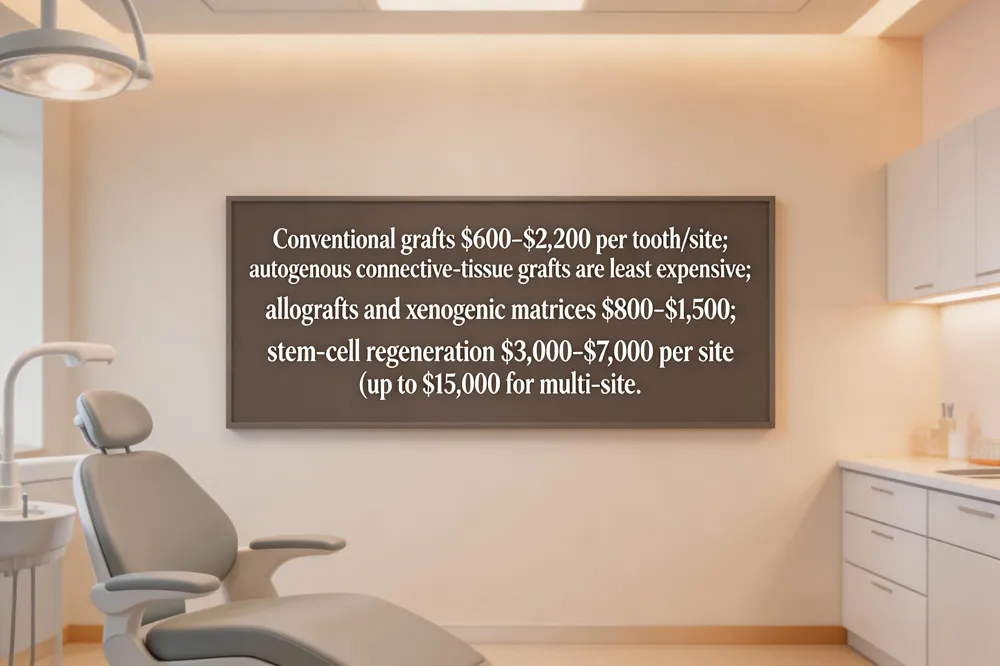
In the United States, a gum‑graft procedure typically costs between $600 and $2,200 per tooth or treated site. The exact price depends on the graft type—connective‑tissue, free‑gingival, allograft, or xenogenic matrix—on how many recession sites are addressed, and on the practice’s geographic location. Large metropolitan or specialist periodontics offices often fall toward the higher end of the range, while community clinics may be closer to $600‑$950.
Typical price range for conventional grafts
In the United States, a gum‑graft procedure typically costs between $600 and $2,200 per tooth or treated site. The exact price depends on the graft type—connective‑tissue, free‑gingival, allograft, or xenogenic matrix—on how many recession sites are addressed, and on the practice’s geographic location. Large metropolitan or specialist periodontics offices often fall toward the higher end of the range, while community clinics may be closer to $600‑$950.
Factors that affect cost Graft material is the primary driver: autogenous connective‑tissue grafts (harvested from the palate) are usually less expensive than allograft or xenogenic collagen matrices, which require laboratory processing. Multiple sites increase the total bill, and adjunctive technologies such as growth‑factor gels or platelet‑rich fibrin can add $150‑$400 per site. Anesthesia, sedation, and the need for a surgical guide or digital planning also influence the final amount.
Emerging high‑cost options such as stem‑cell regeneration Stem‑cell gum regeneration is an emerging, premium‑priced option. Pricing typically falls between $3,000 and $7,000 per treated site, with extensive or multi‑site cases reaching $10,000‑$15,000. Because the technology is novel, insurance coverage is rare, and most patients pay out‑of‑pocket. Practices often offer financing or installment plans to mitigate the expense.
Financing and insurance considerations Many dental insurance plans cover a portion of grafting when deemed medically necessary, especially for autografts or free‑gingival grafts. Patients can explore in‑office financing, third‑party lenders, such as CareCredit, or payment‑by‑phone plans. Transparent pricing after an initial consultation helps patients budget for both conventional grafts and newer stem‑cell treatments.
Healing Process and Patient Experience
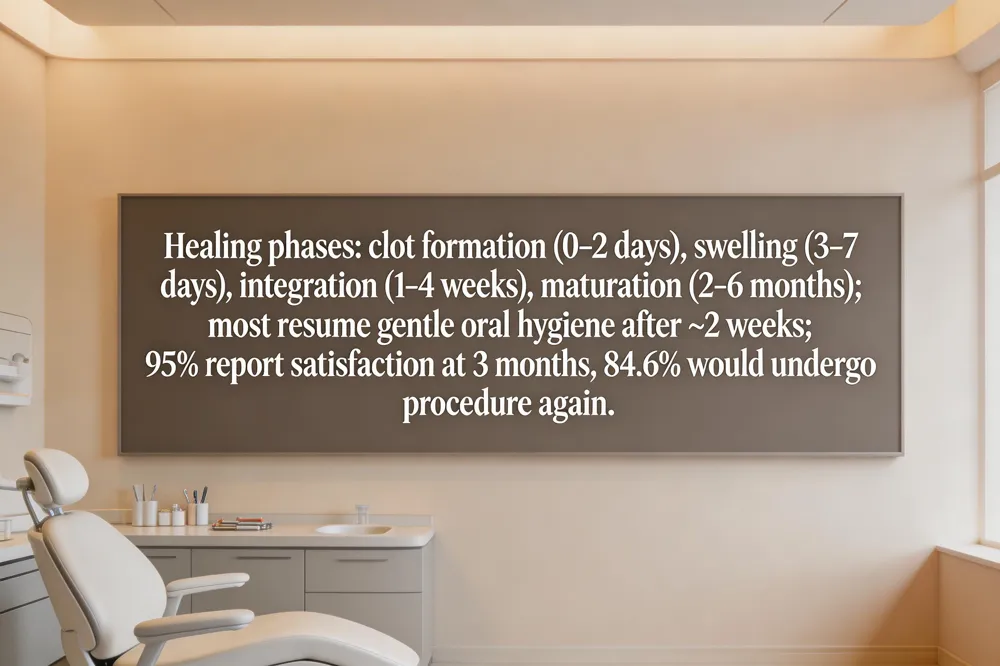 Gum graft healing occurs in distinct phases: clot formation and pain control dominate the first 24‑48 hours; swelling and mild discomfort peak around days 3‑7; graft integration and new tissue formation begin during weeks 1‑4; and over the next 2‑6 months the tissue matures, stabilizes, and the final gum contour appears. Most patients resume gentle oral hygiene after about two weeks, while full maturation may take up to six months. The surgery is performed under local anesthesia, so you feel only pressure, not sharp pain. Post‑operative soreness is typically mild to moderate and subsides within a few days; it is managed with over‑the‑counter analgesics, ice packs, a soft‑food diet, and prescribed rinses. Before‑and‑after photographs illustrating these results are available in the practice’s online gallery and on reputable periodontal sites such as Colorado Gum Care and Dr. Rahmani’s NYC pages. Patient satisfaction is high, with 95 % of graft recipients reporting satisfaction after three months and 84.6 % willing to undergo the procedure again.
Timing, Eligibility, and Alternatives
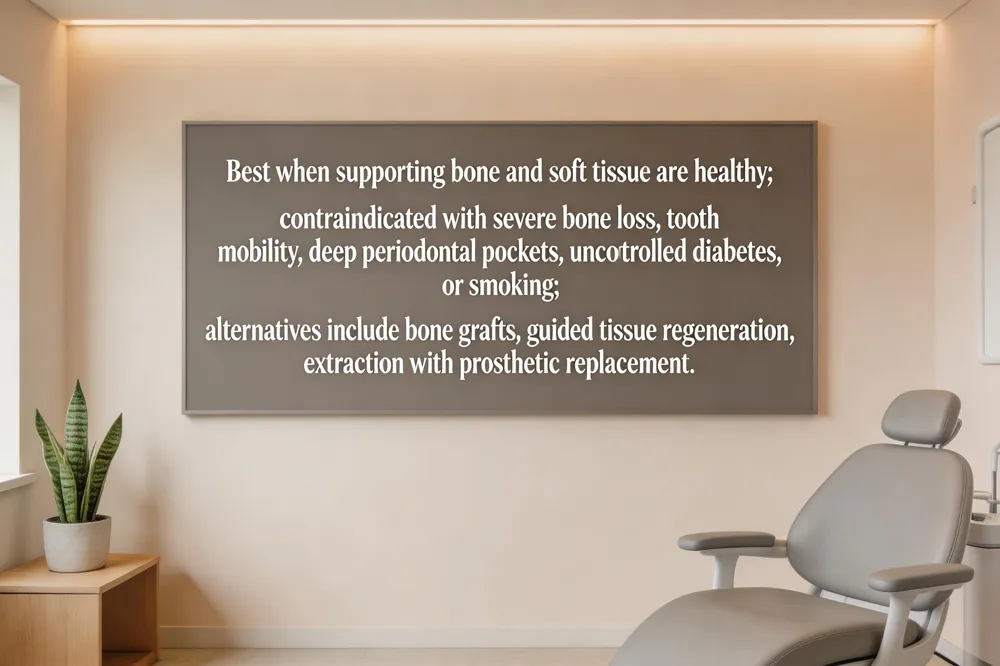 Gum grafting works best when the supporting bone and soft tissue are still healthy. It is considered “too late” when a tooth has severe bone loss, is mobile, or has deep periodontal pockets that cannot be stabilized, and when the recession exposes a large, worn or decayed root surface. Advanced untreated periodontal disease, chronic infection, or excessive interdental tissue loss also diminish graft integration, and extremely thin or fragile gingiva may not provide enough blood supply for a successful graft. In these cases, clinicians often shift focus to adjunctive therapies. Bone grafts can rebuild lost alveolar bone before or alongside soft‑tissue augmentation, especially when planning implant placement. When the defect is too extensive for soft‑tissue coverage alone, a combination of bone grafting, guided tissue regeneration, or even extraction with prosthetic replacement may be recommended. Systemic factors such as uncontrolled diabetes or ongoing smoking further lower success rates, so managing these conditions is essential before any surgical intervention. Early consultation with an experienced periodontist allows proper timing and selection of the most appropriate treatment pathway.
Current Research and Future Directions
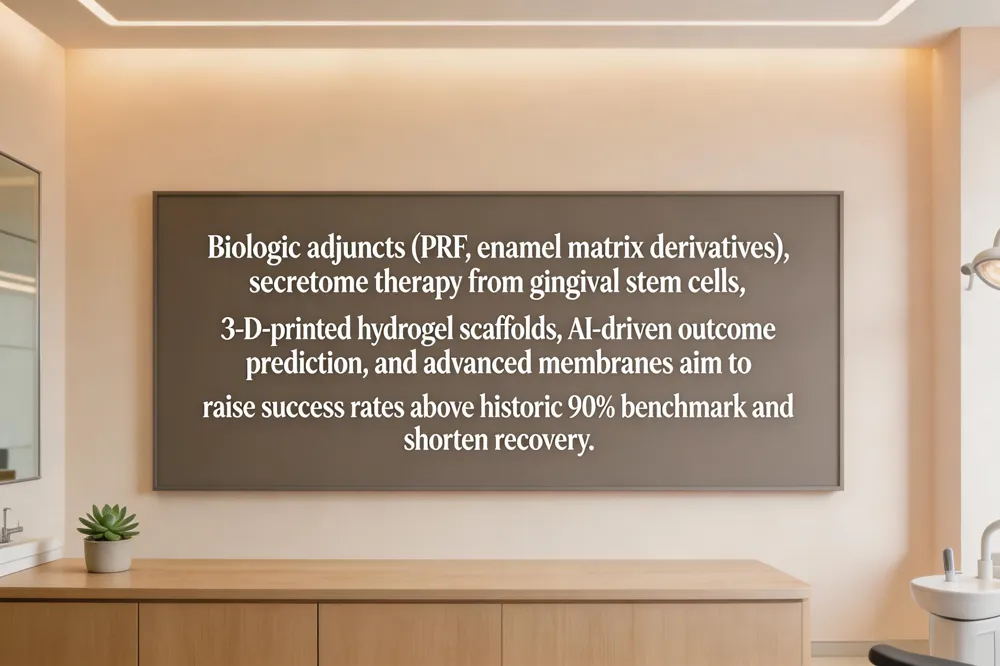 Biologic adjuncts such as platelet‑rich fibrin (PRF), enamel matrix derivatives and other growth‑factor‑rich biomaterials are being tested to boost soft‑tissue healing and reduce inflammation after grafting. Recent studies from Penn Dental Medicine and other centers show that the secretome of human gingival stem cells, delivered without live cells, accelerates wound closure in pre‑clinical models, offering a low‑cost, immunologically safe option. Engineers are also producing 3‑D‑printed hydrogel scaffolds that can be loaded with these bioactive molecules, providing a structural matrix that supports new tissue formation. Artificial‑intelligence platforms are being trained on large outcome databases to predict root‑coverage percentages for individual patients, helping clinicians choose the optimal graft type and technique. Advances in membranes, including acellular dermal matrices and collagen‑based barriers, improve graft stability, reduce inflammation, and allow minimally invasive approaches such as the pinhole surgical technique or laser‑assisted placement. Together, these innovations aim to increase success rates above the historic 90 % benchmark and shorten recovery times.
Putting It All Together
Gum grafting consistently delivers success rates above 90 % in routine cases, with many studies showing stable root‑coverage and tissue thickening for up to 20 years. Selecting an experienced periodontist—such as Dr. Ellie Javadi at Empower Your Smile—ensures the use of proven techniques, precise graft placement, and personalized treatment planning. Strict adherence to post‑operative instructions—soft diet, gentle oral hygiene, avoiding brushing the graft, and attending follow‑up visits—further maximizes healing and long‑term stability. We’ll assess your recession and create a personalized plan. Take the first step toward healthier gums and a confident smile: schedule your comprehensive consultation at Empower Your Smile today.