Introduction: More Than Just Gums
What is a Gummy Smile?
A gummy smile, medically termed excessive gingival display, occurs when a person shows a high proportion of gum tissue above their upper teeth while smiling. Although definitions vary slightly, exposing more than 2-4mm of gingiva is generally considered more than typical. This common variation affects a significant portion of the adult population, with estimates ranging from 10% to as high as 29%.
A Common Concern
Interestingly, the perception of a gummy smile is not evenly distributed. Studies consistently show it is more common in women than in men. For instance, one analysis suggests the incidence during smiling is approximately 14% in females and 7% in males. It is also frequently noted among young adults in their 20s and 30s.
The Personal Impact of a Smile
Smile aesthetics are deeply personal. What one person finds charming, another may wish to change. For many, a gummy smile is a source of significant self-consciousness. The desire to control or hide a smile can impact social interactions and self-esteem, making its correction an important step toward greater confidence for those who seek it.
Modern, Tailored Solutions
The good news is that modern dentistry and cosmetic medicine offer a variety of effective, science-backed solutions. These range from non-surgical injections to precise surgical procedures. Critically, the ideal treatment is not one-size-fits-all; it must be carefully chosen based on the specific anatomical or biological root cause of the excessive gum display.
Understanding the "Why"
To appreciate the diverse treatment landscape, one must first understand the underlying factors. A gummy smile can stem from skeletal structure, dental development, or soft tissue dynamics. For example, it might be due to a hyperactive upper lip muscle, excess gum tissue covering the teeth, or even the vertical overgrowth of the upper jawbone. Each cause points toward a different therapeutic approach.
| Factor Category | Common Examples | Primary Treatment Goal |
|---|---|---|
| Skeletal | Vertical maxillary excess (long upper jaw) | Reposition or shorten the jaw bone |
| Dental | Altered tooth eruption; short clinical crowns | Expose more natural tooth structure |
| Soft Tissue | Hyperactive lip muscles; excess gingival tissue | Relax muscles or reshape gum line |
Decoding the Gummy Smile: Anatomy, Causes, and Classification

Defining the Gummy Smile
A gummy smile, clinically termed excessive gingival display, describes a smile where more gum tissue than is typically preferred is visible above the upper teeth. In aesthetic dentistry, showing more than 2 to 4 millimeters of gum tissue is often the threshold for this classification, though the perception can be subjective. It is primarily considered a cosmetic concern, not a direct oral health problem. However, its impact on an individual's self-esteem and social comfort can be significant, leading many to seek treatment to improve their smile's appearance and feel more confident.
Understanding the Causes
The etiology of a gummy smile is multifactorial, often involving a combination of anatomical features. These causes are broadly categorized into skeletal, dental, and soft tissue origins. A comprehensive diagnosis is crucial as the underlying cause dictates the most effective treatment plan.
Skeletal Causes A common skeletal cause is vertical maxillary excess (VME), where the upper jawbone (maxilla) has grown disproportionately downward. This overgrowth increases lower facial height and leads to excessive gingival display, even when the upper lip itself is of normal length.
Dental Causes Dental factors include altered passive eruption, where gums fail to recede properly during tooth development, leaving teeth appearing short. Other issues are anterior dentoalveolar extrusion (over-eruption of the front teeth) and genetically small teeth, both of which can make the gums more prominent in relation to the teeth.
Soft Tissue Causes This category encompasses a hyperactive upper lip, where muscles like the levator labii superioris lift the lip too high. It also includes having excess gum tissue (gingival hyperplasia), a physically short upper lip, or gum overgrowth due to inflammation or certain medications.
Origins and Contributing Factors
These anatomical causes can stem from various origins:
- Genetic and Developmental: Many factors, like jaw shape, lip length, and tooth size, are inherited. Developmental issues during childhood, such as abnormal tooth eruption or jaw growth patterns, also play a role.
- Medication-Induced: Certain drugs, including some antiseizure medications, calcium channel blockers for blood pressure, and immunosuppressants, can cause gingival hyperplasia as a side effect.
- Oral Hygiene and Inflammation: Poor oral hygiene can lead to gum disease (gingivitis or periodontitis), causing inflamed, swollen gums that contribute to a gummy appearance.
Prevalence and Demographics
Gummy smiles are relatively common, affecting an estimated 10% to 29% of the population, with a higher prevalence among younger adults aged 20-30. It is more frequently observed in women, with studies indicating about 14% of women and 7% of men have excessive gingival display. The prevalence tends to decrease with age as muscle tone lessens and the upper lip naturally drops.
Classification Systems
Dental professionals use classification systems to assess gummy smiles, which aids in diagnosis and treatment planning.
By Severity: The condition is often graded by the amount of gum exposed:
| Severity Level | Gingival Display |
|---|---|
| Mild | 2–4 mm |
| Moderate | 4–8 mm |
| Severe | >8 mm |
By Anatomical Location: Emerging systems classify gummy smiles based on the vertical facial third where the excess display occurs. This helps pinpoint the contributing structures.
| Classification Type | Area of Excess Display | Common Contributing Factors |
|---|---|---|
| Type I (Isolated Upper Third) | Forehead region | Related to brow and forehead muscles |
| Type II (Isolated Middle Third) | Upper eyelid to nasal base | Most common type; involves lip elevator muscles |
| Type III (Isolated Lower Third) | Nasal base to chin | Often related to jaw and dental factors |
| Type IV (Combination) | Two or more areas | Indicates multiple contributing factors |
The Imperative of Professional Diagnosis
Identifying the specific cause is the critical first step. A gummy smile resulting from a hyperactive lip muscle requires a completely different approach than one caused by jaw overgrowth or excess gum tissue. A dental professional, such as a periodontist or cosmetic dentist, will conduct a thorough examination. This includes analyzing facial proportions, measuring lip mobility and length, assessing the smile dynamically, and reviewing dental X-rays. Only with an accurate diagnosis can a tailored and effective treatment path be formulated.
The Non-Surgical Arsenal: From Precision Injections to Laser Sculpting

Introducing Non-Surgical Options
Gummy smile correction is no longer the exclusive domain of surgery. A range of effective, minimally invasive treatments now offer solutions with little to no downtime, tailored to the specific cause behind the excessive gingival display. These procedures provide patients with options that are quick, precise, and often reversible.
How Botox Works to Correct a Gummy Smile
Botox works by relaxing the specific overactive muscles, typically the levator labii superioris, that pull the upper lip too high when you smile. It acts as a neuromuscular blocker, preventing the release of the neurotransmitter acetylcholine at the junction between nerve endings and muscle cells. This temporarily paralyzes the hyperactive lip elevator muscles. Injections, often at a site known as the 'Yonsei point', use small doses, typically 2 to 5 units per site, with males sometimes requiring higher doses. The procedure is quick, taking 10 to 30 minutes, with results visible in a few days and peaking within two weeks. The effect is temporary, lasting between three and six months before a touch-up is needed. It is important to note this is an 'off-label' use but is considered safe when performed by a trained professional.
Understanding Risks of Botox for Gummy Smile
Potential side effects of Botox treatment are generally mild and temporary. They can include minor bruising, swelling, redness, or headache at the injection site. More significant risks, though uncommon, arise from improper technique or dosage and can lead to temporary lip ptosis (drooping), nasal flaring, speech difficulties, or an asymmetric smile. These effects typically resolve as the Botox wears off.
Hyaluronic Acid Filler Injections
Another injectable option involves hyaluronic acid dermal fillers. While Botox relaxes muscles, filler can limit lip movement by adding volume to the upper lip. This creates a subtle, physical barrier that restricts how high the lip can rise. The results from filler injections can last longer than Botox, up to eight months in some cases.
Laser Gum Contouring (Gingivectomy)
For cases caused by excess soft gum tissue, laser gum contouring is a primary non-surgical solution. A dental laser, such as a diode laser, is used to precisely ablate and reshape the gum line. The laser cauterizes tissue as it works, leading to minimal bleeding, reduced swelling, a lower risk of infection, and faster healing compared to traditional scalpels. The procedure is typically performed under local anesthesia in a single visit. When excess bone is also a factor, this can be combined with a surgical crown lengthening procedure.
Orthodontic Treatment
When a gummy smile is due to dental misalignment or bite issues, orthodontics offers a permanent, non-surgical foundation. Braces or clear aligners can gradually reposition teeth and correct the underlying skeletal relationship. In some cases, orthodontists use Temporary Anchorage Devices (TADs)—tiny screws placed in the bone—to help intrude, or push up, the upper front teeth. This treatment requires a significant time commitment, often months to years, but addresses the root cause for lasting results.
Porcelain Veneers
Porcelain veneers are a cosmetic solution primarily for gummy smiles where the teeth appear short. These thin, custom-made shells are bonded to the front surfaces of the teeth, instantly creating the illusion of longer, more proportionate teeth and balancing the gum-to-tooth ratio. This approach requires minimal tooth preparation and offers immediate aesthetic improvement, but it does not address underlying muscular or skeletal causes.
Can a Gummy Smile Be Fixed Without Surgery?
Yes, a gummy smile can often be corrected without traditional surgery. For cases caused by an overactive upper lip muscle, precise Botox injections can relax the muscle to reduce excessive gum display. Another highly effective, minimally invasive option is laser gum contouring, which gently reshapes the gum line to reveal more of the natural tooth structure. Additionally, orthodontic treatments or strategically placed porcelain veneers can create the illusion of longer teeth, balancing the smile's proportions. The best non-surgical option depends entirely on the diagnosed cause, making a professional consultation essential for a personalized treatment plan.
Comparison of Non-Surgical Gummy Smile Treatments
| Treatment | Primary Use Case | How It Works | Procedure Time | Result Duration | Key Consideration |
|---|---|---|---|---|---|
| Botox Injections | Hyperactive lip muscle | Relaxes elevator muscles | 10–30 minutes | 3–6 months | Temporary; 'off-label' use |
| Hyaluronic Acid Filler | Short/hyperactive lip | Adds volume to restrict lift | ~30 minutes | Up to 8 months | Temporary; volumizing effect |
| Laser Gum Contouring | Excess gum tissue | Reshapes gum line with laser | 1–2 hours | Permanent | For soft tissue excess only |
| Orthodontics (e.g., braces) | Tooth/jaw misalignment | Repositions teeth and bite | Months to years | Permanent | Long treatment timeline |
| Porcelain Veneers | Short-looking teeth | Caps teeth to appear longer | 2+ appointments | 10–15 years | Requires tooth preparation |
Surgical Solutions: Precision Reshaping for Lasting Change
Introducing Surgical Gummy Smile Corrections
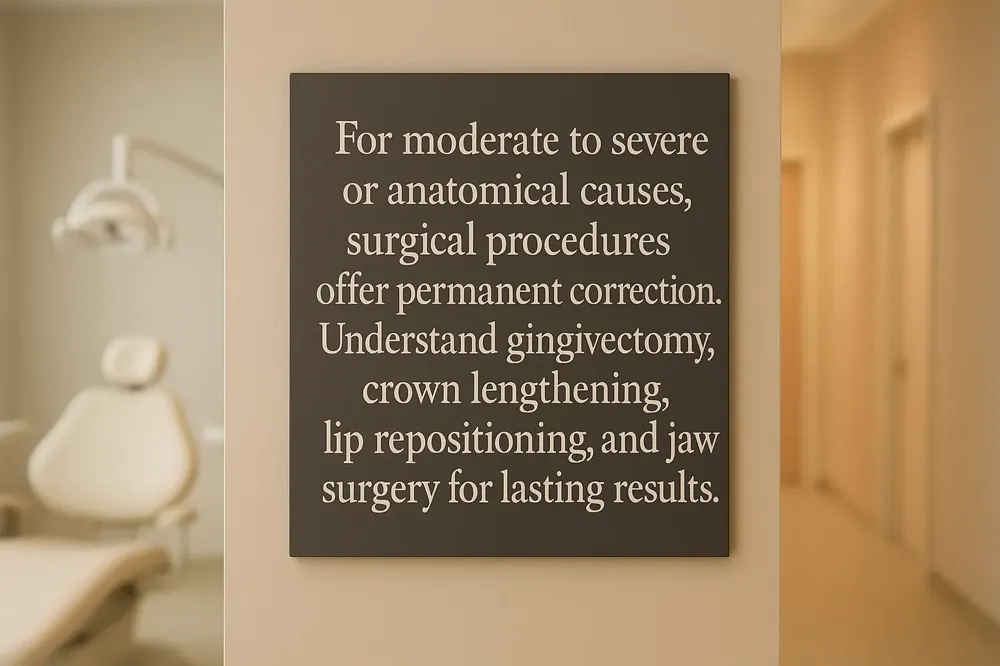
When non-surgical methods are insufficient or a more permanent solution is desired for moderate to severe cases, surgical treatments offer precise and lasting change. These procedures directly address anatomical causes, such as excess gum tissue, a hyperactive upper lip, or skeletal jaw issues.
Detail Gingivectomy and Surgical Crown Lengthening
These are common surgical approaches for correcting excess gum tissue. A gingivectomy involves the removal of overgrown gingival tissue, often using a scalpel or dental laser under local anesthesia, to reshape the gum line. Surgical crown lengthening is a more extensive procedure that not only removes excess gum tissue but also reshapes the underlying bone to expose more of the natural tooth structure. This is crucial when excess tissue covers too much of the tooth crown.
Recovery typically involves a few days of mild tenderness and swelling, with full healing taking up to several weeks. Results are generally permanent, though rare gum regrowth is possible, especially if underlying bone is not adequately contoured.
Detail Lip Repositioning Surgery
For a gummy smile caused by a hyperactive upper lip, lip repositioning surgery offers a durable alternative to temporary Botox injections. This procedure involves removing a strip of connective tissue from under the upper lip to restrict its upward movement. It is performed under local anesthesia and is considered a more permanent solution, with high patient satisfaction reported. However, some degree of relapse or partial reversal is possible over time.
Detail Orthognathic (Jaw) Surgery
In cases of severe skeletal causes, such as vertical maxillary excess (an overgrown upper jaw), orthognathic surgery may be necessary. A common procedure is the LeFort I osteotomy, which repositions the upper jaw. This is a major surgery requiring general anesthesia, a hospital stay, and a significant recovery period of 6 to 12 weeks. Due to its functional impact, this procedure may be partially covered by medical insurance if deemed medically necessary for bite correction or breathing issues.
Discussing Patient Selection and Pre-Operative Evaluation
Surgical options are typically reserved for moderate to severe cases or when the root cause is anatomical. A thorough pre-operative evaluation is essential and includes:
- Comprehensive Imaging: X-rays and digital scans to assess bone levels and tooth roots.
- Smile Analysis: Measuring gingival display and lip mobility.
- Biological Width Assessment: Ensuring procedures do not violate the critical zone of attachment between gum and tooth, which can lead to inflammation or recession.
This careful planning ensures the chosen surgical method effectively targets the specific cause for a successful, long-term outcome.
| Procedure | Primary Target | Key Technique | Typical Recovery | Permanence |
|---|---|---|---|---|
| Gingivectomy | Excess Gum Tissue | Laser/scalpel tissue removal | Days to a week | Usually permanent |
| Crown Lengthening | Gum & Bone Tissue | Reshapes gum and bone | 1-2 weeks for initial healing | Usually permanent |
| Lip Repositioning | Hyperactive Lip Muscle | Removes connective tissue strip | About one week | Long-lasting, relapse possible |
| Orthognathic Surgery | Jaw Bone Structure | Repositions upper jaw bone | 6-12 weeks | Permanent |
Weighing the Investment: Cost, Permanence, and Value

Understanding the Financial Commitment
The financial investment for correcting a gummy smile varies widely, dictated by the underlying cause and the chosen treatment method. At the more accessible end, non-surgical Botox injections cost approximately $300 to $600 per session. For more permanent soft tissue correction, laser gum contouring ranges from $250 to $500 per treated tooth. Surgical interventions, such as crown lengthening or lip repositioning surgery, are more substantial investments, typically costing between $1,500 and $5,000 or more. Orthognathic (jaw) surgery, required for severe skeletal issues, represents the highest cost bracket, often ranging from $20,000 to $40,000. It is important to note that dental insurance may cover part of the cost for procedures deemed medically necessary, such as treating periodontal disease, but elective cosmetic treatments are generally out-of-pocket expenses.
Permanence of Results: Temporary vs. Lasting Solutions
The longevity of your results depends heavily on the treatment path. Surgical options like gum contouring (gingivectomy), crown lengthening, and orthognathic surgery offer permanent or very long-lasting changes. These procedures physically alter the gum tissue, bone, or lip position. Conversely, non-surgical options provide temporary improvement. Botox injections for hyperactive lip muscles typically require re-treatment every 3 to 6 months, as their muscle-relaxing effects are not permanent. Similarly, results from hyaluronic acid filler injections to restrict lip movement can last up to 8 to 12 months before a touch-up is needed.
Assessing the Value Beyond Price
Determining the "worth" of treatment extends beyond the monetary cost. For many individuals, the primary value lies in increased confidence, improved self-image, and greater social comfort. A gummy smile, while often harmless to oral health, can cause significant self-consciousness, leading people to suppress their smiles. Correcting it is an elective, personal choice that can be profoundly life-enhancing. The investment is not just in a procedure, but in achieving the psychological freedom to express oneself fully without reservation.
The Critical Role of Professional Diagnosis and Planning
To ensure you receive good value—an effective, lasting result for your investment—a personalized treatment plan from a qualified specialist is essential. A periodontist, cosmetic dentist, or oral surgeon will conduct a comprehensive evaluation to diagnose the root cause, whether it's excess gum tissue, a hyperactive lip, skeletal issues, or a combination. This diagnosis directly informs the most suitable and cost-effective treatment. A professional can explain all options, from temporary to permanent, ensuring your chosen solution aligns with your budget, lifestyle, and aesthetic goals.
| Treatment Option | Typical Cost Range | Permanence of Results | Primary Best For |
|---|---|---|---|
| Botox Injections | $300 - $600 per session | Temporary (3-6 months) | Gummy smile due to hyperactive upper lip muscles. |
| Laser Gum Contouring | $250 - $500 per tooth | Permanent | Excess gum tissue (Altered Passive Eruption). |
| Crown Lengthening Surgery | $1,500 - $5,000+ | Long-lasting/Permanent | Short clinical crowns, excess gum and bone tissue. |
| Lip Repositioning Surgery | $1,500 - $5,000+ | Permanent | Gummy smile due to a hypermobile upper lip. |
| Orthognathic (Jaw) Surgery | $20,000 - $40,000 | Permanent | Severe skeletal causes like Vertical Maxillary Excess. |
The Empower Your Smile Approach: Personalized Science for Your Smile
A Foundation of Patient-Centered Care
At our practice, we believe a beautiful smile is a deeply personal achievement. Every smile is unique, and so is every journey to achieve it. Our philosophy centers on you. We combine meticulous patient-centered care with advanced technology to deliver truly personalized treatment. This approach ensures your plan addresses not just the appearance of your smile, but also your comfort, health, and long-term well-being.
The Comprehensive Consultation: Mapping Your Smile's Landscape
The first step is a thorough consultation designed to uncover the precise reason for your gummy smile. We move beyond a simple visual assessment to a detailed, scientific analysis. This involves a complete oral exam, digital X-rays, and high-resolution photography. We analyze your smile dynamically, often using video to see how your lips and gums move naturally. We measure your lip mobility, assess your gum-to-tooth ratio, and evaluate your jaw structure. This detailed process helps us pinpoint the exact cause of a gummy smile—whether it’s hyperactive lip muscles, excess gum tissue, tooth positioning, or jaw development.
Harnessing Modern Technology for Precision and Predictability
We leverage state-of-the-art tools to ensure treatment is both precise and predictable. Digital smile design software allows us to create a preview of your potential results before any treatment begins. You can see the proposed changes to your gum line and smile aesthetics. For surgical procedures, we utilize advanced soft tissue lasers. These tools allow for more precise gum contouring with less bleeding, reduced swelling, and faster healing compared to traditional methods. Combined with other diagnostic technologies, these tools help us plan and execute treatment with exceptional accuracy.
Crafting Your Customized Treatment Plan
Led by Dr. Moezinia, our team synthesizes all diagnostic information to create a plan tailored just for you. Your specific anatomical cause, aesthetic goals, oral health status, budget, and lifestyle are all considered. Because gummy smiles often have multiple contributing factors, the most effective solution may combine treatment options for a gummy smile. For example, we might pair laser gum contouring with porcelain veneers to both reshape the gums and lengthen the appearance of the teeth. Or, we might recommend a combination of orthodontics to correct tooth position followed by Botox to relax lip muscles and limit gum exposure. The plan is designed to deliver optimal, balanced results for your individual case.
The Art and Science of a Confident Smile
Correcting a gummy smile is a scientifically-driven process that blends the art of aesthetics with the principles of dentistry. It's not a one-size-fits-all procedure. By understanding the underlying biology and using personalized technology, we transform your smile in a way that looks natural and feels authentically you. This process is designed to empower you, giving you the confidence to share your smile freely.
| Consultation Step | Technology Used | Purpose of This Step | Example Finding Leading to Specific Treatment |
|---|---|---|---|
| Dynamic Smile Analysis | High-Speed Video Recording | Captures natural lip movement & gum exposure | Hyperactive lip lift identified, suggesting Botox for a gummy smile as a potential treatment. |
| Digital Imaging & Design | Digital Smile Design Software | Creates a visual preview of final aesthetic outcome | Patient approves proposed new gum line and tooth proportions before treatment starts. |
| Anatomical Assessment | Digital X-rays & Clinical Measurement | Evaluates bone levels, tooth roots, and gum biotype | Determines if crown lengthening for gummy smile requires bone reshaping in addition to gum removal. |
| Etiology Diagnosis | Combined Data Analysis from All Exams | Pinpoints the primary cause (muscular, skeletal, dental, soft tissue) | Confirms excessive gingival display is due to altered passive eruption, indicating gingivectomy for gummy smile. |
Conclusion: Your Confident Smile Awaits
A Range of Viable Treatments
A gummy smile, defined by showing more than 2–3 mm of gum tissue when smiling, is a common aesthetic concern affecting many individuals. The good news is that numerous effective treatment options are well-established and backed by dental science. These range from minimally invasive procedures like Botox injections and laser gum contouring to more permanent surgical solutions such as crown lengthening or orthognathic surgery. The key is that a solution tailored to your specific situation likely exists.
The Critical Role of Professional Diagnosis
Successful correction begins with an accurate diagnosis. The underlying cause can be skeletal, dental, or related to soft tissue, such as a hyperactive lip muscle or excessive gum tissue. Only a qualified dental professional—like a periodontist, cosmetic dentist, or orthodontist—can perform the comprehensive evaluation needed to pinpoint the exact reason for your gummy smile. This precise diagnosis is the foundation for choosing the most appropriate and effective treatment plan.
Taking the First Step
If you feel self-conscious about a gummy smile, we encourage you to take the empowering first step: schedule a consultation. A professional assessment will clarify your options, from reversible methods like Botox to lasting surgical results. Modern dental practices offer advanced, comfortable techniques, many with minimal downtime. Exploring these possibilities allows you to make an informed decision about enhancing your smile on your own terms.
The Value of a Confident Smile
Investing in your smile is an investment in your confidence and overall well-being. Feeling comfortable and proud of your smile can positively impact personal, social, and professional interactions. With today’s advanced cosmetic and restorative dental care, achieving a balanced, natural-looking smile is more accessible than ever. At Empower Your Smile, our team is dedicated to providing personalized, compassionate care to help you reveal the confident, beautiful smile you deserve.