Why a Complete Dental Exam Matters
A complete dental exam establishes an oral‑health baseline by documenting the condition of every tooth, gum, and soft tissue. This snapshot lets the clinician track changes over time and compare future findings to the original state. By performing a thorough visual inspection, digital radiographs, periodontal probing, and oral‑cancer screening, the exam catches caries, gum disease, bone loss, or malignant lesions at their earliest, often before symptoms appear. Early detection reduces the need for complex, costly procedures and improves long‑term outcomes. The detailed information gathered also guides a personalized treatment plan, tailoring preventive measures, restorative work, and lifestyle advice to each patient’s specific risk factors and goals and overall wellbeing.
Preparing for Success: What to Do Before You Walk In
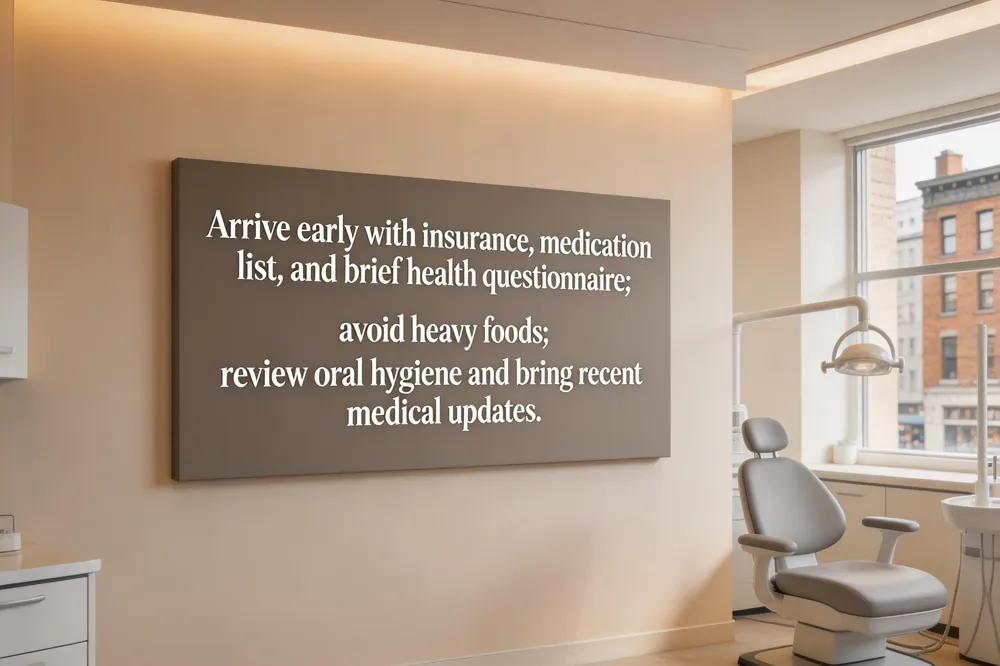 A successful dental visit starts with patient‑centered preparation. Arrive a few minutes early, bring your insurance card, a current medication list, and any recent medical updates. A light snack or a glass of water is fine, but avoid heavy meals or sugary drinks that could leave residue on your teeth.
Health‑history review – Before the exam you will complete a health questionnaire (or the Dental Examination Form PDF available on Empower Your Smile’s website). This form records allergies, medications, systemic conditions such as diabetes or heart disease, and any oral symptoms you’ve noticed. Accurate history lets the dentist tailor the exam, assess risk, and avoid drug‑interaction complications.
Exam workflow – The appointment begins with a brief review of your history, followed by a visual inspection of every tooth, gum, tongue, palate, and salivary glands. Digital panoramic and periapical X‑rays (exposing you to <0.01 mSv per image) are taken when indicated, and a thorough periodontal charting measures pocket depths. An oral‑cancer screening examines the lips, floor of mouth, throat, and neck. After the dentist’s findings, a hygienist performs scaling, polishing, and a fluoride or sealant treatment. Finally, the team discusses a personalized preventive plan and schedules your next visit.
By following these steps—thorough oral hygiene, timely paperwork, and clear communication—you’ll make the most of your comprehensive dental exam and set the stage for long‑term oral health.
Documentation Essentials: Forms, Templates, and Sample Reports
Dental Medical Report sample
Patient John Doe, DOB 03/12/1985, came in on 04/02/2026 with lower‑right molar sensitivity (tooth 30). History: no allergies or systemic disease. Exam: Class II cavity on tooth 30, healthy gingiva, probing 2–3 mm, Class I occlusion. Bitewing X‑rays confirm localized caries. Plan: composite filling, oral‑hygiene reinforcement, follow‑up in two weeks.
Dental clinical notes template PDF
Most practice‑management systems (e.g., Dentrix) provide a downloadable “Default Clinical Note Templates” PDF. It contains pre‑built administrative, anesthetic, exam, and SOAP‑style sections, editable for patient‑specific details, and can be imported into the EHR for consistent, audit‑ready documentation.
Comprehensive dental exam template
Starts with practitioner info and consent, captures presenting complaint, dental/medical/social history, then divides findings into extra‑oral, intra‑oral, oral‑cancer screen, periodontal charting, occlusion analysis, and hygiene status. Radiographic results, diagnosis, treatment options, costs, and follow‑up are documented, ending with patient signature.
Dental examination report
Organized into practitioner data, complaint, histories, clinical findings (extra‑ and intra‑oral), radiographs, diagnosis, and a treatment plan. Includes consent, cost estimate, and follow‑up instructions, ensuring clear communication for patients, specialists, and insurers.
Dental examination report sample
Patient Jane Doe, DOB 04/12/1990, mild upper‑right molar sensitivity. Findings: Class I occlusion, mild gingivitis, small caries on tooth #16 confirmed by bitewing. Diagnosis: early caries + gingivitis. Plan: hygiene instruction, scaling, composite restoration, consent obtained, six‑month recall.
Dental report PDF
A digital PDF summarizing oral‑health status, diagnoses, imaging, and treatment recommendations. Generated by practice software, it can be emailed or accessed via a patient portal for record‑keeping and insurance purposes.
Dental examination PDF
Printable form with sections for personal data, extra‑/ intra‑oral observations, periodontal measurements, and recommended care. Clinics often provide it for patients to review before visits.
Dental report for insurance claim
Include patient ID, service date, provider details, CDT procedure codes, ICD‑10 diagnoses, tooth numbers, place‑of‑service code, and coordination‑of‑benefits notes. Ensure all dates are four‑digit years and the form is fully completed before submission.
Dental report for school
Brief form documenting student name, DOB, school, and oral‑health status (untreated/treated decay, sealants, urgency of needed care). Signed by the dentist and returned to the school health office to meet inspection requirements.
Money Matters: Understanding Costs, Insurance, and Value
 Pricing transparency is key at Empower Your Smile. A routine dental exam and cleaning in New York City averages $200‑$300 nationally, but the practice often bundles the exam, full‑mouth digital X‑rays, and professional cleaning for a flat $325 fee, which most PPO plans cover at 100 %. Uninsured patients may see out‑of‑pocket costs rise to $700‑$963 for a comprehensive visit, though a basic exam and cleaning can stay near the $200‑$300 range. Insurance coverage typically bills the exam and cleaning directly to the provider, leaving little to no cost for the patient; cash‑paying clients benefit from the practice’s competitive, transparent pricing compared to Manhattan offices that charge up to $700 for the same service. Cost‑saving strategies include scheduling six‑month check‑ups to catch problems early—preventing expensive procedures—and taking advantage of new‑patient specials. Remember, the exam (diagnostic evaluation by the dentist) and the cleaning (plaque/tartar removal by a hygienist) are complementary; both are recommended twice yearly. For school‑required exams, a brief visual screening without X‑rays suffices, and Empower Your Smile can complete the necessary documentation to keep your child on track academically.
Beyond the Chair: Health Connections, Screening Tools, and Modern Options
 A comprehensive dental exam does far more than polish teeth; it can reveal systemic illnesses, detect early oral cancers, and employ cutting‑edge technology to keep patients healthy.
Can a dentist detect lymphoma? Yes. During routine visual and tactile screening, a dentist may spot persistent ulcerations, swelling, or non‑healing lesions on gums, palate, or tongue that mimic simple dental problems. When such atypical findings appear, the clinician can order targeted radiographs and refer the patient for an incisional biopsy. Early identification is crucial, as prompt oncology referral improves treatment outcomes and survival rates.
Dental screening for school. Early school‑entry exams catch cavities, gum disease, and malocclusion before they cause pain, missed classes, or speech issues. The American Academy of Pediatric Dentistry advises a “dental home” by age one and semi‑annual exams thereafter. Partnering with a practice like Empower Your Smile ensures fluoride varnish, sealants, and education are provided, reducing untreated disease and supporting academic performance.
Teeth test online. AI‑driven platforms (e.g., SmileScan, Dental.com SmartScan) let patients upload clear intra‑oral photos. The software flags tartar, inflammation, alignment problems, and early decay, delivering a personalized report and recommendations. If concerns arise, a virtual consult with a licensed dentist can be scheduled, and an in‑person visit arranged at Empower Your Smile for definitive care.
Putting It All Together – Your Checklist for a Successful Comprehensive Exam
Before you arrive, review the pre‑visit checklist: note any new symptoms, update your dental and medical history, and list current medications, especially those that cause dry mouth. Bring required documents such as your insurance card, photo ID, recent X‑rays or study casts, and a printed list of allergies or health conditions. During the exam, ask the right questions—clarify any findings on the X‑rays, inquire about your caries risk level, discuss oral‑cancer screening results, and request personalized oral‑hygiene tips. After the visit, follow post‑exam recommendations promptly: schedule any suggested follow‑ups, adopt the preventive care plan, and keep a record of future appointments to maintain optimal oral health.