Introducing Crown Lengthening: A Key to a Healthier, More Attractive Smile
What is Crown Lengthening?
Crown lengthening is a surgical dental procedure that reshapes the gum tissue—and sometimes the underlying bone—to expose more of a tooth's surface. This technique improves the balance and proportion between teeth and gums, boosting both oral health and smile aesthetics.
Purpose and Overview of the Procedure
The procedure serves two main purposes: cosmetic enhancement and restorative preparation. For cosmetic reasons, crown lengthening can correct a "gummy smile" by removing excess gum tissue, allowing teeth to appear longer and more symmetrical. It also plays a crucial role in restorative dentistry, especially when a tooth is broken or decayed below the gum line, by exposing enough tooth structure to support crowns, veneers, or bridges.
Performed swiftly and often completed within an hour, crown lengthening involves making small incisions to remove excess tissue and occasionally reshape bone. Patients typically undergo local anesthesia and experience minimal discomfort, with recovery times ranging from a few days to a few weeks.
Who Performs Crown Lengthening and Its Popularity in the U.S.
Certified periodontists and dental specialists commonly perform crown lengthening, emphasizing personalized and expert care. This procedure is widely accepted across the United States both for its cosmetic benefits and vital role in successful restorative treatments. Its ability to improve oral hygiene, reduce decay, and enhance smile confidence makes it a popular choice for patients seeking long-lasting dental health and beauty.
Understanding Esthetic Crown Lengthening: Enhancing Smile Aesthetics and Function

What is esthetic crown lengthening?
Esthetic crown lengthening is a Crown lengthening procedure that involves reshaping the gum tissue and sometimes the underlying bone to reveal more of the tooth structure. This treatment is often performed to enhance the appearance of a smile by creating a more balanced and proportionate gum-to-tooth ratio, especially in cases where gums cover too much of the teeth. It can also be used to prepare a tooth for restorative dental treatments such as crowns or veneers, by exposing enough healthy tooth structure. The procedure is typically carried out under local anesthesia in dental surgery to ensure patient comfort. At Empower Your Smile, our experienced team uses advanced techniques to perform esthetic crown lengthening effectively, helping patients achieve a natural, confident smile.
Definition and goals of esthetic crown lengthening
The main goal of esthetic crown lengthening is to improve the overall harmony of the smile by removing excess gum tissue and occasionally reshaping the underlying bone. This creates longer, more symmetrical teeth that look natural and appealing. The process is especially beneficial for those with a 'Gummy Smile Correction', where too much gum tissue is visible when smiling.
Procedural details including gum and bone reshaping
The procedure typically involves making small incisions in the gum tissue to carefully remove excess tissue and, if needed, a small amount of bone. This surgically exposes more of the tooth's surface for both cosmetic and functional purposes. Usually completed in less than an hour, the surgery is Minimally invasive procedures and requires a healing period during which swelling and mild discomfort are common but manageable.
Role in cosmetic and restorative dentistry
Beyond aesthetics, esthetic crown lengthening is vital for restorative dental treatments. It exposes enough tooth structure to properly support crowns, veneers, or other dental restorations, ensuring better long-term outcomes and healthier gums around the treated teeth. This dual purpose makes it an essential procedure in modern dental care.
Local anesthesia and patient comfort
To maximize patient comfort during the procedure, local anesthesia in dental surgery is administered. This numbs the area, making the treatment quick and generally painless. Post-procedure, patients are provided with specific aftercare instructions to promote healing and reduce discomfort, including the use of soft foods and gentle oral hygiene practices.
Key Benefits of Crown Lengthening for Oral Health and Appearance

What are the benefits of crown lengthening?
Crown lengthening procedure offers several significant benefits, both cosmetic and functional. This periodontal procedure improves improving smile aesthetics by removing excess gum tissue to correct a Gummy smile treatment revealing more of the natural tooth and creating a balanced, proportionate appearance. It can make teeth look longer and more symmetrical, boosting self-confidence and enhancing overall facial harmony.
Functionally, crown lengthening supports better oral hygiene by exposing more tooth surface, which makes cleaning more effective and reduces bacterial buildup that can cause Reducing risks of periodontal disease. Improved access around teeth helps maintain healthier gums and lowers the risk of gum inflammation.
Moreover, crown lengthening plays an essential role in restorative dental treatments. By exposing more of the tooth structure, it provides a stable foundation for Crowns and bridges preparation, particularly when teeth are broken, decayed, or have insufficient visible surface. This facilitates the proper fitting and long-term durability of restorations.
The procedure typically provides lasting, permanent results, requiring no repetition if performed correctly. Its ability to enhance both oral health and aesthetics makes it a valuable treatment for patients seeking restorative and cosmetic improvements. Patients often report higher satisfaction due to the functional benefits and the boost in smile confidence that Benefits of Crown Lengthening offers.
What to Expect: The Crown Lengthening Procedure and Recovery
What Does the Crown lengthening procedure Involve?
Crown lengthening is a surgical dental procedure commonly performed to expose more of a tooth's surface by reshaping the gums and sometimes the underlying bone. The process begins with local anesthesia in dental surgery to numb the treatment area, ensuring minimal discomfort.
Steps of the Procedure
- Small incisions are made to pull back the gum tissue.
- Excess gum tissue is carefully removed to reveal more of the tooth crown.
- In some cases, a small amount of bone is reshaped or removed to provide adequate tooth exposure.
- The gum tissue is then repositioned and sutured as needed.
This procedure is typically done in an outpatient setting and usually completes within 30 to 60 minutes.
What Happens After the Procedure?
Recovery involves mild soreness and swelling which can be managed with over-the-counter pain relievers and ice packs. Patients are advised to:
- Rinse gently with saltwater.
- Eat soft foods.
- Avoid brushing directly on the surgical site initially.
Healing Timeline
Initial recovery of the soft tissue soft-tissue generally takes about 1 to 2 weeks. If bone reshaping was involved, full healing may take 4 to 6 weeks or longer to ensure proper tissue adaptation.
Managing Sensitivity and Swelling
Postoperative tooth sensitivity to hot and cold is common due to increased tooth exposure but usually diminishes over time. Swelling is normal and can be controlled with proper rest and ice application.
Overall, crown lengthening is a safe and effective procedure with minimal downtime, leading to both aesthetic improvements and better dental restoration outcomes.
Potential Risks and Long-Term Effects to Consider with Crown Lengthening
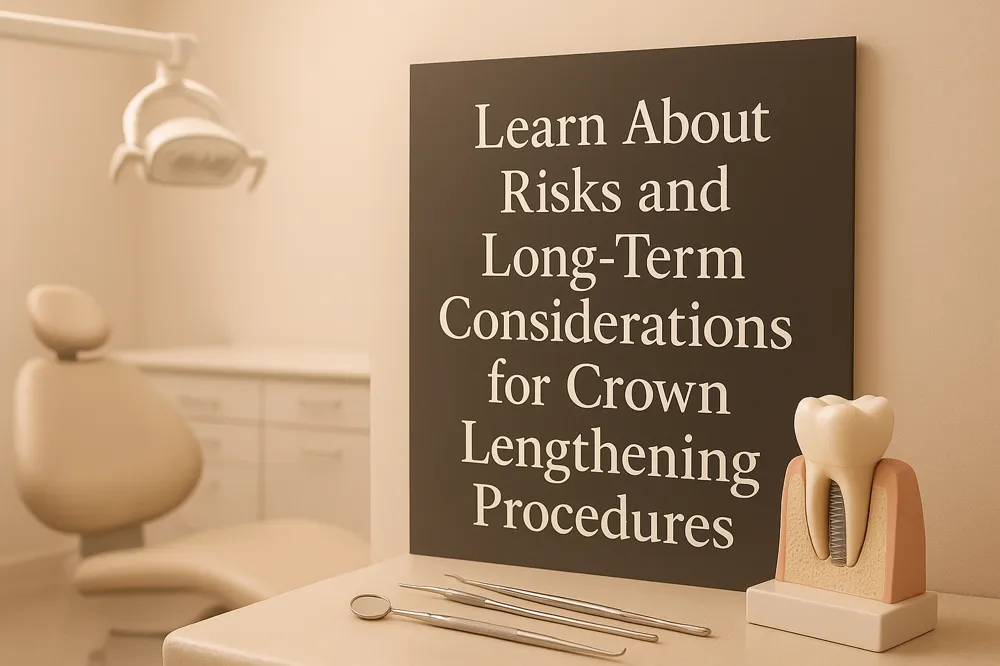
What are the potential disadvantages or complications of crown lengthening?
Crown lengthening procedure is generally a safe dental procedure but can involve some complications. Patients may experience pain, swelling, and mild bleeding during the recovery period. These symptoms are typically manageable with medication and proper care. However, there are risks such as damage to adjacent teeth or tissues and nerve irritation, which might cause numbness or heightened tooth sensitivity, especially to hot or cold foods.
Infections and excessive postoperative bleeding, although rare, can occur if proper hygiene is not maintained. Improper surgical technique or healing complications could also lead to less desirable aesthetic results, such as uneven gum lines or scarring. Additionally, gum tissue may sometimes partially regrow, affecting the long-term success and appearance of the procedure.
What are the risks of gum recession and bone loss?
During crown lengthening procedure, some bone removal is often necessary to maintain healthy gum attachment. This process, however, might contribute to some degree of bone loss, which could influence the tooth's stability over time. Excessive removal of gum tissue can lead to gum recession, exposing more of the tooth root and potentially increasing susceptibility to decay and sensitivity. Patients must understand these risks as they can impact both oral health and aesthetics in the long term.
How does tooth sensitivity and aesthetics get impacted?
Tooth sensitivity is a common after-effect due to the greater exposure of tooth surfaces following tissue removal. Sensitivity to temperature extremes or sweets may persist for weeks or longer post-procedure. Aesthetic changes can include visible gum line alterations and minor scarring. While many changes fade over time, careful surgical planning by a skilled specialist helps ensure improvements look natural and balanced.
Why is the expertise of specialists important in minimizing risks?
Having crown lengthening procedure performed by experienced periodontists or dental specialists significantly reduces risks. Skilled practitioners carefully evaluate each case to avoid damage to surrounding structures and preserve the biologic width — critical to periodontal health. They use precise surgical techniques, often employing lasers or guided tools, to promote quick healing, reduce discomfort, and achieve favorable cosmetic outcomes.
What are the long-term effects including stability and maintenance?
Long-term, crown lengthening provides durable improvements by exposing more tooth for restorations and facilitating better oral hygiene. However, ongoing maintenance is essential to monitor for symptoms such as gum recession or bone loss. Regular dental checkups help detect and manage any late complications. When done properly, the procedure supports tooth longevity and maintains a healthy, attractive smile over time.
| Aspect | Considerations | Impact |
|---|---|---|
| Pain and Swelling | Common post-op effects | Manageable with medication |
| Gum Recession | Possible if too much tissue removed | Can affect aesthetics and decay risk |
| Bone Loss | Reshaping bone to maintain biologic width | Potential for reduced tooth stability |
| Tooth Sensitivity | Due to exposed tooth surfaces | May require desensitizing treatments |
| Infection and Bleeding | Rare but serious if unmanaged | Requires prompt dental care |
| Surgical Expertise | Crucial for minimizing risks | Better healing and aesthetic results |
| Long-Term Stability | Needs monitoring and maintenance | Supports restorative success |
| Aesthetic Outcome | Influenced by technique and healing | Determines patient satisfaction |
Choosing the Right Specialist and Cost Considerations for Crown Lengthening

What type of dental specialist performs crown lengthening procedures?
Crown lengthening procedure is primarily performed by periodontists, specialists trained extensively in treating gum and bone issues. Their expertise ensures precise reshaping of gum tissue and, when necessary, the underlying bone to expose more of the tooth. This is crucial for both aesthetic improvements and preparing teeth for restorations like crowns and bridges. Periodontists evaluate each case carefully, using advanced techniques to contour the gum line and promote healthy healing through tailored post-operative care.
How much does esthetic crown lengthening typically cost?
The cost of esthetic crown lengthening varies widely based on procedure complexity. Basic gum recontouring often ranges from $50 to $350 per tooth, while more involved procedures that include bone reshaping may cost between $800 and $2,000 per tooth. For extensive treatments covering multiple teeth, total expenses might fall between $1,000 and $4,000. Insurance coverage often applies more readily to functional crown lengthening than cosmetic cases, possibly offsetting costs. Additional fees for X-rays, sedation, and follow-up visits should be considered.
Why is selecting an experienced professional important?
Choosing a qualified periodontist is vital for optimal results. Expert diagnosis and careful planning help ensure that the procedure addresses both aesthetic concerns and functional needs without compromising periodontal health. Experienced specialists can minimize risks like gum recession or bone loss, enhancing long-term prognosis and smile aesthetics.
What should patients expect during consultation and treatment planning?
During consultations, potential candidates receive individualized evaluations to determine if crown lengthening suits their needs. Specialists discuss the procedure details, recovery timelines, and cost estimates. Treatment plans are customized, often involving imaging and digital planning tools to maximize precision and patient satisfaction.
How do insurance considerations affect treatment?
Insurance providers typically cover crown lengthening more willingly when it's medically necessary—for example, to restore broken or decayed teeth—than when performed solely for cosmetic reasons. Patients should verify their coverage beforehand and ask about possible out-of-pocket expenses. Some practices offer financing options to assist with managing costs.