Why Aggressive Whitening Deserves a Closer Look
Aggressive teeth whitening refers to the use of high‑concentration peroxide gels (often 15‑35% hydrogen peroxide or 10‑22% carbamide peroxide) or prolonged exposure times that exceed the manufacturer’s recommendations. Many people assume that “the stronger the bleach, the better the result,” believing that over‑the‑counter products are as safe as dentist‑supervised treatments. This misconception ignores the fact that high peroxide levels can erode enamel, increase dentin permeability, and cause gum irritation or chemical burns. Patients are drawn to aggressive protocols because they promise rapid, dramatic shade changes—sometimes in a single office visit or within a few days at home—meeting the desire for an instant, camera‑ready smile in an age of video calls and social media. Understanding the definition, safety myths, and motivations behind these fast‑track approaches helps patients make informed choices and avoid long‑term oral health complications.
Understanding Aggressive Whitening: What It Is and Why It’s Used
 Is teeth whitening worth it?
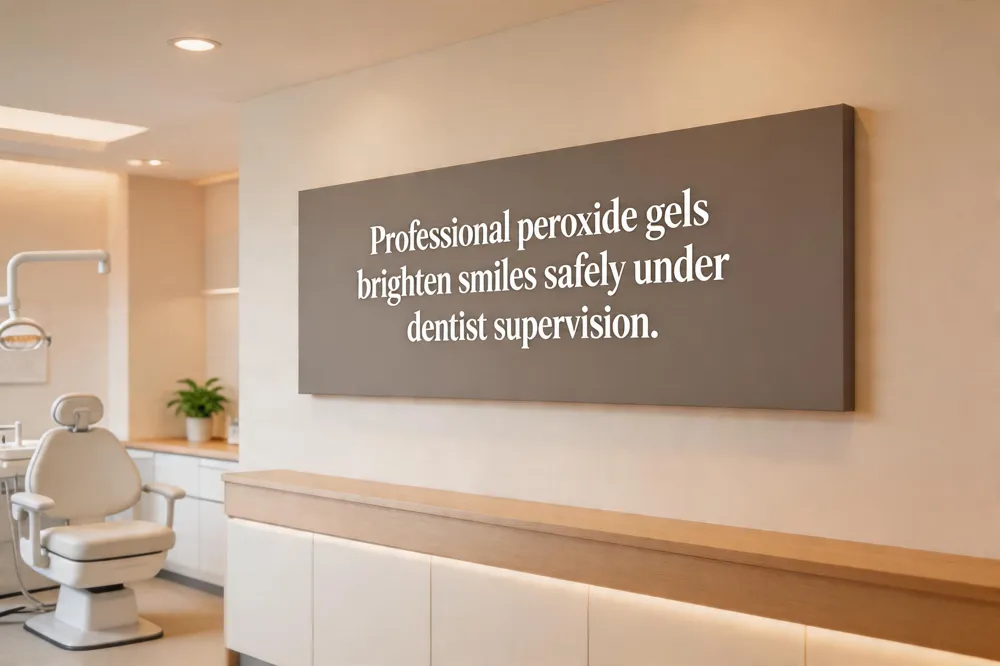
When performed under a dentist’s supervision, whitening is a safe, non‑invasive way to brighten a smile and boost confidence. Professional treatments deliver noticeable results in a single visit and can last several months to a year, making them more cost‑effective than over‑the‑counter kits that require months of use for modest changes. The higher peroxide concentration used by dentists reduces gum irritation and enamel damage, and the protocol can be customized for sensitivity. For most patients, the aesthetic improvement outweighs the investment.
Is teeth whitening worth it?
When performed under a dentist’s supervision, whitening is a safe, non‑invasive way to brighten a smile and boost confidence. Professional treatments deliver noticeable results in a single visit and can last several months to a year, making them more cost‑effective than over‑the‑counter kits that require months of use for modest changes. The higher peroxide concentration used by dentists reduces gum irritation and enamel damage, and the protocol can be customized for sensitivity. For most patients, the aesthetic improvement outweighs the investment.
Professional teeth whitening Dentists use high‑concentration peroxide gels (hydrogen peroxide up to 40 % or carbamide peroxide) that penetrate below enamel to break down surface and deeper stains. The gel may be activated with LED, laser, or Zoom light for faster results, or placed in custom‑fitted trays for at‑home use. Professional supervision minimizes gel leakage, ensures even coverage, and often includes desensitizing agents, reducing sensitivity compared with OTC strips or pens. Restorations such as crowns and veneers do not bleach, so results are best on natural teeth.
What kind of teeth whitening do dentists use? Dentists employ both in‑office light‑activated bleaching and take‑home tray systems. In‑office, a high‑strength peroxide gel is applied and activated for 15‑30 minutes; at‑home, custom trays hold the same gel for a prescribed daily wear time. Both approaches are controlled, monitored, and can incorporate protective barriers to safeguard gums and enamel.
Immediate Side Effects: Sensitivity, Gum Irritation, and Chemical Burns
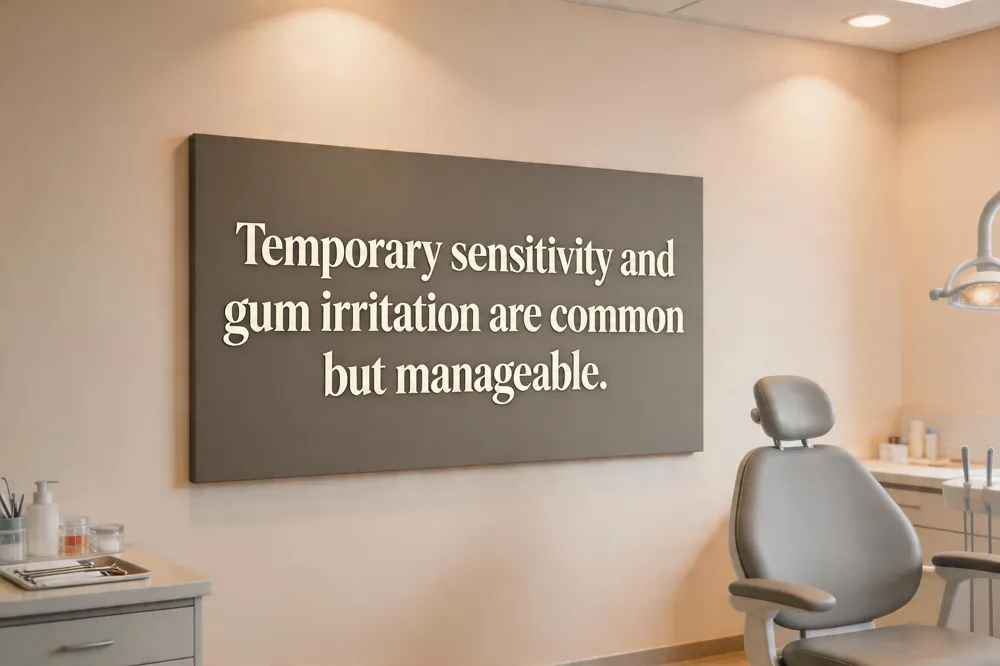 Teeth whitening works by allowing peroxide agents to penetrate the enamel, increasing its porosity and exposing dentin tubules. This temporary demineralization lets fluid flow in the tubules, which triggers the sharp, tingling pain many users describe as sensitivity to hot, cold, or sweet stimuli. When whitening gel contacts the gingiva, the oxidizing chemicals can irritate soft tissue, causing redness, swelling, or even small chemical burns if the gel remains in place too long. Laser‑activated whitening, which uses high‑concentration peroxide gels under light activation, shares these risks: transient sensitivity, gum irritation, and, with over‑use, enamel softening that may predispose the tooth to decay. Over‑the‑counter whitening strips also deliver peroxide directly to the tooth surface; improper placement or prolonged wear can heighten sensitivity, erode enamel, and produce uneven results. While most people experience only mild discomfort that resolves within a few days, those with thin enamel, existing gum disease, or dental restorations should seek professional supervision. Desensitizing toothpaste, fluoride gels, and protective barriers can mitigate these immediate side effects and help preserve enamel integrity.
Long‑Term Risks: Enamel Erosion, Translucency, and Pulp Damage
 Frequent or aggressive whitening can permanently alter tooth structure. Repeated peroxide exposure makes enamel more porous, leading to demineralization, increased permeability, and eventual erosion. As the protective layer thins, the underlying yellow dentin may become visible, giving teeth a translucent, chalky appearance. The same permeability facilitates diffusion of irritants into dentin tubules, which can trigger pulp inflammation (pulpitis) and, in severe cases, nerve damage that persists beyond the typical few‑day sensitivity period.
Q: Are there long‑term side effects of teeth whitening?
A: Yes. Over‑use can cause lasting enamel erosion, translucency, chronic sensitivity, and gum irritation or recession. Limiting treatments to one or two times per year and using dentist‑supervised trays minimizes these risks.
Q: Is teeth whitening bad for your health?
A: When used as directed, whitening is safe for most adults, with only temporary sensitivity and gum irritation. Misuse of high‑concentration products can increase enamel permeability, raise decay risk, and cause gum burns, but professional supervision greatly reduces systemic health concerns.
Q: Can professional teeth whitening harm your teeth?
A: Properly performed professional whitening causes minimal enamel alteration that natural remineralization repairs. Harm arises mainly from over‑treatment or DIY kits that erode enamel and heighten sensitivity.
Q: What can go wrong with teeth whitening?
A: Possible issues include heightened sensitivity, gum irritation or chemical burns, uneven shade, translucency, and allergic reactions. Restorations such as crowns or veneers do not bleach, leading to mismatched aesthetics.
Q: Why do dentists not recommend teeth whitening?
A: Dentists caution against aggressive bleaching because high‑concentration peroxide can erode enamel, cause pulpitis, and irritate gums. Unsupervised at‑home use may mask underlying dental problems and damage restorations, so supervised, calibrated treatments are preferred.
Managing Discomfort: Pain Relief, Desensitizing Strategies, and Post‑Care
 Over‑the‑counter painkillers such as ibuprofen (200‑400 mg every 6‑8 h) are the most effective for whitening‑induced sensitivity; acetaminophen 500‑1000 mg is a good alternative for those who cannot take NSAIDs. Desensitizing toothpastes work by blocking dentinal tubules—potassium nitrate reduces nerve excitability, while stannous fluoride or fluoride alone promotes remineralization. Begin using these pastes a few days before treatment and continue for at least a week afterward. Home care includes rinsing with a warm salt‑water solution, avoiding hot, cold, or acidic foods for 24‑48 h, and using a soft brush. For persistent "zingers," combine a desensitizing toothpaste with a fluoride mouth‑rinse and, if needed, a short course of ibuprofen. If pain is severe, lasting beyond 48 h, or accompanied by swelling, stop the product, apply a cold compress, and see a dentist promptly for professional fluoride gel or a reassessment of the whitening protocol.
Practical Guidance: Safe Use, Frequency, and Maintenance
 The ADA limits over‑the‑counter peroxide to ≤10% carbamide peroxide, while professional whitening may reach 35%–40% under dentist supervision. Space professional whitening no more than once or twice a year (≈6‑12 months) to allow enamel remineralization; custom at‑home trays can be used every 3‑6 months. Costs vary: in‑office bleaching $300‑$800, dentist‑made trays $150‑$400, OTC kits $5‑$80; many practices offer financing. Results typically last 6‑12 months for professional kits, 3‑6 months for OTC strips, and only days‑weeks for whitening toothpaste. Maintenance habits—avoiding staining foods, using a straw, brushing twice daily, and regular cleanings—extend brightness. Sensitivity, gum irritation and uneven shade are common issues; desensitizing toothpaste, fluoride varnish, and proper tray fit mitigate them. For permanent results, schedule periodic touch‑ups and follow dentist‑recommended protocols.
Balancing Brightness and Safety: Your Path to a Healthy, Confident Smile
Teeth whitening can produce dazzling results, but it also carries risks such as increased sensitivity, enamel demineralization, gum irritation, and uneven shade when restorations are present. Managing these issues means limiting treatment frequency, using peroxide concentrations no higher than 10% carbamide peroxide for at‑home kits, applying fluoride or desensitizing agents, and allowing ample remineralization time between sessions. Professional supervision is essential—dentists can assess enamel health, fit custom trays, protect gingiva, and monitor pulp response, dramatically reducing complications. Take the next step toward a safe, beautiful smile by scheduling a personalized consultation with your dentist today.