Introduction to Maintaining Your Bright Smile After Whitening
Importance of Professional Teeth Whitening
Professional teeth whitening is a highly effective cosmetic dental treatment that significantly enhances your smile's brightness, offering safer and quicker results than over-the-counter alternatives. This procedure uses higher concentrations of bleaching agents like hydrogen peroxide to remove deep and surface stains, delivering dramatic and long-lasting whitening effects.
Common Causes of Tooth Discoloration
Teeth can discolor due to various factors including consumption of pigmented foods and beverages such as coffee, tea, red wine, and berries. Tobacco use is another major contributor to staining, along with the natural aging process and certain medications. Environmental elements like plaque buildup and acidic foods can also weaken enamel and increase susceptibility to stains.
Overview of Maintaining Whitening Results
Maintaining the results from professional whitening involves a combination of good oral hygiene, mindful dietary choices, and regular dental visits. Brushing twice daily with fluoride or whitening toothpaste, flossing daily, and rinsing after consuming staining foods help protect your teeth. Avoiding tobacco and using straws with pigmented drinks reduce direct contact with enamel. Additionally, adhering to post-treatment care—like consuming light-colored foods and avoiding acidic or dark substances for the first 48 hours—helps preserve your bright smile for months or even years.
Immediate Post-Whitening Care: Setting the Foundation for Long-Lasting Results

What should I do immediately after having my teeth whitened?
Immediately after teeth whitening, it's essential to follow a "white diet" for at least 24 to 48 hours. This means consuming only light-colored, non-acidic foods such as:
- Milk, yogurt, and cheese
- White pasta and rice
- Skinless chicken, white fish, and eggs
- Potatoes (peeled), tofu, bread, and oatmeal
- Light fruits like bananas and apples
Avoid foods and drinks that can easily stain teeth, such as coffee, tea, red wine, berries, tomato sauce, soy sauce, soda, and chocolate. Tobacco products should also be strictly avoided since they cause deep staining and can irritate sensitive teeth. For more on preventing teeth discoloration after whitening, see this helpful guide.
Managing post-whitening sensitivity
Some sensitivity and gum irritation are normal and may last 1 to 3 days post-treatment. To ease discomfort, use anti-sensitivity toothpaste with fluoride and avoid very hot or cold foods and drinks. Over-the-counter pain relief can also be helpful if needed. For detailed teeth whitening sensitivity and discomfort information and care tips, check this resource.
Hydration and remineralization benefits
Drinking plenty of water helps flush away residual bleaching agents and food particles that might cause staining. Staying hydrated supports saliva production, which naturally protects enamel and reduces acidity. Using remineralizing gels or fluoride mouthwash can aid in restoring minerals to the enamel, decreasing white spots caused by dehydration. Learn more about teeth whitening effects and enamel care.
Timely oral hygiene practices post-treatment
Brush gently twice daily with a non-abrasive, fluoride toothpaste to protect enamel and remove plaque. Floss daily to clean between teeth. Avoid brushing immediately after consuming acidic foods; wait about 30 minutes to safeguard enamel integrity. Rinsing with water after eating or drinking pigmented substances can minimize staining. For comprehensive advice on oral hygiene for whitening and proper post-whitening care, refer here.
Following these immediate post-whitening care steps will help maintain your bright, healthy smile for months to come. For extended guidance on maintaining teeth whitening results, consider consulting the linked expert advice.
Essential Do’s and Don’ts After Teeth Whitening for Optimal Maintenance

Avoiding common staining agents
After professional teeth whitening, it is crucial to avoid consuming stain-causing substances such as coffee, tea, red wine, dark sodas, berries, tomato sauce, soy sauce, and chocolate for at least 24 to 48 hours. These foods and drinks can quickly diminish whitening results by re-staining the enamel before the protective pellicle layer fully regenerates. Using a straw to reduce teeth staining when drinking staining beverages can significantly reduce contact with the teeth, minimizing discoloration. Rinsing after consuming staining foods mouth with water immediately after consuming pigmented or acidic foods also helps flush away pigments and acids that can erode enamel and cause stains.
Strategies to prevent sensitivity and discomfort
Teeth whitening sensitivity and discomfort may temporarily increase tooth sensitivity and gum irritation, often lasting one to three days. This occurs because bleaching agents open enamel pores, exposing nerve endings to stimuli. To reduce discomfort, avoid consuming hot or cold foods and beverages immediately after treatment. Using desensitizing toothpaste or gels before and after whitening can strengthen enamel and soothe teeth. Over-the-counter pain relief, like ibuprofen, may be helpful if needed. Hydration and reducing staining beverages by drinking plenty of water supports enamel remineralization and reduces sensitivity.
The role of tobacco cessation in whitening maintenance
Tobacco products, including smoking and chewing, cause deep, stubborn stains on teeth and worsen oral health. Avoiding tobacco after whitening is essential to preserve a bright, white smile. Quit smoking to prevent teeth stains significantly reduces discoloration risk and supports gum health, reducing the chance of staining and other complications.
When to brush teeth and how to do it safely
It is recommended to wait at least 30 minutes to an hour after whitening before brushing teeth to avoid irritating sensitive enamel. During this time, rinse with water post-whitening or a fluoride mouthwash to neutralize acidity and help soothe sensitivity. When brushing, use a soft-bristled toothbrush with fluoride toothpaste for enamel strengthening or one formulated for sensitive teeth. Brush gently to remove plaque without damaging enamel. Replace toothbrushes or brush heads regularly, ideally every three months, to maintain cleaning effectiveness.
Use of remineralizing and desensitizing products
Remineralizing agents, such as fluoride gels, varnishes, or toothpastes containing calcium and phosphate, aid in restoring enamel minerals that may be depleted during whitening. White stains after teeth whitening can be reduced by these products. Whitening toothpaste approved by dental associations helps remove surface stains and maintains brightness without harming enamel. Whitening-specific mouthwash with hydrogen peroxide can also support whitening effects occasionally. Always follow your dentist’s recommendations for product use and frequency of touch-up treatments to balance results and tooth sensitivity.
Long-Term Strategies for Sustaining White Teeth After Professional Whitening
How should I maintain white teeth after professional whitening?
Maintaining white teeth long-term requires a consistent oral hygiene for whitening routine. Brushing twice daily with fluoride toothpaste and floss regularly to remove plaque and prevent surface stains. Limiting intake of stain-causing foods and beverages such as coffee, tea, red wine, and berries reduces the risk of discoloration. Drinking water and rinsing your mouth after consuming these items helps flush away pigments before they adhere to enamel. Avoiding tobacco products is vital, as smoking significantly stains teeth and damages oral health.
What are some best practices for maintaining dental whitening at home?
Good oral care at home supports whitening effects. Use ADA-approved whitening toothpaste and consider peroxide-containing mouthwashes to help remove surface stains gently. Be cautious of DIY whitening methods such as charcoal or acidic substances, which may harm enamel. Replace toothbrushes every three months for effective plaque removal. Chewing sugar-free gum can stimulate saliva, which naturally protects teeth.
Limiting and managing stain-causing foods and beverages
Stain-inducing items like coffee, tea, red wine, dark sodas, tomato sauces, and berries should be consumed sparingly. When drinking colored beverages, use a straw to reduce direct contact with teeth. After eating or drinking stain-causing substances, rinse with water promptly or brush gently after 30 minutes to minimize staining effects.
Importance of regular dental check-ups and cleanings
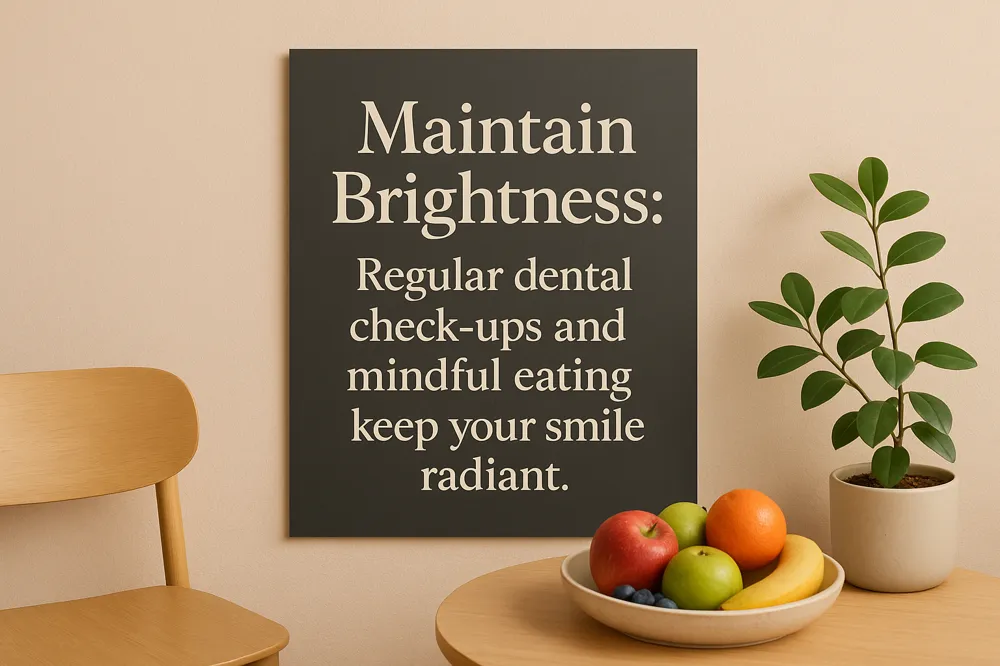
Professional dental visits every six months remove plaque, tartar, and stubborn stains. Dentists can monitor the health of your teeth and gums, assess the longevity of whitening results, and offer personalized advice. Touch-up whitening treatments are often recommended every 6 to 12 months depending on lifestyle and consumption habits, ensuring sustained brightness.
Smoking cessation benefits
Quitting smoking greatly benefits both oral and overall health. Tobacco use causes deep, persistent stains and contributes to gum disease and oral cancer risks. Avoiding tobacco preserves whitening effects and enhances your smile's health and appearance.
Recommended timing and frequency of touch-up treatments
Whitening results typically last between six months to two years, influenced by your habits and oral care. Dentists suggest touch-up treatments approximately every 6 to 12 months for those frequently exposed to staining agents. These treatments refresh tooth color safely and help maintain the bright, white smile gained from professional whitening.
Maintaining white teeth beyond professional whitening involves disciplined oral hygiene, dietary mindfulness, regular dental care, and lifestyle choices. Together, these strategies ensure your smile remains radiant and healthy for the long term.
Understanding Whitening Treatments and Their Impact on Your Smile
What types of teeth whitening treatments are offered by dentists?
Dentists provide several options for teeth whitening treatments tailored to different needs and preferences. In-office procedures use high-concentration peroxide gels, often activated by special light, to deliver rapid and noticeable whitening results in a single visit. At-home treatments supplied by dentists include custom-fitted trays filled with bleaching gels containing peroxide, allowing gradual whitening over days or weeks with controlled usage. Over-the-counter options, such as whitening strips, gels, and pens, generally have lower peroxide levels and are less potent. Whitening toothpastes, typically containing mild abrasives and some peroxide, help maintain brightness but are not as effective for deep stains. Consulting a dentist ensures selection of the safest, most effective treatment suitable for your dental health and cosmetic goals.
What ingredients should I avoid in teeth whitening products?
Choosing the right whitening product is crucial to protect your enamel and gums. Avoid high concentrations of hydrogen peroxide or chlorine dioxide outside professional supervision, as they can erode enamel and increase tooth sensitivity or cause lasting damage. Be cautious of abrasive substances like baking soda, which can wear enamel with frequent use. Acidic ingredients such as lemon juice or citrus extracts may demineralize and weaken teeth, raising decay risk. Additionally, watch for Sodium Lauryl Sulfate (SLS), an irritant linked to gum sensitivity and mouth sores. Only use ADA-approved products recommended by your dentist to minimize risk and ensure effective results (Whitening treatment options).
How do dental evaluations influence whitening treatment?
A thorough dental exam before whitening helps identify existing restorations like crowns or veneers, which will not whiten and may affect the overall appearance. This assessment also checks enamel health to prevent problems such as excessive sensitivity or decay post-treatment. Dentists customize whitening plans based on oral condition, stain type, and desired outcomes, maximizing safety and satisfaction.
What are the differences between in-office and at-home whitening?
In-office whitening offers faster, more dramatic results during a single visit using stronger agents and professional techniques. At-home whitening with dentist-provided trays delivers gradual improvement and allows flexible timing but requires patient compliance over several weeks. Both methods use peroxide-based gels, but concentrations differ to balance effectiveness and sensitivity (Professional teeth whitening treatments).
What limitations arise from dental restorations?
Crowns, porcelain veneers, and fillings do not respond to bleaching agents, potentially leading to uneven coloration after whitening natural teeth. Dentists may recommend replacing restorations after whitening or advise alternative cosmetic solutions for a harmonized smile (Impact of dental restorations on whitening).
| Treatment Type | Peroxide Concentration | Application Setting | Result Speed | Suitability |
|---|---|---|---|---|
| In-office Whitening | High (e.g., 25-40%) | Dental Clinic | Immediate (single session) | Rapid, dramatic change; professional supervision needed |
| Dentist at-home Trays | Moderate (e.g., 10-22%) | Home | Gradual (days to weeks) | Controlled use; gradual whitening; flexible schedule |
| Over-the-counter | Low (varies) | Home | Slow to moderate | Suitable for light stains; less reliable results |
| Whitening Toothpaste | Very low (abrasives + peroxide) | Home | Maintenance | Helps remove surface stains; not for significant whitening |
Maintaining safe whitening practices and understanding treatment options empower you to achieve a bright smile without compromising oral health (Teeth Whitening Maintenance Tips).
Enhancing Whitening Effects Through Lifestyle and Diet Choices

What foods and drinks should I avoid after teeth whitening?
After teeth whitening, it’s important to avoid colored beverages like coffee, tea, soda, and red wine, as well as dark sauces (such as soy sauce and tomato-based sauces). Citrus and other acidic fruits, high-sugar foods and drinks, and tobacco products should also be limited or avoided. These substances can stain teeth and irritate sensitive enamel during the critical first 24 to 48 hours post-treatment. For detailed guidance, see Foods to Avoid After Teeth Whitening.
Impact of diet and lifestyle on whitening longevity
The longevity of whitening results generally spans from six months up to three years and can be shortened by frequent consumption of staining foods and drinks or tobacco use. Smoking especially causes significant yellowing and deep stains that diminish whitening effects. Learn more about Lifestyle Impact on Whitening.
Benefits of a balanced diet rich in calcium and fiber
A diet rich in calcium (found in dairy products) and fiber (from fruits and vegetables) supports strong enamel and overall oral health. This sustains whitening results by reducing susceptibility to stains and decay. For more about Diet for Oral Health.
How hydration and saliva aid enamel protection
Drinking plenty of water flushes away food particles and stain-causing substances. Additionally, saliva production, stimulated by hydration and chewing sugar-free gum, helps neutralize acids and remineralize enamel to prevent discoloration. See Drinking Water for Teeth Whitening and Chewing Sugar-Free Gum Benefits.
Techniques to reduce staining from beverages
Using a straw when drinking pigmented beverages minimizes direct contact with teeth, lowering stain formation. Rinsing the mouth with water immediately after consuming staining foods or drinks also helps wash away pigment residues before they settle on enamel. More on Using a Straw to Prevent Teeth Stains, and Rinsing After Consuming Staining Foods.
Avoiding acidic and highly pigmented foods post-whitening
For the first 48 hours after whitening, consuming light-colored, non-acidic foods like pasta, rice, chicken, white fish, yogurt, and eggs is recommended. Acidic and pigmented foods in this period can weaken enamel and increase stain risk. Refer to First 48 Hours Post-Whitening Care and Avoid Acidic Foods After Whitening.
Role of sugar-free gum and rinsing practices
Chewing sugar-free gum after meals boosts saliva flow to help clear food debris and acids. Rinsing with water or an ADA-approved whitening mouthwash further prevents stain buildup and supports enamel strength. For more information see Whitening-Specific Mouthwash with Hydrogen Peroxide and Proper Oral Hygiene After Whitening.
Following these diet and lifestyle choices helps enhance and maintain a brilliant white smile long after professional whitening treatments.
Summary and Final Tips for a Lasting White Smile
Recap of Maintenance Strategies
To keep a bright smile after professional teeth whitening, maintain excellent oral hygiene by brushing twice daily with fluoride or whitening toothpaste and flossing daily. Avoid or limit stain-causing foods and drinks like coffee, tea, red wine, berries, and tomato-based sauces. Use a straw when drinking colored beverages and rinse your mouth with water promptly afterward. Stay hydrated and consume calcium-rich, non-acidic foods to support enamel health.
Follow Professional Guidance
Adhering to your dentist's recommendations, including using whitening touch-up treatments every 6 to 12 months, helps extend whitening results safely. Avoid tobacco products, as they cause deep stains and harm oral health. Manage any post-whitening sensitivity with appropriate dental products and avoid acidic or hot and cold foods for a few days after treatment.
Importance of Regular Dental Visits
Regular dental check-ups and professional cleanings, ideally every six months, remove plaque and surface stains, monitor the health of your teeth and restorations, and help maintain a lasting white smile. Combining professional care with consistent personal oral hygiene is the best approach to enjoy the benefits of teeth whitening over time.