Your Quick Path to a Confident Smile
Modern, Discreet Orthodontic Care
Invisalign offers a modern alternative to traditional braces, using a series of clear, removable aligners. These custom-made trays are designed to gently shift your teeth into optimal positions over time. The discreet nature of the treatment makes it a popular choice for adults and teens seeking an effective yet subtle way to straighten their smile.
Understanding the Treatment Timeline
On average, Invisalign treatment takes 12 to 18 months to complete. For many patients, this timeline is often about 50% faster than treatment with traditional metal braces. The actual duration can vary significantly, from as little as 3 months for minor adjustments to over 2 years for complex cases. Your specific timeline depends on the complexity of your alignment needs and your individual response to treatment.
Your Commitment Drives Your Results
While your orthodontist designs a precise treatment plan, the speed of your progress is largely in your hands. Your consistent commitment to wearing and caring for your aligners is the most critical factor for achieving faster results. This patient-centered approach means that following professional guidelines closely can directly influence how quickly you reach your smile goals.
Actionable Insights for a Faster Journey
This guide will share actionable, evidence-backed strategies to help you compress your treatment timeline. From mastering daily wear time to utilizing specific tools and maintaining impeccable oral health, these practical tips are designed to optimize every phase of your Invisalign journey. Each recommendation is grounded in proven orthodontic principles to support efficient tooth movement.
A Partnership for Your Smile
At our practice, we believe in a collaborative, patient-centered approach. We empower you with the knowledge and tools needed for success, providing clear guidance and consistent support throughout your treatment. Our goal is to help you navigate your orthodontic journey with confidence, ensuring you feel informed and motivated every step of the way toward your new smile.
Key Facts About Accelerating Invisalign Treatment
- Adhering to the 22-hour daily wear rule can reduce total treatment time by an average of 20%.
- Maximizing wear time in the first 48 hours with a new aligner capitalizes on peak pressure to accelerate tooth movement.
- Using chewies can improve aligner seating by up to 50%, ensuring a perfect fit for faster progress.
- Maintaining excellent oral hygiene can lead to 15% faster tooth movement compared to poor hygiene.
- Clean aligners daily with mild soap and cool water; avoid toothpaste and hot water to prevent damage and bacterial buildup.
- Changing aligners too early can cause pain, poor tracking, and root damage, leading to significant treatment delays.
- Drink only water with aligners in to prevent stains, warping, and tooth decay; remove for all other beverages.
- Advanced technologies like AcceleDent and Propel can potentially reduce treatment time by 30-50%.
- The fastest possible Invisalign treatment for minor corrections can be completed in 3 to 6 months.
- Skipping orthodontist check-up appointments can disrupt your treatment plan, potentially adding weeks or months to your timeline.
1. Embrace the 22-Hour Rule (It's Not a Suggestion)

Understanding the Golden Rule
The cornerstone of a fast and successful Invisalign treatment is unwavering adherence to the daily wear schedule. Orthodontists universally prescribe wearing your clear aligners for 20 to 22 hours every single day. This isn't a flexible guideline; it's the essential mechanism for achieving predictable tooth movement.
Why Consistency Is Non-Negotiable
Invisalign works by applying gentle, continuous pressure to guide teeth into their new positions. Removing the aligners interrupts this pressure, causing teeth to stall or even drift back toward their original location. Every hour your aligners are out delays progress and can extend your overall treatment timeline. Consistent wear keeps the biological process of bone remodeling on a steady, planned course.
The Tangible Time-Saving Benefit
Complying with the 22-hour rule doesn't just keep you on schedule; it can actively accelerate your results. Data cited in orthodontic literature indicates that patients who consistently achieve 22 hours of daily wear can reduce their total treatment time by an average of 20% compared to those who wear them less. For a typical 12-month treatment plan, this disciplined approach could shorten it to approximately 9.5 months.
Practical Strategies to Hit Your Target
Achieving 22 hours requires planning and habit integration. Use these actionable tips to make compliance seamless:
- Plan Your Meals: Consolidate eating and drinking (anything besides water) into structured mealtimes. Avoid frequent snacking to minimize removal frequency.
- Leverage Technology: Use a phone timer, a dedicated app, or a smartwatch to track your daily wear time accurately.
- Maximize Overnight Wear: Switching to a new set of aligners at bedtime and sleeping through the initial adjustment period provides several uninterrupted hours of wear.
- Integrate into Routine: Wear your aligners during sedentary activities like working at a desk, watching TV, or commuting.
- Carry a Kit: Always have your aligner case and a travel toothbrush to make post-meal reinsertion quick and easy when you're away from home.
A Warning Against Overcorrection
It is crucial to follow your orthodontist's specific instructions precisely. Wearing your aligners for more than the recommended 22 hours per day does not speed up treatment. Excessive wear can place unhealthy stress on teeth and gums, potentially causing damage, pain, and setbacks that require professional intervention, ultimately delaying your progress.
2. Master the First 48 Hours with Every New Tray
Jump-Starting Each Treatment Phase
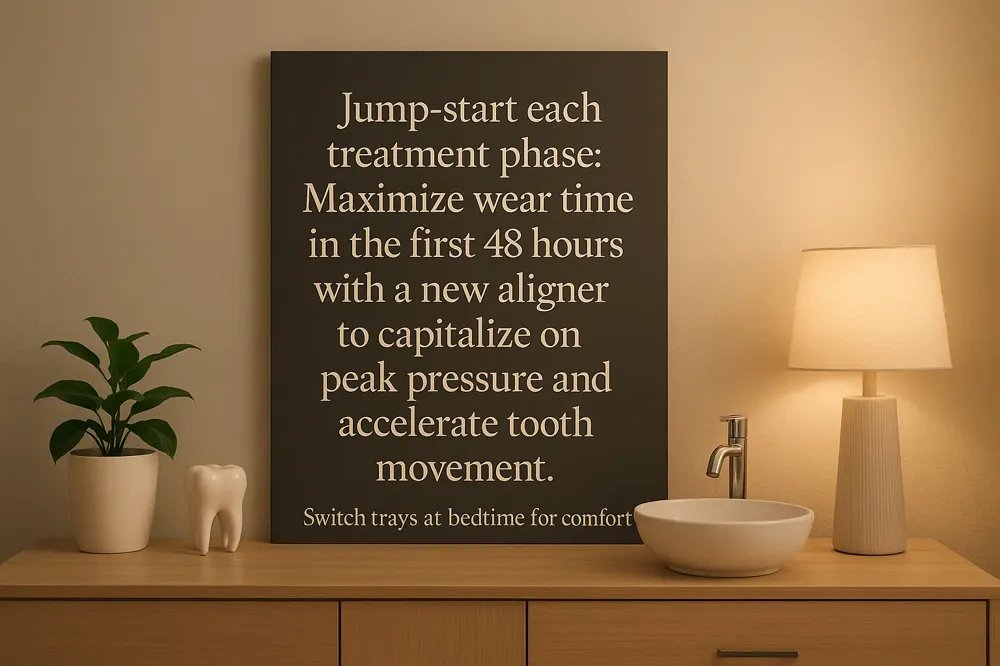
The initial two days after switching to a new set of Invisalign aligners are a pivotal window for accelerating your overall treatment timeline. Orthodontic experts consistently highlight this period as a critical opportunity to ‘jump-start’ progress for each new phase. During these first 48 hours, the programmed forces from the fresh aligner are at their peak intensity. Maximizing wear time during this window capitalizes on this pressure, efficiently initiating the planned tooth movements that will continue over the following one to two weeks.
Intensive Initial Wear Recommendations
To optimize this critical period, a specific protocol is recommended. You should aim to wear your new aligners almost non-stop, removing them only for essential, brief breaks. These breaks are strictly for eating, drinking anything other than water, brushing your teeth, and flossing. The goal is to minimize the cumulative time the aligners are out of your mouth during these initial two days. This concentrated effort ensures your teeth are under consistent, optimal pressure as they begin their transition to the new position.
Why This Strategy Accelerates Movement
This intensive initial wear serves a clear biological and mechanical purpose. It helps teeth adjust quickly to the new aligner’s configuration, reducing any lag time in the movement process. By seating the aligner fully and maintaining constant contact, you allow the gentle force to work most effectively from the very start. This sets a strong foundation for the remainder of the wear cycle, promoting steady, predictable movement. Essentially, you are ensuring each aligner works at its maximum potential right from the beginning.
A Practical Tip for Comfort
A common and highly effective strategy is to schedule your aligner change for right before bedtime. Switching to a new set at night allows you to sleep through the initial hours of tightness and potential discomfort. By morning, the most intense part of the adjustment period has often passed. This simple timing trick can make the transition smoother and more comfortable, making it easier to adhere to the intensive 48-hour wear protocol.
| Action | Recommended Protocol During First 48 Hours | Key Benefit |
|---|---|---|
| Wear Time | Aim for near-continuous wear, 22+ hours/day. | Maximizes initial pressure for faster tooth movement. |
| Removal Breaks | Only for eating, drinking, and oral hygiene. | Minimizes disruption to the critical adjustment phase. |
| Change Timing | Switch to new aligners right before bedtime. | Sleep through initial tightness and discomfort. |
| Aligners Seating | Use chewies frequently after insertion. | Ensures perfect fit for optimal force application. |
3. Become a Chewie Champion for a Perfect Fit
Do Chewies make Invisalign work faster?
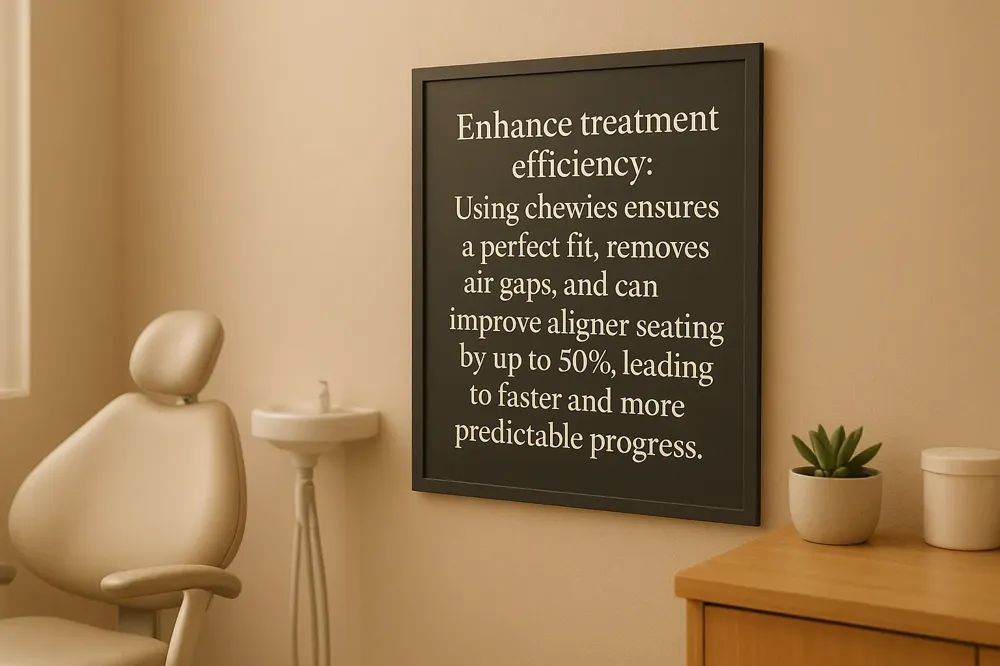
Yes, using chewies can accelerate your Invisalign progress. These small, soft foam or plastic cylinders help your aligners fit perfectly by removing tiny air bubbles between the plastic and your teeth. This ensures optimal, consistent pressure is applied, making tooth movement more efficient and predictable.
How Chewies Enhance Treatment Efficiency
A snug fit prevents tracking issues that could require refinement aligners later. When aligners are seated correctly, each set can do its job more effectively. This means your teeth are more likely to reach their target positions on schedule, avoiding setbacks.
The Impact on Treatment Speed
Consistent use of chewies can improve aligner seating by up to 50%. This directly contributes to faster progress. While chewies are a valuable tool, they work alongside the fundamental rules: wearing aligners for 20-22 hours daily and following your orthodontist's change schedule are still paramount.
Proper Chewie Protocol for Best Results
For maximum benefit, bite down gently on your chewie for 5 to 15 minutes. Focus on moving it around your mouth to cover all teeth. This is especially important when you first insert a new set of aligners. Make it a part of your routine after meals and before bed.
| Chewie Benefit | How It Works | Recommended Usage |
|---|---|---|
| Eliminates Air Gaps | Creates vacuum seal between aligner & tooth | Bite gently for 5-15 min sessions |
| Ensures Optimal Pressure | Allows aligner to apply full, intended force | Use especially after inserting new trays |
| Promotes Correct Tracking | Guides teeth into precise aligner positions | Roll chewie around entire arch |
| Prevents Treatment Delays | Reduces need for mid-course corrections | Incorporate into daily hygiene routine |
4. Prioritize Impeccable Oral Hygiene: Clean Teeth Move Faster
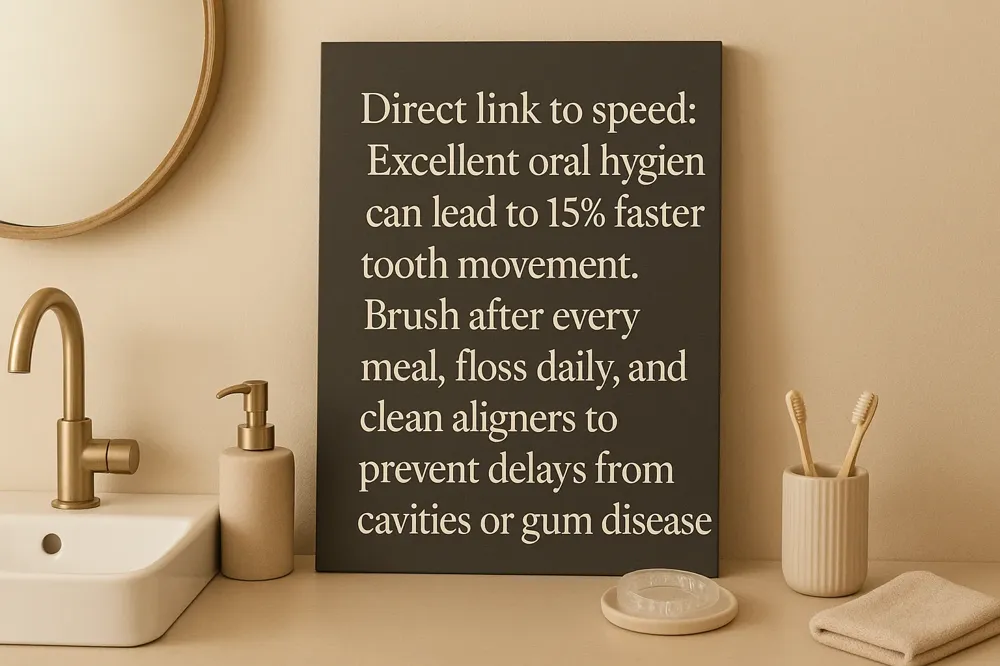
Establish the direct link between oral health and treatment speed: plaque, inflamed gums, and cavities create resistance to tooth movement.
Oral health is not just a side consideration during Invisalign treatment; it's a fundamental driver of its speed. When gums are inflamed due to plaque buildup, they resist the gentle pressure applied by the aligners. This inflammation can slow or even stall tooth movement. Similarly, the development of cavities necessitates pausing orthodontic work to address the decay. A mouth free from plaque and infection allows teeth to move more predictably and efficiently along the planned path, helping you achieve faster Invisalign results.
Cite that excellent hygiene can lead to 15% faster tooth movement compared to poor hygiene.
Studies underscore the tangible impact of hygiene on treatment timelines. Research presented at the American Association of Orthodontists (AAO) indicates that maintaining excellent oral hygiene can lead to approximately 15% faster tooth movement compared to poor hygiene practices. This significant time saving highlights how proactive care directly contributes to achieving a straighter smile sooner and is a key part of maintaining good oral health with Invisalign.
Detail the essential routine: Brush teeth thoroughly after every meal/snack before reinserting aligners. Floss daily (consider threaders/water flossers).
An effective hygiene routine is specific and non-negotiable.
Brushing: You must brush teeth before reinserting aligners after every meal or snack to avoid delays in treatment. Use a soft-bristled toothbrush and fluoride toothpaste. Pay special attention to cleaning around any bonded attachments on your teeth.
Flossing: Daily flossing is essential to remove food debris trapped between teeth. This prevents gum inflammation that impedes movement. Flossing daily for faster Invisalign results is crucial, and floss threaders or water flossers can be invaluable tools for cleaning.
Aligner Care: Clean your aligners daily. Rinse them with lukewarm water every time you remove them. Gently brush them with a soft brush and clear, mild soap. Avoid toothpaste, as it can be abrasive and scratch the plastic.
| Activity | Frequency | Key Tools | Purpose |
|---|---|---|---|
| Brushing Teeth | After every meal/snack | Soft-bristle brush, fluoride toothpaste | Removes food particles & plaque from teeth surfaces; prevents cavities and gum issues |
| Flossing | Once daily | Dental floss, threaders, or water flosser | Cleans between teeth & along gumline to prevent inflammation |
| Aligner Cleaning | Daily (AM & PM) | Soft brush, clear liquid soap, lukewarm water | Prevents bacterial buildup, stains, and odors on aligners |
Explain the consequences: Dental issues like cavities or gum disease can pause treatment for restorative work, causing significant delays.
Neglecting oral hygiene carries direct consequences for your treatment timeline. If a cavity develops, your orthodontist will likely instruct you to pause wearing your aligners until the decay is treated by your dentist. Similarly, gum disease (gingivitis or periodontitis) causes swelling and bleeding, creating an unhealthy environment for tooth movement. Treatment may need to be halted to address the gum condition.
These interruptions are not mere pauses. Teeth can begin to shift back toward their original positions during this downtime, potentially requiring a correction phase that adds weeks or months to your overall treatment plan. Preventing dental problems during Invisalign treatment through consistent, impeccable hygiene is your best defense against these disruptive and time-consuming setbacks.
5. Care for Your Aligners Like Precision Instruments
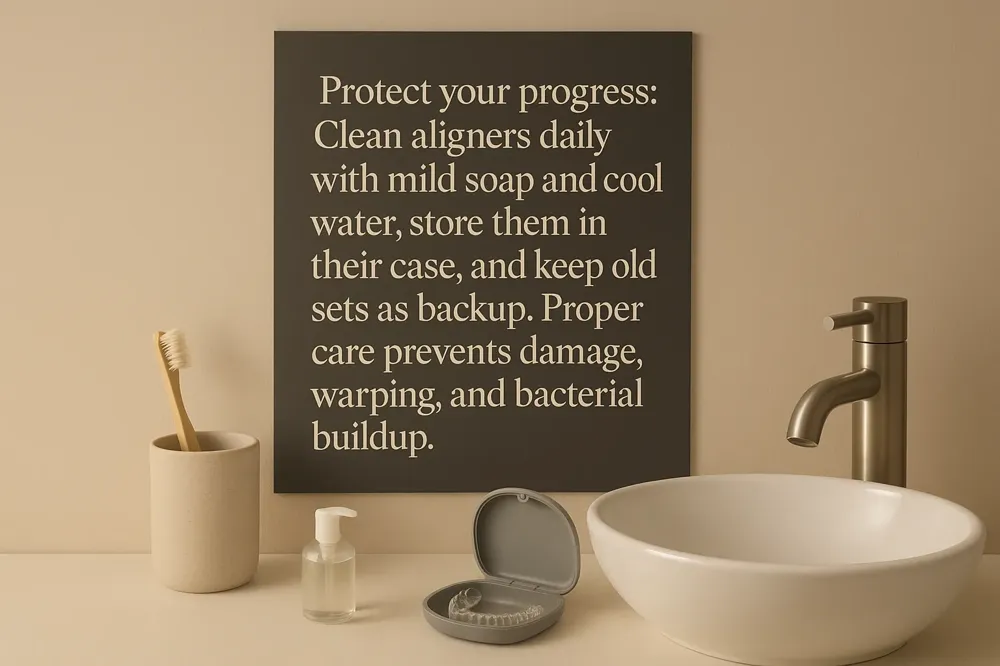
Keep Aligners Functioning Properly
Invisalign aligners are engineered to apply precise, gentle force to move your teeth. If they become damaged, warped, or covered in plaque, they cannot function correctly. A dirty aligner traps bacteria against your teeth, potentially leading to cavities or inflamed gums, which can stall your progress. Proper clean aligners with soft-bristled toothbrush and soap and clean aligners properly to avoid bacteria ensures your treatment stays on its fastest possible track.
Follow Proper Daily Cleaning Protocol
Maintaining aligner hygiene is a daily necessity. Each time you remove them, rinse aligners when removed with lukewarm or cool water to wash away saliva and loose debris. Once a day, gently brush them using a soft-bristled toothbrush and a small amount of clear, mild liquid soap. Avoid using toothpaste, as its abrasive particles can scratch the plastic, creating hazy patches and microscopic grooves that harbor bacteria.
Avoid Common Cleaning Mistakes
Hot water is a common pitfall. Avoid hot water to prevent warping of the thin plastic, compromising their fit and effectiveness. For a deeper clean, you can occasionally soak aligners in cleaning crystals or a solution specifically designed for clear retainers or denture cleaner as directed. Always clean Invisalign aligners with warm water before putting them back in your mouth.
Store Aligners Securely When Not in Use
Never leave your aligners loose on a napkin, in a pocket, or on a counter. Always store aligners in a case when they are not in your mouth. This simple habit protects them from physical damage, prevents accidental loss, and shields them from bacteria and germs. A lost or broken aligner can set your treatment back by weeks while you wait for a replacement.
Keep Your Previous Set as an Emergency Backup
While following your orthodontist's change schedule, do not discard your previous set of aligners immediately. Keep them clean and stored in their case. If your current aligners are lost or damaged, your orthodontist may advise you to keep previous aligners as backup temporarily to hold your teeth in place while waiting for a new set. This prevents your teeth from shifting backward and causing significant treatment delays.
| Care Aspect | Correct Action | Why It's Important | What to Avoid |
|---|---|---|---|
| Cleaning | Rinse daily, brush with soft brush & mild soap. | Prevents plaque buildup and bacterial growth. | Toothpaste and hot water. |
| Storage | Use the hard protective case every time. | Prevents loss, breakage, and contamination. | Wrapping in napkins or leaving loose. |
| Backup Plan | Keep the last set of aligners as a spare. | Provides a temporary solution if current set is lost. | Throwing away old aligners immediately. |
6. Adhere Religiously to Your Treatment Schedule
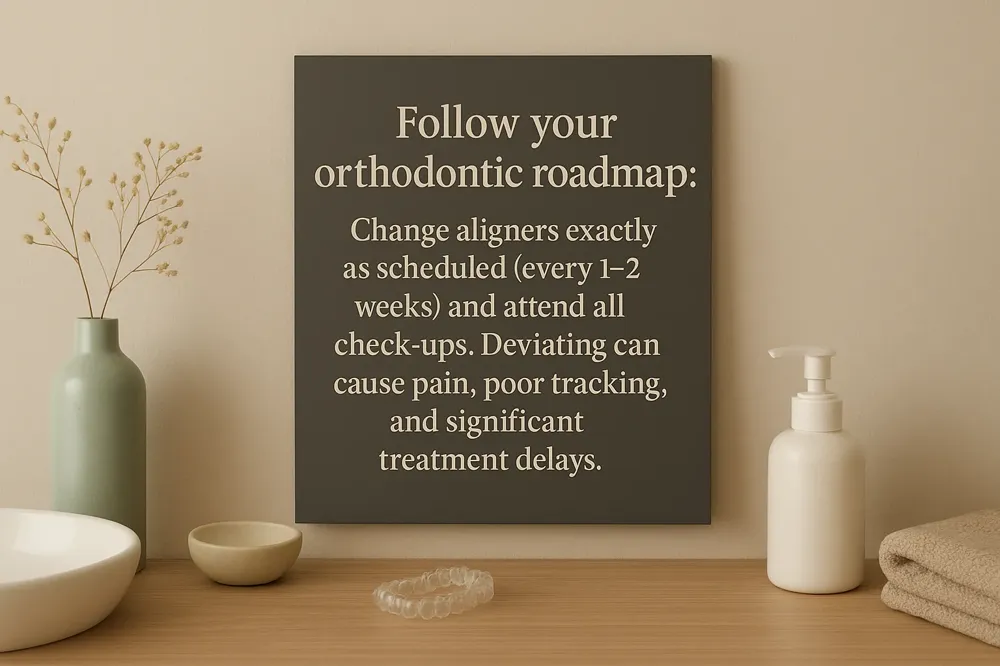
What happens if you rush or change your Invisalign aligners too early?
Rushing or changing your Invisalign aligners too early can disrupt your entire treatment plan and damage your teeth. Each aligner is designed to apply precise, gradual pressure, and moving ahead prematurely can force teeth into positions they aren't ready for, leading to intense pain, root damage, or misalignment. It can also cause the aligners to not fit properly, a problem known as "poor tracking," which halts progress and often requires you to backtrack to a previous set or get entirely new trays. This not only prolongs your total treatment time but may also incur additional costs. Always follow the schedule set by your dentist and consult them if you have concerns about your progress; they can safely adjust your plan if needed.
Your Invisalign treatment schedule is a carefully calculated orthodontic roadmap, not a loose suggestion. The typical instruction to switch aligner sets as instructed, typically every 1 to 2 weeks, is based on your specific, predetermined plan for tooth movement.
Timely tray changes are critical. Orthodontists warn that changing aligners too early is strongly discouraged and can cause significant pain, physically damage the aligners, and move teeth incorrectly. The consequences often lead to a longer overall treatment period as your progress is undone.
Conversely, delaying your aligner changes or wearing an old set for longer than prescribed also stalls progress. This prevents teeth from moving to the next planned position on time. While consistent daily wear of 20 to 22 hours per day is critical, so is advancing to the next stage exactly when directed.
Regular checkup appointments with your orthodontist or dentist are essential to keep this roadmap on course. These visits, typically scheduled every 8 to 12 weeks, allow your provider to monitor progress, provide you with the next series of aligners, and make any necessary adjustments. Missing these appointments can disrupt your treatment plan, potentially adding weeks or months to your timeline.
| Component of Schedule | Typical Frequency | Consequence of Deviation | Primary Purpose of Appointment |
|---|---|---|---|
| Aligner Change | Every 1-2 weeks | Switching early causes pain and poor tracking; delaying stalls progress. | Receive new set of aligners. |
| Orthodontist Check-up | Every 4-12 weeks | Missing appointments can extend treatment duration significantly. | Monitor progress, make adjustments. |
7. Optimize Your Diet for Speed and Safety
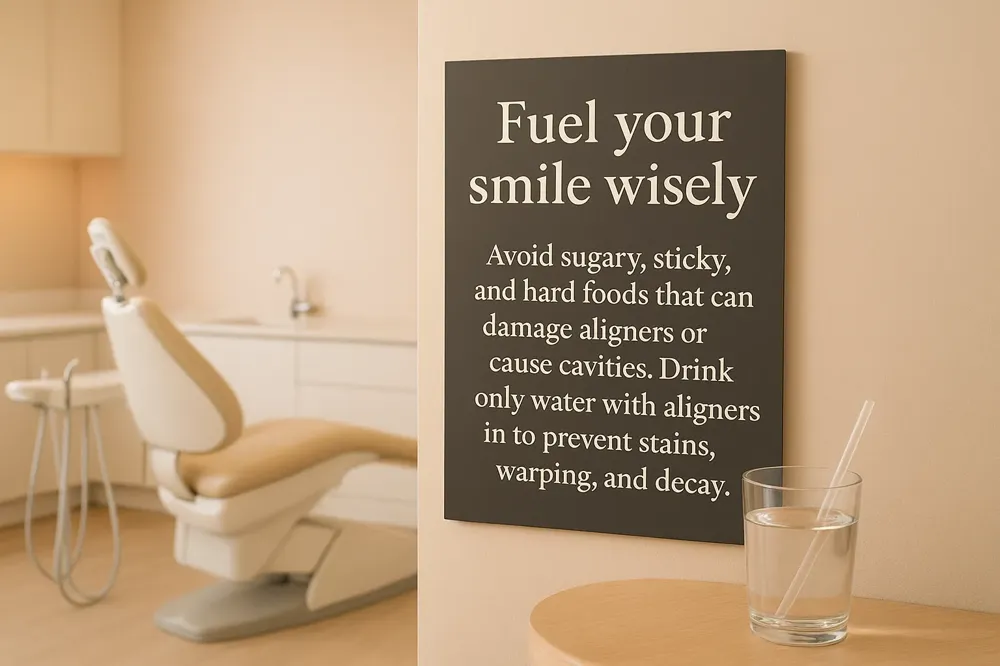
What foods should you avoid while wearing Invisalign?
While you remove your Invisalign aligners for meals, your dietary choices have a direct impact on treatment speed and safety. Limiting sugary and acidic foods and beverages is crucial, as they promote tooth decay and enamel weakening. This creates an unhealthy oral environment that can resist tooth movement and potentially pause your treatment for necessary dental work.
Chewy and sticky items like caramel, taffy, and gum should be avoided. These foods can leave residue on your teeth even after removal. If aligners are placed over this residue, it's trapped against your enamel, heightening the risk of cavities. Similarly, hard, crunchy foods like nuts, popcorn, and hard candies pose a risk. Accidentally biting into these with your aligners in can crack or damage them.
The golden rule for beverages is simple: drink only water while your aligners are in. Consuming coffee, tea, soda, or wine with aligners in can stain the plastic, warp them with heat, or bathe your teeth in sugar and acid, leading to decay. For other drinks, always remove your aligners.
Adopting tooth-friendly eating habits supports a smoother treatment process. Prioritize a balanced diet rich in lean proteins, vegetables, and dairy. Always brush and floss thoroughly after eating before reinserting your aligners to maintain optimal oral health and keep your progress on schedule.
| Food/Beverage Category | Why To Avoid | Impact on Treatment & Oral Health | Recommended Action |
|---|---|---|---|
| Sugary & Acidic Foods/Drinks | Promote bacterial growth & enamel erosion. | Slows treatment by creating an unhealthy mouth environment; increases cavity risk. | Limit intake; always brush teeth before reinserting aligners. |
| Sticky Foods (caramel, gum) | Cling to teeth & orthodontic attachments. | Traps sugars against enamel; can damage attachments if chewed with aligners in. | Avoid completely; if consumed, clean teeth thoroughly afterward. |
| Hard, Crunchy Foods (nuts, popcorn) | Require forceful biting pressure. | Can crack or fracture aligners; may damage teeth or attachments if aligners are accidentally left in. | Eat mindfully only after removing aligners; check for food debris. |
| All Beverages Except Water | Contain sugars, acids, pigments, or heat. | Can stain aligners, warp plastic with heat, and cause tooth decay under the trays. | Remove aligners for any drink besides plain water; rinse mouth with water after drinking if unable to brush. |
8. Explore Advanced Acceleration Technologies
Introducing Adjunctive Acceleration Devices
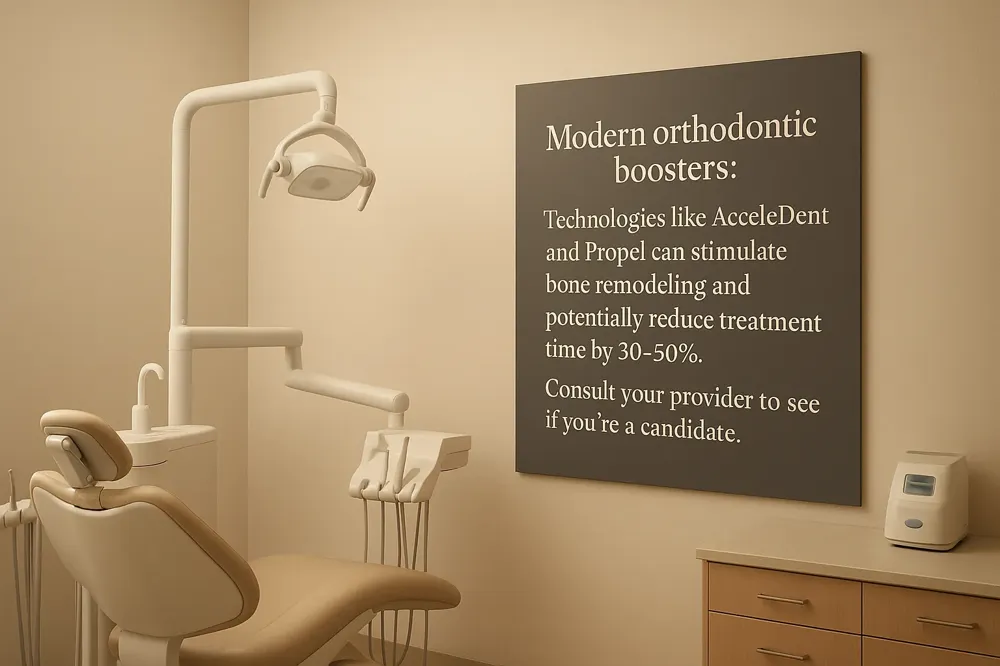
Modern orthodontics offers specialized adjunctive devices for Invisalign that can significantly reduce overall treatment time for patients undergoing Invisalign therapy. These technologies work alongside the clear aligners to enhance the rate of tooth movement.
How AcceleDent Works
AcceleDent is a device that patients use at home for about 20 minutes per day. It delivers gentle micropulse vibrations to the teeth and jawbone. This process stimulates bone remodeling, a key biological process in orthodontic tooth movement. Clinical studies suggest that consistent use can potentially reduce Invisalign treatment time by 30-50%.
Understanding Propel Treatment
The Propel system employs a different approach known as micro-osteoperforations (MOPs). Performed in a dental office, this technique involves creating tiny, precise indentations in the bone surrounding the teeth. These micro-perforations stimulate a localized healing response that accelerates the bone remodeling process. This can be particularly effective for speeding up movement in complex cases, like significant crowding or bite corrections.
Consultation is Essential
It is crucial to understand that these advanced technologies are not suitable for every patient. Their use depends on individual case complexity, overall dental health, and specific treatment goals. A consultation with an experienced Invisalign provider is mandatory to determine candidacy, ensure safety, and integrate these devices properly into a personalized treatment plan.
Frequently Asked Questions About Speeding Up Invisalign

Can Invisalign treatment be sped up?
Yes, you can make your Invisalign treatment more efficient. The most crucial step is wearing your clear aligners for the recommended 20 to 22 hours every day. This consistent pressure is essential for steady tooth movement. Skipping hours can slow progress significantly.
Adhering to your orthodontist’s schedule for changing aligners is also vital. Switching trays every one to two weeks as prescribed keeps the treatment on track. Using tools like Chewies for a few minutes after inserting a new set helps seat the aligners properly, which can make the process more effective.
Excellent oral hygiene prevents delays. Brushing and flossing after meals before reinserting aligners stops plaque buildup that could lead to cavities or gum inflammation, which hinder movement. Cleaning your aligners with a soft brush and clear soap, not toothpaste, keeps them clear and functional.
Attending all check-up appointments allows your orthodontist to monitor progress and make timely adjustments. While these practices maximize efficiency, your treatment plan should always be supervised by your dental professional for safety and effectiveness.
What is the fastest possible Invisalign treatment?
The fastest Invisalign treatments are designed for minor corrections. Systems like Invisalign Lite or Invisalign i7 can address simple spacing issues or mild crowding in as little as three to six months. They use a shorter series of aligners compared to comprehensive plans.
Your total treatment time depends heavily on your specific case. Factors include the complexity of your alignment issues, your age, and how closely you follow the plan. For very minor adjustments, some patients may complete treatment in just a few months.
Severe cases, such as significant crowding or bite problems, typically require longer treatment, often 12 to 24 months. An experienced orthodontist will use a digital scan to create a personalized plan and give you a realistic timeline during your initial consultation.
What are some things about Invisalign that patients often aren't told?
Patients might not realize the full extent of daily commitment required. The 22-hour daily wear rule means aligners must be removed for every snack and any drink besides water, which can be more disruptive to lifestyle than expected.
There are specific care rules that aren't always highlighted. For instance, aligners should never be rinsed with hot water, as it can warp them, and they should be cleaned with mild soap instead of abrasive toothpaste to prevent scratches.
Initial adjustments can be surprising. Many patients experience a temporary lisp and soreness, especially in the first few days with a new set of aligners. This discomfort is normal but often underestimated.
Financial and insurance aspects can be unclear. Many dental insurance plans classify Invisalign as a cosmetic procedure, which may result in limited coverage or higher out-of-pocket costs than initially anticipated.
| Common Patient Concern | Key Insight from Treatment | Practical Implication |
|---|---|---|
| Daily Time Commitment | 20-22 hour daily wear is non-negotiable | Requires planning meals & social activities |
| Aligner Care | Clean with cool water & mild soap, not toothpaste | Prevents damage & maintains clarity |
| Initial Discomfort | Temporary lisp & soreness are common | Typically subsides within a few days |
| Treatment Duration | Varies from 3 months to 2+ years | Depends entirely on case complexity & compliance |
| Insurance Coverage | Often considered elective/cosmetic | May result in significant patient cost share |
Your Partnership for a Faster, Healthier Smile
A Collaborative Path to Success
The journey to a straighter smile with Invisalign is a true partnership. Its success and speed are built on a foundation of dedicated patient compliance paired with expert professional guidance. While your orthodontist provides the roadmap and tools, your daily commitment to the plan transforms it into reality.
The Unbeatable Protocol
There is no singular magic trick to accelerate Invisalign. The true secret lies in unwavering consistency across a few core areas:
- Relentless Wear Time: Adhering to the 22-hour daily rule provides the consistent pressure necessary for steady, predictable tooth movement. Every hour matters.
- Impeccable Oral Hygiene: Clean teeth and healthy gums move more efficiently. Brushing and flossing after every meal prevents complications that could pause treatment.
- Rigorous Schedule Adherence: Changing aligners exactly as prescribed and attending all check-up appointments ensures your progress stays perfectly synchronized with your treatment plan.
- Strategic Tool Use: Employing provided tools like chewies to seat aligners properly ensures optimal force application for more effective movement.
Your Personalized Plan at Empower Your Smile
At Empower Your Smile, Dr. Moezinia and our team are dedicated to optimizing this partnership. We leverage advanced diagnostic technology, such as iTero digital scanners, to create a highly accurate and efficient treatment blueprint from the start. Our personalized care means we actively monitor your progress and can discuss modern acceleration options, like gentle vibrational devices, that may be suitable for your specific case.
Taking the Next Step
Your path to a confident smile is unique. We encourage you to schedule a consultation to discuss your specific goals. Together, we can explore how a tailored approach, combining your dedication with our expertise and technology, can streamline your journey.
Embracing this partnership means you are empowered to achieve a healthier, more radiant smile efficiently and with greater confidence than ever before.