Introduction
Crown lengthening is a specialized periodontal surgery used to expose additional natural tooth structure when the existing crown height is insufficient for a durable restoration or when aesthetic concerns such as a “gummy” smile arise. The procedure, typically performed by a periodontist, involves making a small incision, lifting the gingival tissue, and, when necessary, removing a modest amount of alveolar bone to re‑establish the biologic width and create a stable, ferrule‑ready tooth surface. Local anesthesia ensures patient comfort, and after suturing the tissue, the gums heal over a period of weeks to months before a final crown, bridge, or veneer is placed. This section explains why crown lengthening matters—both to provide a sound foundation for restorative work and to enhance smile harmony—while offering a concise overview of the surgical steps, healing timeline, and expected outcomes.
Understanding the Procedure and Its Necessity
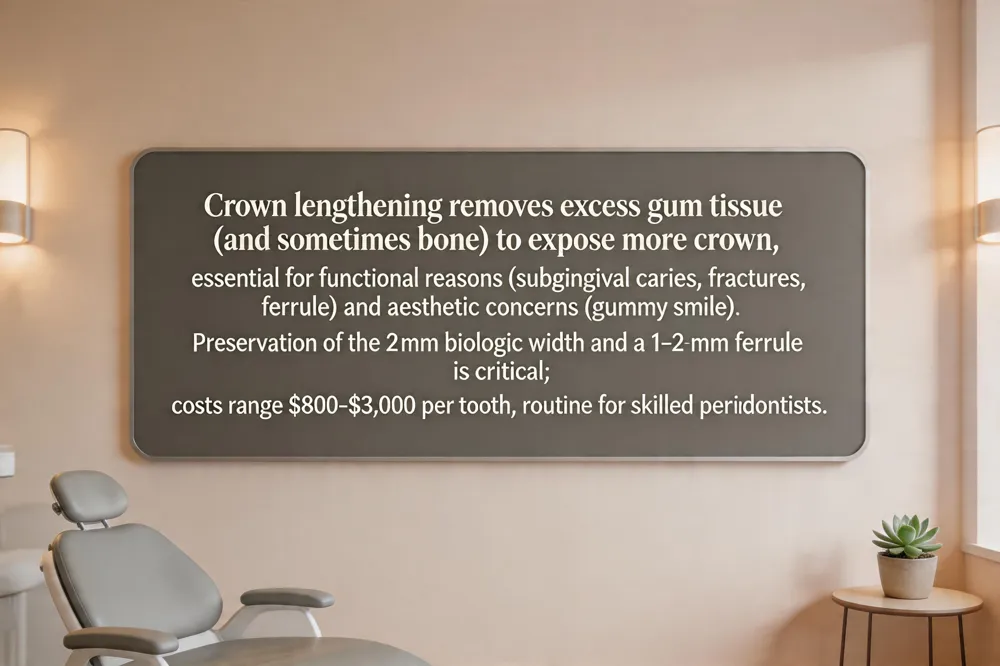 Crown lengthening is a periodontal surgery that removes excess gingival tissue—and when needed, a small amount of alveolar bone—to expose more of a tooth’s natural crown.(Crown lengthening is a periodontal surgical procedure that removes excess gum tissue and/or bone to expose more of the tooth’s natural crown)
It is performed for functional reasons (e.g., subgingival caries, root fractures, or to create a 1.5‑2 mm ferrule) and for aesthetic reasons such as correcting a “gummy” smile or uneven gingival margins.(Crown lengthening can be categorized as functional (to expose subgingival caries, fractures, or protect biologic width) or aesthetic (to lengthen short anterior teeth and correct uneven gingival contours))
Preservation of the biologic width (≈2 mm) is critical; the surgery must re‑establish at least 3 mm from the restorative margin to the bone crest to avoid chronic inflammation and bone loss.(Biologic width comprises approximately 2 mm of supracrestal tissue attachment and must be preserved to avoid chronic inflammation and bone loss
Average cost: $800‑$3,000 per tooth, with gum‑only procedures at $800‑$2,000 and bone‑contouring cases at $2,000‑$3,000. Insurance often covers the procedure when it is medically necessary, but purely cosmetic cases are usually out‑of‑pocket.(Crown lengthening cost for gum tissue adjustment only ranges from $800 to $2,000 per tooth)
Difficulty: For a skilled periodontist, crown lengthening is a routine, predictable surgery involving local anesthesia, a small incision, possible bone reshaping, and suturing. Complexity rises with multiple teeth, extensive bone removal, or challenging anatomy.(Crown lengthening is a surgical dental procedure that removes gum tissue and sometimes bone to expose more of a tooth
Crown lengthening vs. gingivectomy: A gingivectomy removes only soft tissue and heals in about a week, while crown lengthening may also involve bone reduction and requires 3‑6 months for full remodeling before final restorations.(Gingivectomy is appropriate when the bone crest is ≥3 mm from the desired gingival margin; otherwise osseous reduction is required
Cosmetic classification: Yes—when used to improve smile aesthetics it is cosmetic, but it also serves therapeutic purposes such as exposing decay or providing adequate tooth structure for a crown.(Crown lengthening can be categorized as functional ... or aesthetic
Necessity: The procedure is indicated when insufficient tooth height prevents a stable restoration, when decay or fracture extends below the gum line, or when a gummy smile compromises aesthetics and oral hygiene. Proper case selection, respect for biologic width, and a 1‑2 mm ferrule are essential for long‑term success.(Indications for crown lengthening include subgingival caries, root fractures, need for a ferrule, gummy smile, altered passive eruption, and uneven gingival margins)
Clinical Planning, Codes, and Documentation
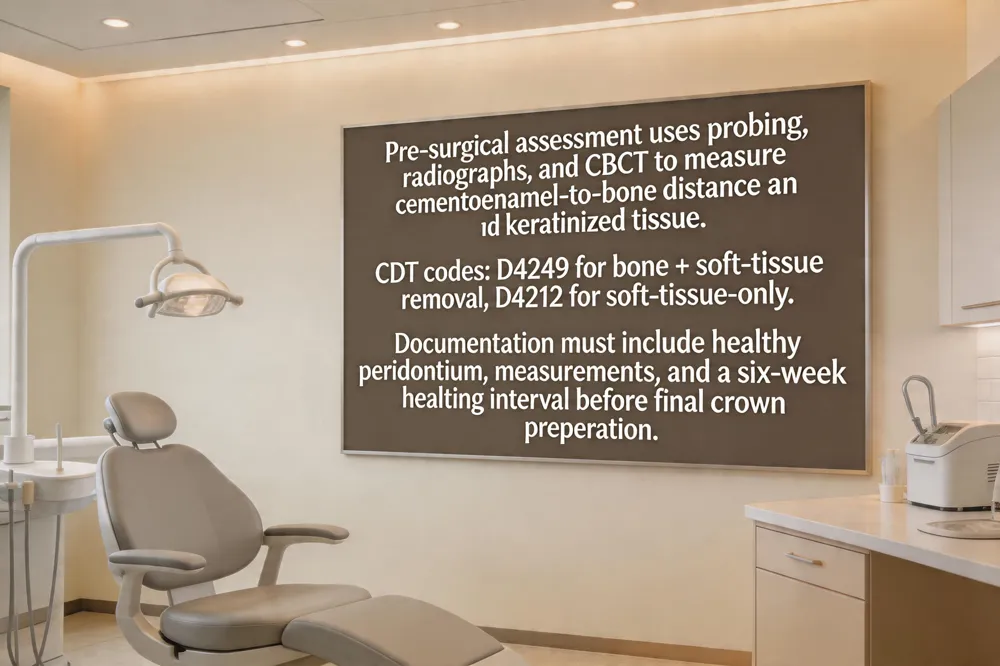 A successful crown‑lengthening case begins with a thorough pre‑surgical assessment. Clinical examination, periodontal probing, and radiographs—including periapical X‑rays or CBCT scans—determine the distance from the cementoenamel junction to the bone crest, the width of keratinized tissue, and the biologic width (≈2 mm). This data guides whether a simple gingivectomy/gingivoplasty or an apically positioned flap with osseous resection is required.
CDT Procedure Codes – When bone and/or soft tissue is surgically removed to expose tooth structure, the appropriate code is D4249. For soft‑tissue‑only trimming, use D4212 (gingivectomy/gingivoplasty). Documentation must include a healthy periodontal environment, radiographic measurements, and a narrative of clinical necessity; most insurers require a minimum six‑week healing interval before final crown preparation.
Patient‑Education Materials – A PDF outlines indications, biologic‑width requirements, step‑by‑step technique, and post‑op care. A video demonstrates laser or scalpel tissue removal, flap elevation, and bone contouring, emphasizing minimal bleeding and rapid recovery. A PowerPoint (PPT) slides through assessment, marking the desired gingival margin, flap surgery, osteotomy, suturing, and follow‑up protocols.
Detailed Surgical Steps – 1) Diagnose and plan using imaging; 2) Administer local anesthesia; 3) Make precise incisions and reflect a flap; 4) Perform osseous resection if the bone crest is <3 mm from the intended margin; 5) Reposition and suture soft tissue to achieve a harmonious gum line; 6) Provide post‑operative instructions and schedule a follow‑up to evaluate healing before crown placement.
Managing Healing, Recovery, and Risks
 Crown lengthening is performed under local anesthesia, so patients feel no pain during the surgery. After the anesthetic wears off, mild soreness, swelling, and tenderness are normal and usually peak within the first 24‑48 hours. Ice packs, over‑the‑counter NSAIDs, and a soft‑food diet keep discomfort manageable (Crown‑operative instructions include: keep the head elevated, apply cold compresses for the first day, rinse gently with salt water or an antimicrobial mouthwash after meals, avoid hot, spicy, hard, or crunchy foods for the first week, and use a soft‑bristled brush while avoiding the surgical site for 24‑48 hours. Sutures are removed or dissolve within 7‑10 days, and a follow‑up visit checks healing.
Healing timeline: days 1‑2 focus on pain and swelling control; days 2‑3 swelling peaks while a dressing protects the area; days 4‑7 discomfort subsides and gentle rinses begin; by weeks 2‑3 the gum tissue stabilizes, stitches are out, and firmer foods can be re‑introduced. Soft‑tissue healing is evident by 4‑6 weeks, but complete bone remodeling and final gum‑line contouring may take 3‑6 months before the permanent crown is placed.
Potential complications include postoperative pain, bruising, increased tooth sensitivity, gum recession, infection, delayed healing, and, in rare cases, excessive bone removal that compromises tooth stability. Prompt reporting of severe bleeding, persistent swelling, or numbness to the dental office is essential for timely intervention.
Addressing Short Teeth and Microdontia
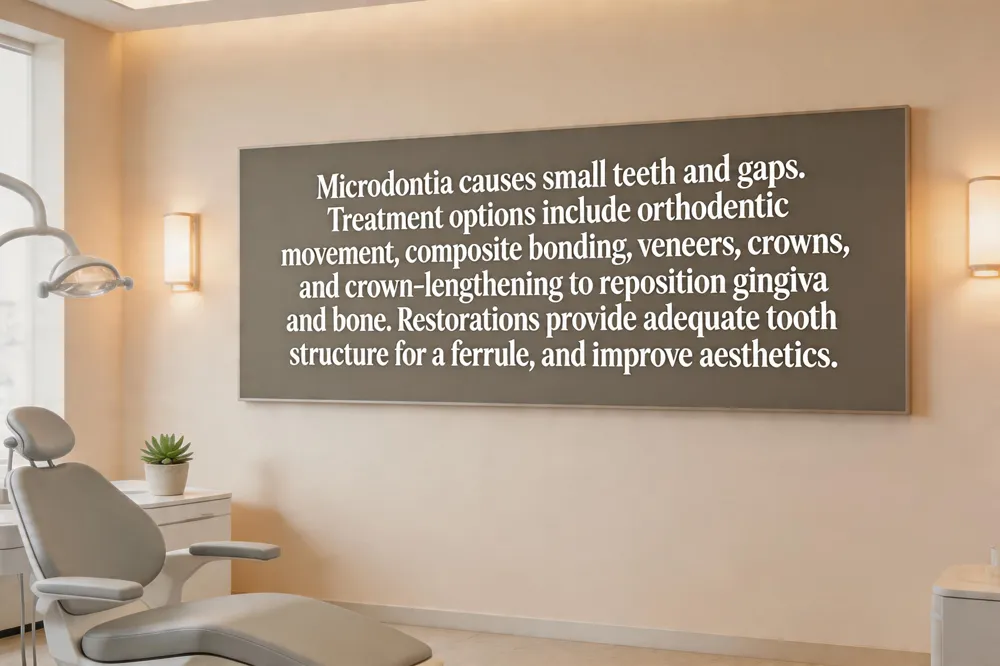 Microdontia is a condition in which one or more teeth develop smaller than normal, often affecting the upper lateral incisors or third molars. It can be localized, relative, or generalized and may stem from genetics, hormonal imbalances, or prenatal exposures. Small teeth can create gaps, misaligned bites, and a “gummy” appearance.
How to fix small teeth naturally – While the true size of a tooth cannot be altered without treatment, excellent oral hygiene and treatment of gum disease can reduce excess gingival tissue that hides tooth length. Orthodontic options such as clear aligners gently shift teeth forward, exposing more crown and creating the illusion of longer teeth. Avoiding grinding with nightguards and stress management prevents further wear.
Can short teeth be fixed? – Yes. Composite bonding adds tooth‑colored material to increase size, while porcelain veneers or crowns provide a durable, natural‑looking enlargement. When gum tissue is excessive, crown‑lengthening surgery—performed by a periodontist—repositions the gum line and, if needed, removes a small amount of bone to expose more tooth structure, creating a stable foundation for restorations.
Small teeth with gaps – Gaps often result from microdontia combined with an oversized jaw. Treatment may include veneers, bonding, or limited orthodontic movement to close diastemas and improve smile symmetry.
How to fix small teeth in adults – Adults can benefit from veneers, crowns, or a combination of orthodontics and crown lengthening to enhance both size and gum‑line aesthetics.
Microdontia treatment – Options range from minimally invasive bonding to full‑coverage crowns, and when gum excess contributes, surgical crown lengthening restores proper biologic width and supports long‑term restorative success.
Why are my teeth so small at 14? – At this age, microdontia often manifests as “peg” lateral incisors or relative smallness due to a larger jaw. Early orthodontic evaluation and potential crown‑lengthening or restorative work can correct aesthetics and function before adulthood.
Patient Education, Rules, and Miscellaneous Topics
 Good oral hygiene begins with brushing twice a day for two minutes, using a soft‑bristled brush and fluoride toothpaste, and flossing daily to remove plaque from between teeth. A healthy saliva flow aids remineralization; fluoride, calcium‑phosphate products can rebuild enamel when damage is limited to the outer surface. Once a true cavity (a hole) forms, natural remineralization is no longer possible and a professional restoration is required.
2‑2‑2 Rule – Brush twice daily, two minutes each session, and visit the dentist twice a year for cleanings and exams.
3‑3‑3 Rule (pain management) – Rinse or apply a cold compress every three hours, limit any topical pain‑relief to three minutes, and schedule a dental appointment within three days of the onset of pain.
3‑3‑3 Rule (medication) – Take up to three ibuprofen tablets (200 mg each) every three hours, not exceeding three days, to control inflammation.
Fun Dental Fact – The average adult has about 1,000 to 1,200 bacteria per square millimeter of gum tissue, reminding us why gentle brushing and regular check‑ups are essential.
Conclusion
Crown lengthening restores lost tooth length, preserves biologic width, and creates a stable foundation for crowns, bridges or veneers while also improving a gummy smile. The procedure is indicated when decay, fractures, or insufficient clinical crown height compromise restorative success, or when aesthetic balance is desired. Patients should schedule a consultation if they notice excessive gum display, a short‑looking tooth, or difficulty maintaining oral hygiene around a tooth that feels too low. At Empower Your Smile, a periodontist conducts an assessment, then designs a personalized, comfort‑focused surgical plan that integrates restorative and aesthetic goals, ensuring optimal long‑term results.