Why Frequency Matters
Periodontal maintenance (PM) is the ongoing deep‑cleaning and monitoring protocol after active therapy, aiming to control plaque, preserve attachment, and prevent tooth loss. Effective scheduling balances individual risk factors, treatment cost, and patient compliance, tailoring recall intervals to achieve optimal long‑term gum health while supporting overall systemic wellness and cost‑effectiveness.
Defining Periodontal Maintenance: Codes, Insurance, and Clinical Narrative
 Periodontal maintenance definition
Periodontal maintenance (PM) is a therapeutic, deep‑cleaning protocol performed after active periodontal therapy (scaling and root planing, surgery, or other corrective procedures). Its purpose is to remove supragingival and subgingival plaque/calculus, monitor probing depths, attachment levels, and radiographic bone, and reinforce oral‑hygiene instructions to prevent disease recurrence.
Periodontal maintenance definition
Periodontal maintenance (PM) is a therapeutic, deep‑cleaning protocol performed after active periodontal therapy (scaling and root planing, surgery, or other corrective procedures). Its purpose is to remove supragingival and subgingival plaque/calculus, monitor probing depths, attachment levels, and radiographic bone, and reinforce oral‑hygiene instructions to prevent disease recurrence.
Periodontal maintenance narrative for insurance Patient diagnosed with chronic periodontitis (stage II, grade B) after comprehensive scaling and root planing on [date]. Clinical exam shows probing depths of 3–5 mm, ≤20 % bleeding on probing, and stable attachment with no radiographic bone‑loss progression. A maintenance program every 4 months is prescribed to reinforce hygiene, debride plaque, and monitor stability. Continued coverage is medically necessary to avoid more invasive, costly procedures.
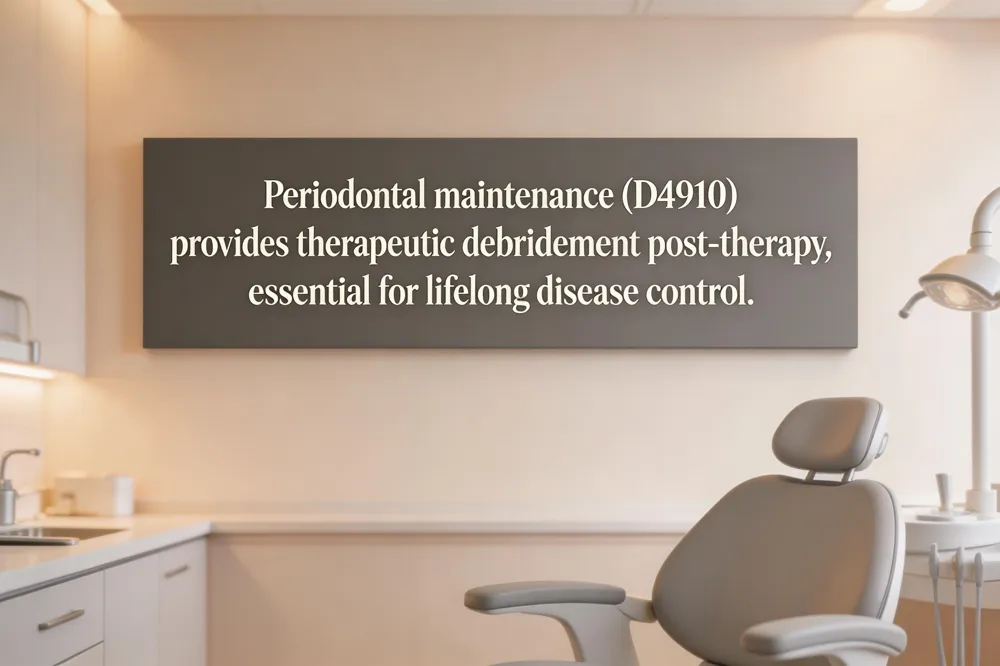
Periodontal maintenance code The CDT code for periodontal maintenance is D4910. It is used for patients who have completed active therapy and require ongoing debridement of plaque and calculus both above and below the gumline. D4910 includes a periodontal evaluation, site‑specific scaling, and pocket‑depth monitoring and is typically scheduled every three to four months for the life of the dentition.
Ada code for perio maintenance D4910 is distinct from the routine prophylaxis code D1110; it reflects therapeutic care for a patient with a history of periodontitis and prior periodontal therapy.
Dental code for perio charting Periodontal charting is not billed separately. A comprehensive periodontal evaluation (D0180) or periodic oral evaluation (D0120) includes charting, and when combined with scaling/root planing it is bundled with D4341/D4342. Maintenance visits requiring updated charting are coded under D4910.
Periodontal maintenance covered by insurance Most dental plans cover D4910 when the diagnosis and prior therapy are documented. Coverage typically ranges from 80 %–100 % after deductible, with a limit of every three to six months. Some carriers require prior authorization or a history‑of‑gum‑disease flag.
Periodontal maintenance cost In the U.S., a D4910 visit averages $100‑$250 (often $120‑$200). Costs vary by geography, practice overhead, and adjunctive services. Insurance reimbursement varies; out‑of‑pocket patients usually fall within the $100‑$250 range.
Do I need periodontal maintenance forever? Yes. Periodontitis is chronic; maintenance is a lifelong commitment to keep bacterial recolonization under control, preserve bone, and protect prior restorations. Frequency should be individualized based on risk factors and stability.
What qualifies for periodontal maintenance? Any patient who has been diagnosed with periodontitis and completed active therapy qualifies. Ongoing risk assessment (smoking, diabetes, oral‑hygiene compliance) dictates recall intervals.
What is D4910 periodontal maintenance? D4910 designates a therapeutic maintenance visit that includes full‑mouth debridement, periodontal charting, radiographic review (if needed), and reinforcement of home‑care instructions. It is essential for long‑term disease control.
Evidence‑Based Recall Intervals: Guidelines, Risk Assessment, and the 5 P’s
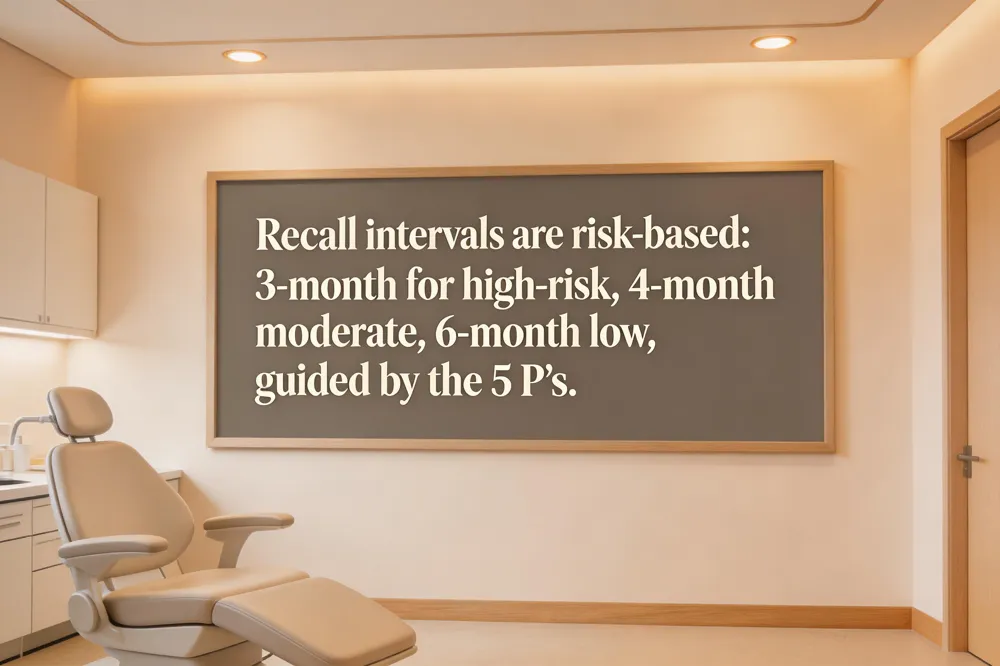 Scientific evidence from eight retrospective cohort studies (Farooqi et al., 2015) and systematic reviews shows that patients with active periodontitis achieve the best outcomes when periodontal maintenance (PM) is scheduled every 3 months; longer intervals (≈6 months) are acceptable for stable, low‑risk patients but may increase tooth loss in high‑risk groups. The American Dental Association (ADA) advises that PM intervals be individualized—generally 3–6 months for treated periodontitis—based on probing depths, attachment loss, and oral‑hygiene status, and it codes the service as D4910 for lifelong use. The American Academy of Periodontology (AAP) similarly recommends an initial 3‑month recall, then tailoring the schedule using risk‑assessment tools (Periodontal Risk Calculator, grading). Risk‑based scheduling categorizes patients: high‑risk (active disease, smoking, uncontrolled diabetes) → 3‑month; moderate‑risk (stable disease, some risk factors) → 4‑month; low‑risk (healthy periodontium, excellent home care) → 6‑month or annual. The five P’s of periodontics—Predictive, Preventive, Personalized, Participatory, and Proactive—guide this approach: predictive analytics identify risk; preventive care (cleanings, antimicrobial rinses) halts progression; personalized plans adjust recall intervals; participatory education engages patients; proactive monitoring ensures early detection of relapse. In practice, a patient like John Doe (moderate chronic periodontitis) would receive PM every 4 months, with full‑mouth charting, probing, radiographs, and reinforced home‑care at each visit. This risk‑driven, evidence‑based model balances clinical need with patient compliance, improving long‑term tooth retention and overall health.
Clinical Protocols at Empower Your Smile: Personalized Care in Action
 At Empower Your Smile we place the patient at the center of every periodontal maintenance program. After active therapy—scaling and root planing, surgery or other corrective procedures—the long‑term goal is to keep the dentition stable for life. Periodontal maintenance procedures include supra‑gingival and sub‑gingival scaling to eliminate plaque and calculus, with root planing when deeper debridement is needed. Clinicians measure pocket depths, perform probing, review radiographs for bone changes, and polish teeth. Oral‑hygiene reinforcement and personalized home‑care instructions—often with antimicrobial rinses or localized antibiotics—are provided at each visit.
Supportive periodontal care (SPC) is our personalized maintenance program that follows active treatment. Regular recall visits remove supragingival and sub‑gingival deposits, re‑evaluate pocket depths and attachment levels, and assess risk factors such as smoking, diabetes, and oral‑hygiene compliance. By reinforcing proper brushing, flossing, and interdental cleaning, SPC prevents disease recurrence and maintains a pain‑free, functional dentition.
Periodontal maintenance after deep cleaning is scheduled every 3‑4 months, though intervals are tailored to disease severity and plaque re‑accumulation rates. Between visits patients brush gently with a soft‑bristled or electric toothbrush, floss daily, and may rinse with warm salt water. A soft‑food diet for the first 24‑48 hours after deep cleaning minimizes irritation while gums re‑attach.
Perio maintenance narrative example: John Doe, 52, completed full‑mouth scaling and root planing on 03/12/2024. At his 07/10/2024 maintenance visit, probing depths were ≤ 4 mm, bleeding on probing was absent, and radiographs showed stable bone. He received D4910 maintenance, reinforced oral‑hygiene, and will return every 4 months.
What qualifies for periodontal maintenance? Any patient diagnosed with periodontitis who has completed active therapy—whether scaling and root planing, periodontal surgery, or other corrective procedures—should enter a lifelong maintenance schedule.
Do I need periodontal maintenance forever? Yes. Periodontitis is chronic; bacteria re‑accumulate below the gum line, risking recurrence and bone loss. Lifelong, risk‑based maintenance (typically every 3‑4 months) protects gums, preserves restorations, and supports overall systemic health.
Balancing Cost, Frequency, and Patient Comfort
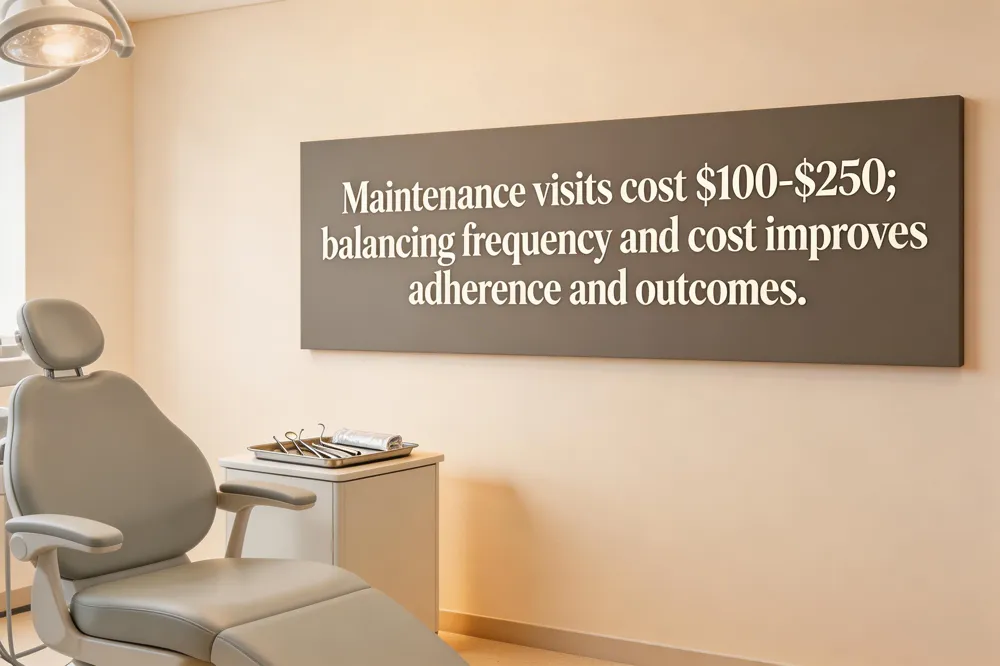 Financial considerations are a major driver of patient adherence to periodontal maintenance. In the United States a typical maintenance visit (CDT D4910) ranges from $100‑$250, averaging about $120, with higher costs in major cities such as New York. Insurance reimbursement varies; private plans often cover a percentage of the $100‑$200 range, while Medicaid may require prior‑authorization or offer lower fees. To help patients understand the value, clinicians can use the "3‑3‑3" rule—brush three times a day for three minutes, replace the brush every three months—to reinforce home‑care and reduce the need for more frequent professional visits.
Evidence‑based recall intervals suggest a 3‑month schedule for most patients with a history of periodontitis, especially those who are high‑risk (smokers, diabetics, poor oral hygiene). Low‑to‑moderate‑risk individuals may be safely recalled every six months, provided disease stability is documented. Some studies show no significant difference in tooth loss between 3‑ and 6‑month intervals, but personalized risk assessment tools such as the Periodontal Risk Calculator are increasingly used to tailor schedules.
Deep cleaning (scaling and root planing) is generally a one‑time therapeutic procedure, followed by maintenance every 3‑4 months. Over‑cleaning can cause temporary sensitivity, gum inflammation, or, in rare cases, infection. Clear communication about cost, interval rationale, and home‑care expectations empowers patients to stay compliant, balancing clinical benefit with financial and comfort considerations.
Putting It All Together: Patient‑Centric Decision Making
 Personalized Recall Planning
Risk‑based assessment tools (e.g., Periodontal Risk Calculator) allow clinicians to tailor recall intervals. High‑risk patients (active disease, smoking, uncontrolled diabetes) benefit from 3‑month visits, while stable, low‑risk individuals may be recalled every 4‑6 months or even annually. This individualized approach aligns with AAP and ADA recommendations and reflects evidence that a 3‑month schedule reduces tooth loss in high‑risk groups.
Long‑Term Oral Health
Periodontal disease is chronic; maintenance (SPC) preserves gingival and bone health for life. Regular deep cleanings disrupt biofilm reblooming (≈4‑6 weeks) and enable early detection of pocket progression, supporting systemic health (cardiovascular, diabetes). Studies show 3‑month maintenance can lower disease recurrence by up to 70 % and reduce annual tooth loss (e.g., 0.12 vs 0.36 teeth/patient).
Key Takeaways for Patients
- Commitment: Periodontal maintenance is lifelong after periodontitis treatment.
- Frequency: Most patients start with 3‑month recalls; intervals can be extended based on risk and stability.
- Cost: Typical U.S. visit $100‑$250; insurance may cover 2‑4 visits per year.
- Self‑Care: Twice‑daily brushing, daily flossing, and risk‑factor control (quit smoking, manage diabetes) are essential.
What periodontal recall interval is supported by evidence?
Systematic reviews of cohort studies suggest a short‑term 3‑month schedule for active disease, with longer (6‑month) intervals acceptable for stable cases.
Recall interval for periodontal maintenance
Individualized based on risk: high‑risk ≈ 3 months; moderate risk ≈ 4‑6 months; low risk ≈ 6‑12 months.
What are the 5 P’s of periodontics?
Predictive, Preventive, Personalized, Participatory, Proactive.
Supportive periodontal care
SPC includes professional cleaning, plaque/calculus removal, risk assessment, and education.
Do I need periodontal maintenance forever?
Yes—periodontitis is chronic; lifelong maintenance prevents recurrence.
Periodontal maintenance cost
Average $120 per visit; varies by location and services.
ADA guidelines for periodontal maintenance
Individualized 3‑6 month recalls based on clinical assessment.
New ADA guidelines for perio charting
Full‑mouth probing depth, bleeding, attachment level at ≥6 sites/tooth, plus recession, plaque, furcation documentation.
Takeaway
Optimal periodontal maintenance frequency balances disease risk and cost. For most post‑treatment patients, visits every 3‑4 months reduce tooth loss, while low‑risk individuals may extend to 6‑12 months. Understanding insurance limits, out‑of‑pocket fees, and personalized risk assessments empowers patients to schedule effective, affordable care and improve long‑term oral health outcomes for everyone.