Why Scaling and Root Planing Matters Today
Periodontitis affects nearly half of U.S. adults over age 30, with about 47 % showing measurable attachment loss. This high prevalence makes effective therapy essential. Deep cleaning through scaling and root planing (SRP) removes plaque and calculus from both supragingival and subgingival sites, smoothing root surfaces to allow gingival reattachment and reduce inflammatory burden. Clinical studies confirm SRP lowers pocket depths by 1–2 mm and improves attachment levels by up to 1 mm, decreasing risk of bone loss and tooth loss. The American Academy of Periodontology and the ADA’s Evidence‑Based Clinical Recommendations designate SRP as the first‑line, non‑surgical treatment for chronic periodontitis meeting diagnostic criteria (CAL ≥2 mm, pockets >4 mm, radiographic bone loss). Adjunctive antibiotics are reserved for aggressive cases, while maintenance visits every 3–6 months sustain gains. Insurance coverage is tied to documentation, including radiographs and a periodontal chart, ensuring claim approval and access to this therapy. Thus, SRP remains a cornerstone of modern periodontal care.
Clinical Definitions, Indications, and Coding Standards
Key Diagnostic & Coding Summary
| Criterion | Definition | \ Threshold |
|---|---|---|
| Interdental CAL | Clinical attachment loss on non‑adjacent teeth | ≥ 2 mm on ≥ 2 teeth |
| Buccal/Oral CAL | Attachment loss on buccal or oral surfaces | ≥ 3 mm with pocketing > 3 mm on ≥ 2 teeth |
| Radiographic Requirement | Diagnostic‑quality bite‑wings or full‑mouth series showing bone loss | Must be taken immediately prior to treatment planning |
| Period Chart Chart | Pocket depths, BOP, attachment loss | Recorded at ≥ 6 sites per affected tooth/implant |
| ADA Coding | D4341 – ≥ 4 teeth per quadrant<br>D4342 – 1‑3 teeth per quadrant | Non‑by‑report; narrative confirming disease required |
| AAP Documentation for Quad‑quadrant SRP | Narrative justification, anesthesia record, chair‑time schedule | Needed when all quadrants treated in one visit (e.g., IV sedation) |
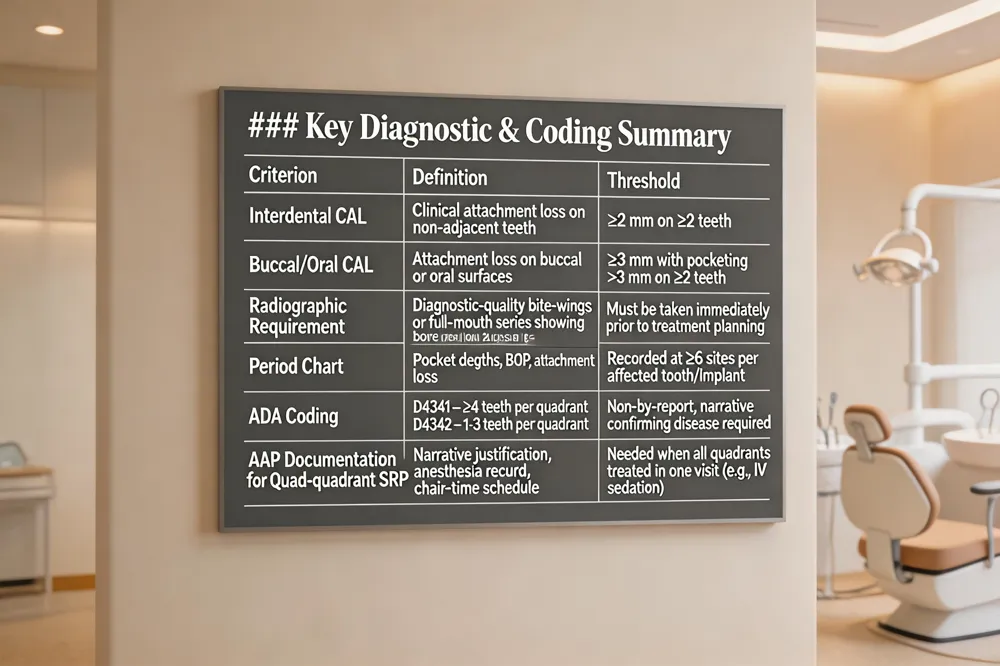 Periodontitis Diagnostic Criteria
ADA Guidelines for Scaling and Root Planing
ADA Evidence‑Based Clinical Recommendations state SRP is the initial definitive therapy for chronic periodontitis meeting the above thresholds. The procedure includes thorough scaling (plaque/tartar removal above and below the gumline) and root planing (smoothing root surfaces to promote re‑attachment). Coding uses D4341 (≥4 teeth/ quadrantal) or D4342 (1‑3 teeth/quadrant). Claims must contain a narrative confirming disease, diagnostic‑quality radiographs (bitewings or full‑mouth series), and a full periodontal chart with pocket depths, bleeding on probing, and attachment loss at ≥6 sites per tooth. Required documentation for SRP claims includes a narrative indicating periodontal disease, diagnostic‑quality radiographs showing bone loss, and a complete periodontal chart with pocket depths, bleeding on probing, and attachment loss recorded at at least six sites per affected tooth or implant.
AAP Guidelines for SRP
AAP aligns with ADA on diagnostic cut‑offs and adds that when all four quadrants are treated in one visit (e.g., IV sedation, special‑needs patients) a detailed justification, anesthesia record, and chair‑time schedule are required. When SRP is performed on four quadrants in a single appointment, a narrative must explain the reason (e.g., IV sedation, special‑needs patient, transportation barriers, pre‑treatment antibiotics), and some plans may also request a schedule showing chair‑time allocation and confirmation of local anesthesia use. Radiographs must be properly mounted, labeled, and taken immediately prior to treatment planning. Radiographs submitted for SRP claims must be properly mounted, labeled (including patient name and left/right orientation), depict appropriate anatomical structures, and be duplicates taken immediately prior to the diagnostic treatment‑planning appointment.
Root Planing vs. Scaling
Scaling removes supra‑and sub‑gingival deposits; root planing follows to smooth the cementum, eliminating bacterial niches. Both are performed under local anesthesia, often split into quadrants.
SRP Note Template
Patient: _______________________ Date: __________
Diagnosis: Periodontal disease with ≥4 mm pockets, BOP, radiographic bone loss of ___ mm.
Treatment: Local anesthesia; full‑mouth scaling & root planing using ultrasonic + hand curettes on teeth #‑.
Risks: Swelling, pain, bleeding, transient recession, sensitivity.
Consent: Informed consent obtained and signed.
From Appointment to Healing: What Patients Experience
Patient Experience Timeline
| Phase | Typical Duration | Common Sensations | Management Tips |
|---|---|---|---|
| Pre‑procedure | 5‑10 min (pre‑op instructions) | Anticipation, mild anxiety | Light meal, no smoking/alcohol |
| Procedure (per quadrant) | 45‑60 min | Numbness (local anesthesia) | Communication with clinician |
| Immediate Post‑op (0‑24 h) | 1‑2 days | Mild gum tenderness, slight swelling, sensitivity | OTC analgesics, warm salt‑water rinses, soft foods |
| Early Healing (1‑4 days) | Up to 4 days | Decreasing discomfort, possible minor bleeding | Gentle brushing, avoid hot/cold/acidic foods |
| Intermediate (1‑2 weeks) | 1‑2 weeks | Gums feel firmer, residual sensitivity may linger | Continue soft diet, oral‑hygiene reinforcement |
| Long‑term (≥ 3 weeks) | Ongoing | Stable periodontal health with maintenance visits | Routine care, recall every 3‑6 months |
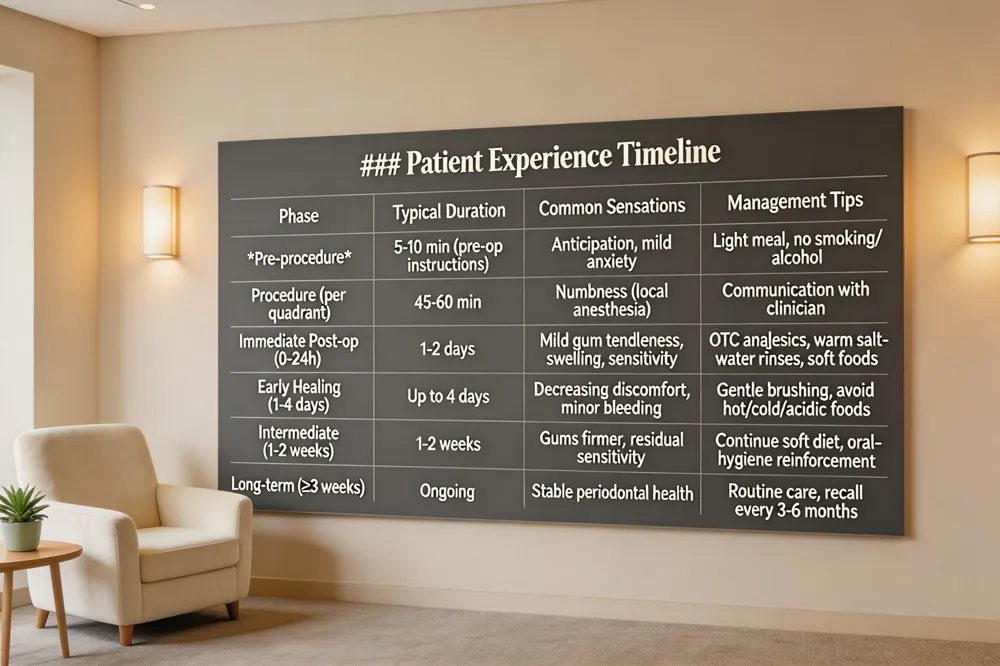 Before the appointment patients should keep up their normal brushing and flossing, eat a light meal, and avoid smoking or alcohol. The clinician then administers local anesthesia (and, if needed, IV sedation) to numb the area. Scaling removes plaque and tartar above and below the gumline, followed by root planing, which smooths the tooth roots to eliminate bacterial niches and promote re‑attachment. The procedure usually lasts 45‑60 minutes per quadrant and may be split into one or two visits.
After SRP most patients notice mild gum tenderness, slight swelling, and temporary tooth sensitivity. Managing discomfort with over‑the‑counter pain relievers, warm salt‑water rinses, soft foods, and gentle brushing helps. Avoid hard, crunchy, very hot or cold, acidic, spicy, and alcoholic foods for the first 24‑48 hours. Symptoms typically subside within a few days; gums feel firmer by one to two weeks and continue to improve over the next several months with diligent oral‑hygiene and regular maintenance visits.
Scaling alone removes visible deposits, while root planing reshapes the root surface; both are essential for deep‑pocket disease. The overall experience is painless during the anesthetized procedure and only mildly uncomfortable afterward, with the long‑term benefit of healthier gums, reduced pocket depths, and a lower risk of tooth loss.
Practical Logistics: Duration, Cost, and Finding Care
Logistics & Cost Overview
| Item | Typical Range | Notes |
|---|---|---|
| Appointment Length per Quadrant | 45‑60 min (scaling + root planing) | May be split into 1‑2 visits |
| Full‑Mouth SRP (4 quadrants) | 2‑4 hours total | Often scheduled over 1‑2 appointments |
| ADA Code D4341 | $185‑$444 per quadrant (average $242) | ≥ 4 teeth per quadrant |
| ADA Code D4342 | $185‑$444 per quadrant (average $242) | 1‑3 teeth per quadrant |
| Total Out‑of‑Pocket (Full‑Mouth) | $740‑$1,776 (average $970) | Varies by region; NYC higher |
| Insurance Requirement | Narrative, diagnostic radiographs, 6‑point chart | Non‑by‑report codes |
| Local Provider Example (NYC) | Tribeca Smiles – 212‑473‑4444 | Offers SRP with optional IV sedation |
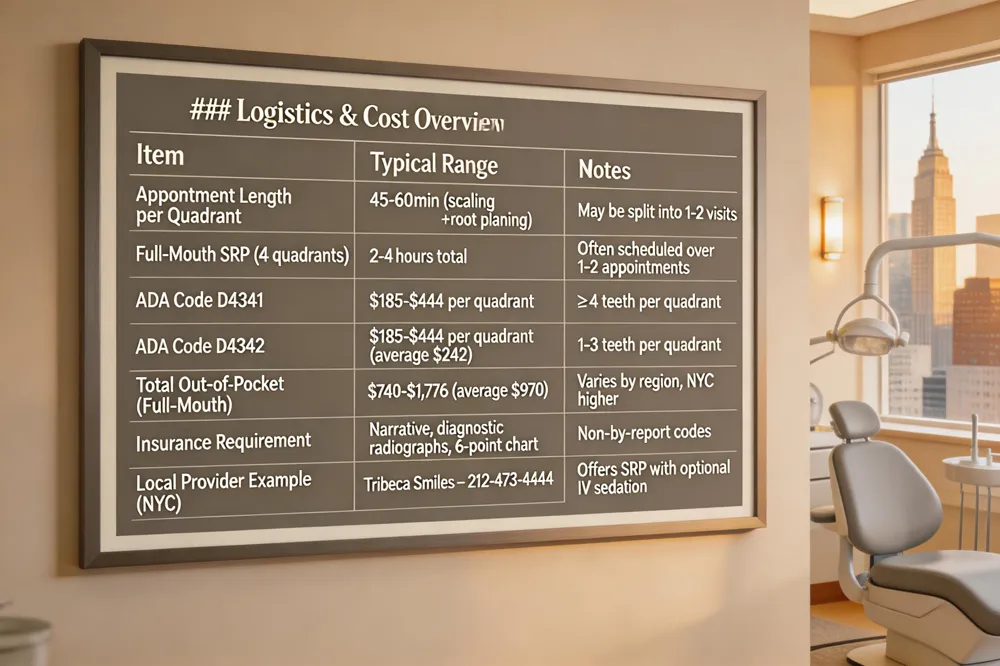 Appointment Length per Quadrant
Scaling and root planing (SRP) usually takes one to two hours per visit. When performed quadrant‑by‑quadrant, each quadrant can be completed in roughly an hour, so a full‑mouth treatment often requires two to four hours spread over one or two appointments. Local anesthesia is administered at the start of each session, adding a few minutes but ensuring patient comfort.
Appointment Length per Quadrant
Scaling and root planing (SRP) usually takes one to two hours per visit. When performed quadrant‑by‑quadrant, each quadrant can be completed in roughly an hour, so a full‑mouth treatment often requires two to four hours spread over one or two appointments. Local anesthesia is administered at the start of each session, adding a few minutes but ensuring patient comfort.
Insurance Coding and Documentation The ADA codes for SRP are D4341 (four or more teeth per quadrant) and D4342 (one to three teeth per quadrant). Both are non‑by‑report codes and require a narrative indicating periodontal disease, diagnostic‑quality radiographs (bite‑wings or full‑mouth series), and a complete periodontal chart with pocket depths, bleeding on probing, and attachment loss recorded at at least six sites per affected tooth. When four quadrants are treated in a single appointment, a detailed narrative explaining the medical necessity (e.g., IV sedation, special‑needs patient) is required.
Out‑of‑Pocket Cost Estimates National averages range from $185 to $444 per quadrant (≈ $242). Treating all four quadrants typically costs $740‑$1,776, though costs can be higher in high‑overhead areas such as New York City. Without insurance, patients can expect $800‑$1,800 for a full‑mouth SRP. Most plans cover a portion of the procedure when medically necessary.
Local Provider Information In New York City, Tribeca Smiles (212‑473‑4444) offers SRP with local anesthesia and optional sedation. Dr Moezinia’s team can provide a personalized estimate, help maximize insurance benefits, and arrange financing if needed.
When Deep Cleaning Is Needed—and When It Isn’t
Indications vs. Non‑Indications for SRP
| Situation | Indication for SRP? | Rationale |
|---|---|---|
| Deep pockets (≥ 4 mm) | Yes | Clinical attachment loss requires sub‑gingival debridement |
| Persistent bleeding on probing | Yes | Indicates active inflammation |
| Radiographic bone loss | Yes | Confirms periodontal destruction |
| Shallow pockets (< 4 mm) & good hygiene | No | Routine prophylaxis sufficient |
| Healthy gingiva, no inflammation | No | SRP would be overtreatment, risk scar tissue |
| Stage II (moderate) disease | Yes | First‑line non‑surgical therapy (SRP) |
| Stage III/IV (advanced) disease | Yes (initial) | SRP followed by surgical adjuncts if pockets > 5 mm remain |
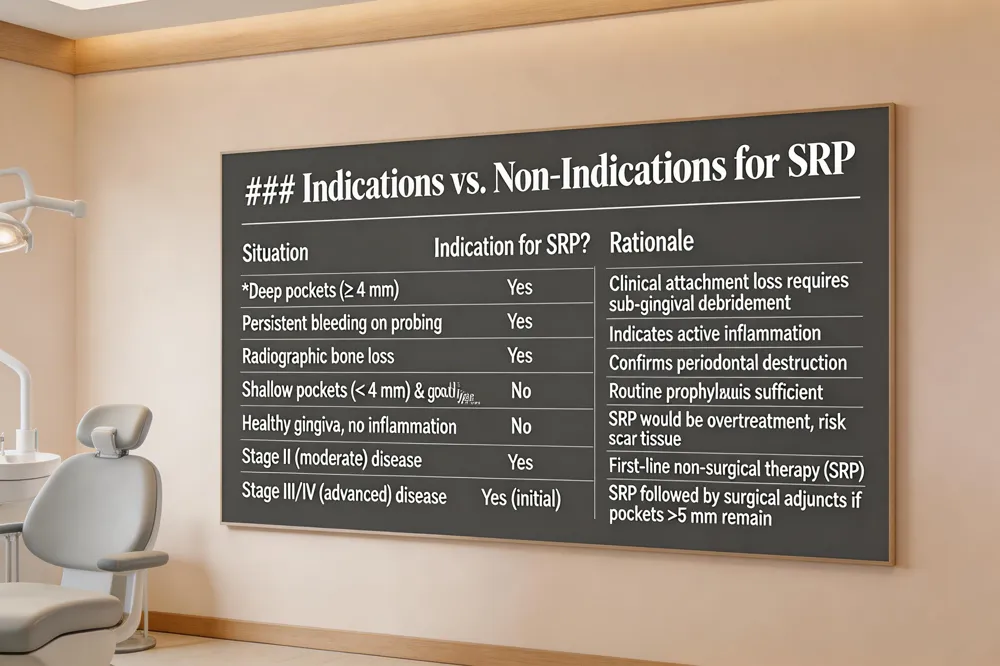 Unnecessary scaling and root planing
Scaling and root planing is only necessary when clinical signs of periodontal disease—deep pockets (≥4 mm), persistent bleeding, attachment loss, or radiographic bone loss—are present. ADA periodontitis definition Patients with good oral hygiene, shallow pockets, and no inflammation are managed with routine prophylaxis and home care. Over‑treatment irritates healthy tissue, creates scar tissue, and adds cost without benefit. A thorough examination and risk assessment guide the decision.
Moderate periodontitis treatment
For moderate disease (stage II, pockets 4–5 mm) the first‑line therapy is non‑surgical SRP using ultrasonic and hand instruments, often supplemented by a short course of subantimicrobial‑dose doxycycline. EFP guideline on SRP Post‑SRP, patients receive individualized oral‑hygiene instruction and are re‑evaluated at 4–6 weeks; surgical referral is considered only if pockets remain >5 mm.
Advanced periodontitis treatment
Severe cases (stage III/IV, pockets >6 mm) start with SRP, followed by surgical adjuncts—flap surgery, guided tissue regeneration, or bone grafts—when deep pockets persist. Mayo Clinic on advanced therapy Host‑modulation therapy and systemic antibiotics are reserved for high‑risk patients. ADA guideline on adjunctive therapies Ongoing maintenance every 3–4 months sustains results.
Risk‑based decision making
Risk‑based decision making considers diabetes, smoking, and immunosuppression. High‑risk patients may receive adjunctive antibiotics or subantimicrobial‑dose doxycycline. Emerging adjuncts like laser‑assisted SRP and AI analysis are adjuncts, not replacements. Documentation with radiographs and six‑point charting supports coverage. ADA documentation requirements
Long‑Term Maintenance and Patient Empowerment
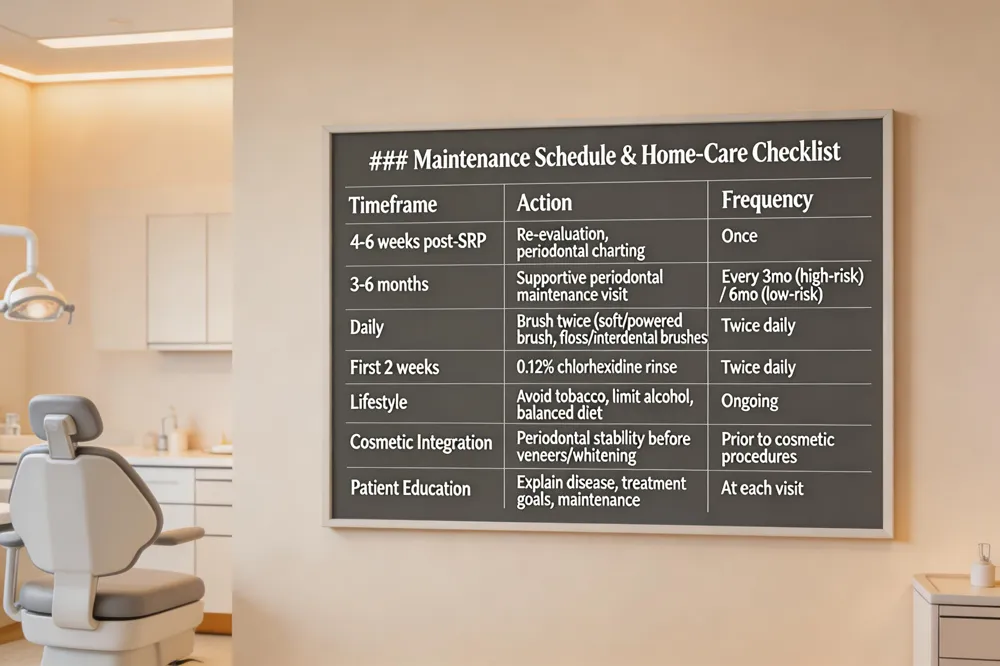
Maintenance Schedule & Home‑Care Checklist
| Timeframe | Action | Frequency |
|---|---|---|
| 4‑6 weeks post‑SRP | Re‑evaluation, periodontal charting | Once |
| 3‑6 months | Supportive periodontal maintenance visit | Every 3 months (high‑risk) or 6 months (low‑risk) |
| Daily | Brush twice with soft/powered brush, floss or interdental brushes | Twice daily |
| First 2 weeks | 0.12 % chlorhexidine rinse | Twice daily |
| Lifestyle | Avoid tobacco, limit alcohol, balanced diet | Ongoing |
| Cosmetic Integration | Ensure periodontal stability before veneers/whitening | Prior to elective cosmetic procedures |
| Patient Education | Explain disease, treatment goals, maintenance importance | At each visit |
 Periodontal Maintenance Schedule
After SRP, schedule a re‑evaluation at 4–6 weeks, then enter supportive care with recalls every 3–6 months (high‑risk patients may need 3‑month intervals).
Home‑Care Strategies
Brush twice daily with a soft/powered brush, floss or use interdental brushes, and rinse with 0.12 % chlorhexidine for two weeks post‑procedure. Avoid tobacco, limit alcohol, and eat a balanced diet.
Integration with Cosmetic Dentistry
Stabilize gum health before veneers, bonding, or whitening to ensure tissue integrity and optimal aesthetics. SRP can also improve gingival contours, reducing the need for surgical crown lengthening.
Patient Education & Confidence
Clear explanations of disease, treatment goals, and maintenance expectations empower patients to own their oral health.
Teeth scaling vs cleaning
A routine prophylaxis removes plaque and surface tartar above the gumline; scaling‑root planing removes sub‑gingival calculus and smooths roots to treat periodontitis.
Do gums grow back after SRP?
Receded tissue does not regenerate; SRP allows remaining fibers to re‑attach and halts further loss. Surgical grafts are required for true tissue restoration.
Scaling and root planing note template
Scaling & Root Planing (SRP) Note Template
Patient: _______________________ Date of Service: __________ DOB: __________
Diagnosis: Periodontal disease with ≥4 mm probing depths and bleeding on probing in [quadrants/teeth]; radiographic bone loss of [X] mm on recent full‑mouth series.
Treatment Performed: Local anesthetic administered; full‑mouth scaling and root planing with hand/ultrasonic instruments on teeth #‑; removal of calculus and diseased cementum.
Risks Discussed: Post‑operative swelling, pain, bleeding, transient recession, sensitivity, infection, rare anesthetic reactions; oral‑hygiene and diet instructions given.
Consent: Patient signed informed‑consent and agreed to follow‑up in 3 months. (Signature) _______________________ (Clinician) _______________________
Scaling and root planing cost
Typical range $185‑$444 per quadrant; insurance often covers ≥50 % when medically necessary.
Scaling and root planing what to expect
Local anesthesia, 45‑60 min per quadrant, mild soreness, swelling, and temporary bleeding; full healing within 1‑2 weeks.
Putting It All Together: A Confidence‑Boosting Path to Periodontal Health
Scaling and root planing (SRP) is the gold‑standard nonsurgical therapy for chronic periodontitis. Robust clinical trials and systematic reviews demonstrate that SRP reduces probing depths by 1.5‑2 mm, gains 0.8‑1.2 mm of clinical attachment, and lowers bleeding on probing, translating into slower bone loss and reduced tooth‑loss risk. The American Academy of Periodontology and the ADA endorse SRP as the first‑line treatment, and adjunctive host‑modulation such as low‑dose doxycycline can further improve outcomes in stage II‑III disease. However, the benefits are transient without diligent supportive periodontal care. Regular maintenance visits every 3‑6 months, reinforced oral‑hygiene instruction, and risk‑factor control (smoking cessation, diabetes management) preserve gains and prevent recurrence. Patients should feel empowered to ask their clinician about the specific pocket depths, radiographic bone loss, the planned maintenance schedule, and any needed adjunctive therapies. Knowing why each step matters builds confidence and promotes long‑term gum health for a brighter smile.