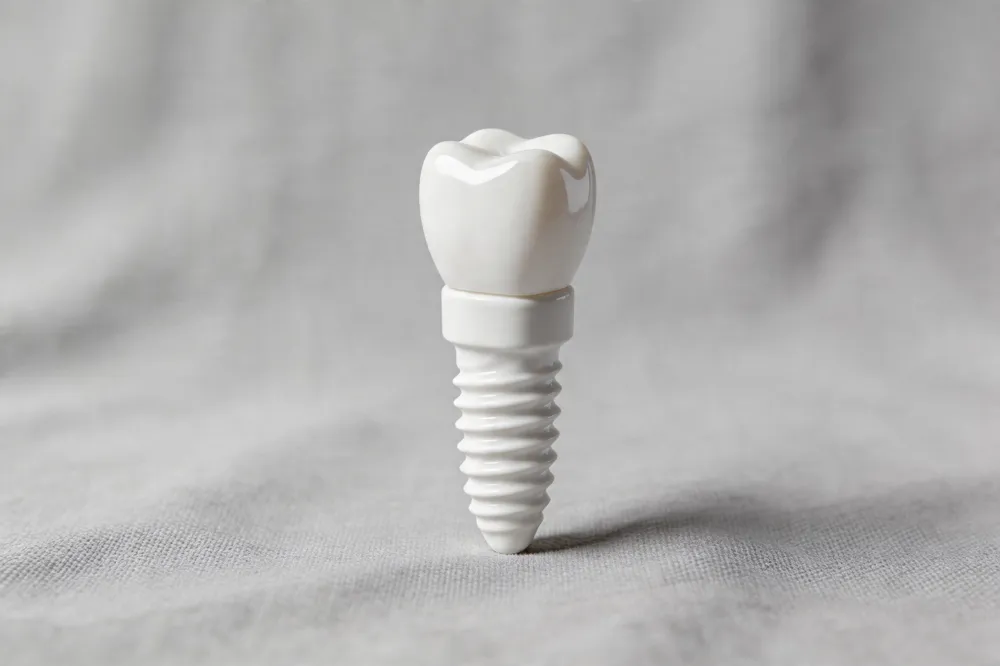
Why a Periodontist Matters from a Implant
Dental implants boast a 94‑96 % long‑term success rate, yet failures occur—early loss of osseointegration or late peri‑implantitis, bone loss, overload, or component fracture. Periodontists complete three additional years of specialty training focused on gum disease, bone regeneration, and implant complications, mastering tools like CBCT, laser decontamination and guided bone regeneration. Their expertise enables early detection of bleeding, probing depth changes or radiographic bone loss, allowing minimally invasive debridement, antimicrobial therapy and personalized risk‑reduction counseling. A patient‑centered approach—regular cleanings, smoking cessation, diabetes control and customized maintenance—maximizes rescue chances and long‑term stability.
Diagnosing a Failing Implant: Tools and Early Warning Signs
 A periodontist begins with a thorough clinical examination, using a periodontal probe to measure pocket depths, bleeding on probing, and implant mobility. Any wobble, pain, or persistent swelling flags a lack of osseointegration. Radiographic imaging follows: periapical X‑rays reveal early bone loss, while cone‑beam CT (CBCT) provides three‑dimensional views of bone volume, defect morphology, and soft‑tissue health. These tools together expose the classic early‑failure signs—persistent pain, redness, pus, bleeding after brushing, and a loose fixture.
Can periodontists restore implants? Yes. They diagnose peri‑implantitis, perform debridement, antimicrobial or laser therapy, and apply bone or soft‑tissue grafts. Loose components may be tightened or replaced; if bone loss is extensive, they remove the implant and plan a regenerated site.
What are common signs of early implant failure? Persistent pain, swelling, redness, pus, mobility, bleeding, and foul taste/odor.
Who is responsible for a dental implant failure? Responsibility is shared: the surgeon for proper placement and risk disclosure, the restorative dentist for prosthetic design and hygiene instructions, the lab for accurate fabrication, and the patient for oral hygiene and health‑condition management.
Treatment Options: From Non‑Surgical Cleaning to Surgical Regeneration
 When a dental implant fails, the first line of defense is non‑surgical debridement combined with antimicrobial therapy. Mechanical cleaning with ultrasonic scalers or titanium‑coated curettes removes biofilm, while adjunctive agents—chlorhexidine rinses, locally delivered antibiotics, laser decontamination, or photodynamic therapy—reduce bacterial load and promote healing. If peri‑implantitis has caused bone loss, surgical regeneration is indicated: guided bone regeneration (GBR) using autograft, allograft, xenograft or synthetic grafts with resorbable membranes restores alveolar volume, and soft‑tissue grafts (connective‑tissue or xenogeneic) thicken the gingival seal. For severe defects where conventional implants are not feasible, a rescue implant (often a zygomatic implant) bypasses deficient bone by anchoring into the dense zygomatic arch, allowing immediate loading and a fixed restoration. Gum recession around an implant is not normal; it signals inadequate soft‑tissue support or disease. Early intervention with soft‑tissue grafts and meticulous oral hygiene can halt progression and preserve the prosthesis.
Choosing the Right Specialist: Why Periodontists Lead the Way
 Periodontists complete three extra years of residency after dental school, concentrating on implant surgery, guided bone regeneration, soft‑tissue grafting, and CBCT imaging. This focused training equips them to manage both the implant and the supporting gum and bone tissue. Oral surgeons excel in extractions and complex bone work, while prosthodontists specialize in prosthetic design and occlusion, but neither routinely treats the periodontal environment essential for implant health. Thus a periodontist offers a one‑stop solution: surgical skill, disease control, and coordinated restoration.
What specialist is best for dental implants? The specialist most highly trained for dental implants is a periodontist. Their combined surgical and periodontal expertise makes them the ideal choice for comprehensive implant treatment.
What advanced dentistry services does Empower Your Smile offer in Tribeca? Empower Your Smile provides custom porcelain veneers, same‑day CEREC crowns and bridges, full‑arch implant placement with guided bone regeneration, periodontics, sedation dentistry, and Invisalign—all delivered with digital imaging and a patient‑centered approach.
Long‑Term Maintenance and Cost Considerations
 Regular professional cleanings and periodic radiographic monitoring are the backbone of implant longevity. A periodontist typically recommends a cleaning every 3–6 months, combined with bite‑ray or CBCT scans to detect early bone loss or peri‑implantitis before it becomes irreversible. Lifestyle factors play an equally crucial role: smoking reduces blood flow and impairs healing, uncontrolled diabetes lowers bone density, and bruxism creates excessive occlusal forces that can loosen or fracture an implant. Addressing these risks through cessation programs, medical management, and night‑guard therapy dramatically improves outcomes.
Why can dental implants fail after 10 years? The leading cause is peri‑implantitis, an inflammatory infection that erodes supporting bone. Systemic conditions such as osteoporosis or diabetes, mechanical overload from grinding or mis‑aligned bites, and poor oral hygiene or smoking also accelerate deterioration, making vigilant maintenance essential.
How much do dental implants cost in NYC? A single‑tooth implant (surgery, abutment, crown) typically ranges from $3,500 to $6,500, with multi‑tooth or full‑arch solutions (All‑on‑4/6) costing $20,000–$35,000 per arch. Additional procedures—bone grafts, sinus lifts, extractions—add $300–$5,000. Most Manhattan practices, including Empower Your Smile, offer financing plans, insurance coordination, and in‑house payment options to spread the investment over time.
Family Care and Late‑Stage Failure Prevention
 Q: Do you have a pediatric dentist in Tribeca?
A: Yes, Empower Your Smile has a dedicated pediatric dentist in Tribeca. Dr. Nora Nakshabendi, DMD, is our board‑certified pediatric specialist who focuses on gentle, age‑appropriate care for children. She works alongside Dr. Moezinia and the rest of our team to ensure a comfortable, family‑friendly environment. Our practice offers comprehensive pediatric services ranging from routine exams to preventive treatments and early oral‑health education. You can schedule an appointment for your child at our Tribeca office and experience personalized, child‑focused dental care.
Q: Can a dental implant fail years after placement?
A: Yes, a dental implant can fail years after it has been placed, although the overall success rate remains high. Late failures are most often linked to peri‑implantitis (a gum infection that causes bone loss), chronic bone loss or osteoporosis, excessive bite forces, or systemic health issues such as uncontrolled diabetes or autoimmune disorders. Poor oral hygiene, smoking, and bruxism can further increase the risk by compromising the bone‑implant interface. Even implants that initially osseointegrate can become loose or infected over time if these factors are not managed. Regular dental check‑ups, diligent home care, and addressing any medical or lifestyle concerns are essential to catch problems early and preserve long‑term implant success.
From Failure to Forever: The Periodontist’s Promise
Periodontists use clinical exams and CBCT imaging to spot peri‑implant inflammation before bone loss becomes evident. When early signs appear, they tailor debridement, antimicrobial rinses, laser decontamination, and, if needed, guided bone regeneration, preserving the fixture. After rescue, a maintenance schedule—professional cleanings every three to six months, interdental brushing, and regular radiographs—keeps disease at bay. Patients must adhere to oral‑hygiene protocols, quit smoking, and manage systemic health. Empower Your Smile combines 3‑D planning, digital guides, and laser therapy, delivering personalized, evidence‑based care that turns a failing implant into lasting success.