
Why Your Gum Health Matters for Diabetes
Periodontal disease and diabetes share a two‑way relationship: high blood sugar weakens immunity and promotes gum infection, while chronic gum inflammation releases cytokines that increase insulin resistance. This oral‑systemic link means that untreated periodontitis can raise HbA1c and accelerate diabetes complications. Professional dental cleanings—especially scaling and root planing—remove plaque and calculus below the gum line, dramatically lowering bacterial load and inflammation. Clinical trials consistently show a 0.3‑0.5% HbA1c reduction after 3–6 months of nonsurgical periodontal therapy, comparable to adding a second diabetes medication. The goal of this article is to explain why maintaining gum health is essential for optimal glycemic control and to encourage regular, dentist‑guided cleanings as a core component of diabetes management. It also supports cardiovascular health and life.
The Two‑Way Link Between Diabetes and Periodontal Disease
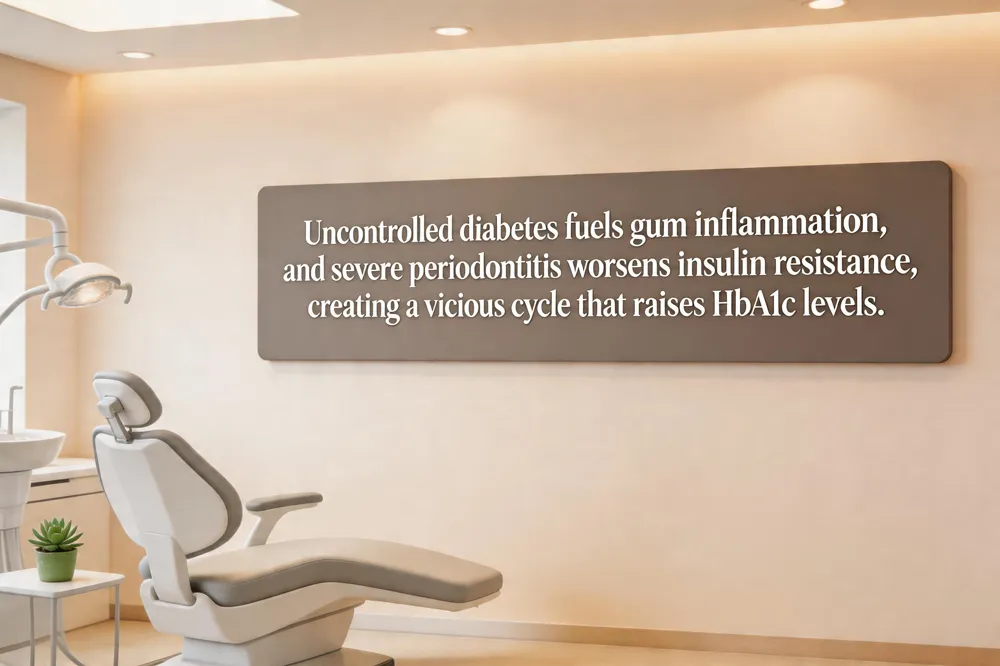 Diabetes and periodontal disease: a two‑way relationship
Uncontrolled diabetes raises blood‑glucose levels, impairing neutrophil function and promoting advanced‑glycation end‑products that make periodontal tissues more susceptible to infection. In turn, chronic periodontitis creates a persistent systemic inflammatory load, releasing cytokines such as TNF‑α, IL‑6 and CRP that aggravate insulin resistance and increase HbA1c. Randomized trials and meta‑analyses consistently show that non‑surgical periodontal therapy (scaling and root planing) lowers HbA1c by roughly 0.3‑0.5 %—a benefit comparable to adding a second oral hypoglycemic agent. Because smoking, poor diet and obesity amplify both conditions, coordinated care between physicians and dental professionals is essential for optimal outcomes.
Pre diabetes and gum disease
Even modest hyperglycemia in pre‑diabetes compromises gingival immunity, allowing plaque‑forming bacteria to proliferate and trigger early inflammation. Epidemiologic data indicate that individuals with pre‑diabetes are at higher risk for gingivitis and periodontitis, and that untreated gum disease can further hinder glucose regulation. Early signs include red, swollen or bleeding gums, persistent hal breath, and receding gum lines—often painless. Rigorous oral‑hygiene (twice‑daily brushing, daily flossing, quarterly professional cleanings) combined with lifestyle measures that improve glycemic control can halt progression. At Empower Your Smile we provide comprehensive periodontal exams and personalized preventive plans to protect both oral and systemic health.
What Happens in Your Mouth When Blood Sugar Is High
 When blood glucose is elevated, the excess sugar leaks into the saliva, turning the mouth into a nutrient‑rich broth for bacteria. Oral microbes such as Streptococcus mutans and Porphyromonas gingivalis thrive on this glucose, rapidly multiplying and forming a sticky, acid‑producing plaque that adheres to tooth surfaces and the gum line. The acidic by‑products demineralize enamel, leading to cavities, while the biofilm irritates the gingiva, triggering inflammation (gingivitis) that can progress to periodontitis if left untreated.
Can type 2 diabetes affect your teeth? Yes—type 2 diabetes directly compromises oral health. High blood‑sugar levels reduce saliva flow, increase glucose in the mouth, and impair neutrophil function, creating a perfect storm for plaque accumulation and gum disease. The resulting chronic inflammation raises systemic cytokines (e.g., IL‑6, TNF‑α), which worsen insulin resistance and further destabilize glycemic control. Consequently, diabetics experience faster progression of gingivitis, deeper periodontal pockets, and a higher risk of tooth loss.
High levels of sugar in saliva can lead to gum disease. The surplus glucose fuels bacterial metabolism, accelerating plaque formation and acid production. This plaque irritates gum tissue, causing bleeding, swelling, and, over time, destruction of the supporting bone. Maintaining tight glycemic control, staying hydrated, and practicing diligent oral hygiene (brushing, flossing, regular professional cleanings) are essential to break this cycle and protect both oral and systemic health.
Scaling and Root Planing: Clinical Evidence and Glycemic Benefits
 Results from randomized controlled trials
Recent RCTs in type‑2 diabetes (T2DM) consistently show that scaling and root planing (SRP) lowers glycated hemoglobin (HbA1c). One 150‑patient trial reported a 1.0 % drop at 3 months and 1.2 % at 6 months versus hygiene‑hygiene instructions alone. Another 90‑patient study found a statistically significant HbA1c reduction after SRP combined with oral‑health education, with fasting glucose also improving. Both studies documented large reductions in bleeding on probing, pocket depth and clinical attachment loss and reported no adverse events.
Meta‑analysis findings on HbA1c reduction
A systematic review of five controlled studies (371 participants) estimated an average HbA1c decrease of 0.40 % (95 % CI –0.77 % to –0.04 %) after SRP, comparable to adding a second oral diabetes medication. Individual trials reported larger effects (≈‑1.1 %) when baseline inflammation was high, while others showed modest 0.3‑0.5 % improvements. Reductions in systemic markers such as hs‑CRP and TNF‑α correlated with the glycemic benefit.
Adjunctive antibiotics and safety considerations
Adjunctive systemic antibiotics (metronidazole, doxycycline) have been tested; they did not produce additional HbA1c gains beyond SRP alone and did not increase adverse events. SRP is safe for diabetic patients when glucose is stable (70‑300 mg/dL) and local anesthesia is used judiciously.
Is scaling contraindicated in diabetes?
No. SRP is recommended for diabetic patients because it reduces periodontal inflammation and can improve glycemic control. The procedure is safe when glucose levels are within an acceptable range and the appointment is timed around meals and medication.
Diabetes gum disease treatment
Effective management starts with rigorous daily oral hygiene, regular professional cleanings, and SRP when pockets are present. Coordination with the medical team ensures stable blood‑sugar before and after treatment, and adjunctive therapies (localized antibiotics, minimally invasive surgery) may be added if needed. Successful periodontal therapy has been shown to lower HbA1c and support overall diabetes management.
Dental Implants and Glycemic Targets: Preparing for Success
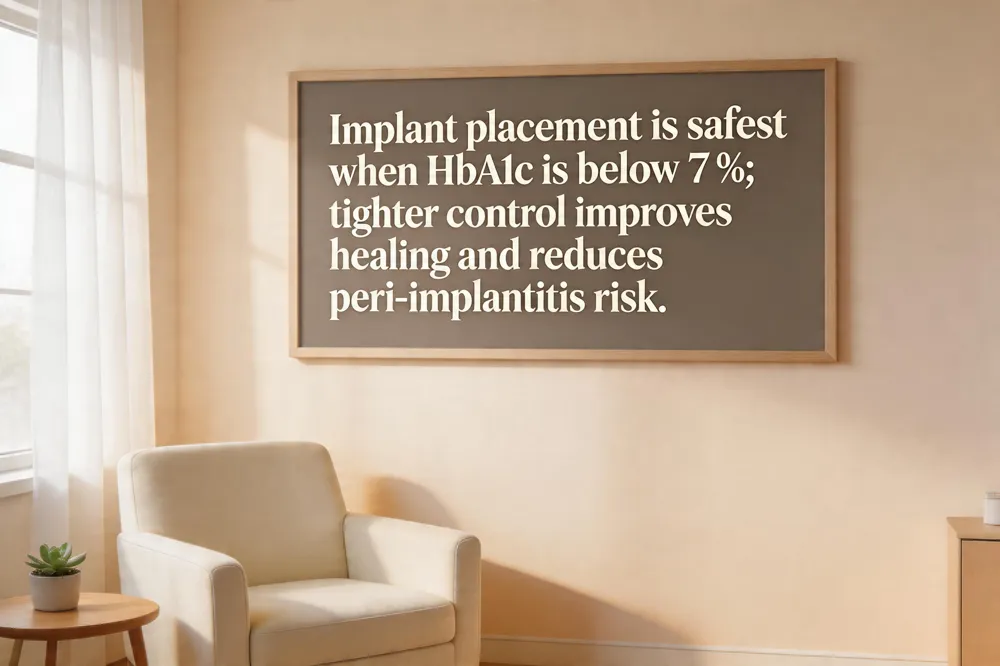 Current evidence supports a clear glycemic guideline for implant surgery. Most specialists aim for an HbA1c below 7 % (often <6.5 %) before placing implants, because lower values reduce infection risk and promote faster osseointegration. Patients with HbA1c around 8 % can achieve outcomes comparable to non‑diabetics, but values above 8 % are linked to delayed wound healing, higher peri‑implantitis rates, and greater postoperative complications.
High HbA1c also worsens systemic inflammation, raising CRP, IL‑6 and TNF‑α which impair bone remodeling and increase the likelihood of implant failure. Consequently, clinicians often defer elective oral procedures until the patient’s glycemic control improves to the 7 %–7.5 % range. Routine cleanings and simple restorations may be performed safely up to HbA1c ≈ 8.5 %, but close blood‑glucose monitoring is advised.
Successful implant therapy requires a collaborative care model. Dentists should request a recent HbA1c test, discuss results with the patient’s physician, and develop a joint plan to lower A1c before surgery. Coordinated adjustments in medication, diet, and oral‑hygiene reinforcement can bring A1c into the target range, ensuring optimal healing and long‑term implant stability.
Practical Oral‑Health Strategies for Diabetics
 A growing body of clinical research shows that non‑surgical periodontal therapy—especially scaling and root planing (SRP)—lowers systemic inflammation and can reduce HbA1c by 0.3‑0.6 % in people with type‑2 diabetes. Meta‑analyses of five randomized trials (n = 371) report an average HbA1c drop of 0.40 % after 3‑6 months, comparable to adding a second oral hypoglycemic agent. Because periodontal inflammation drives insulin resistance, regular deep‑cleanings become an adjunct to diabetes management, not merely a cosmetic procedure.
The 3‑3‑3 rule for daily care and emergency pain – Brush for three minutes, three times a day, and complete a three‑step routine (brush, floss or interdental cleaning, fluoride rinse). If sudden tooth pain occurs, three 200 mg ibuprofen tablets every three hours (no more than three days) can control inflammation while you arrange a dental visit.
Recommended cleaning frequency for diabetes – The American Diabetes Association and the American Academy of Periodontology advise at least two professional cleanings per year; many clinicians suggest every three to four months for diabetic patients because their risk of periodontitis is two‑ to three‑fold higher.
Integrating dental visits into overall diabetes management – Schedule scaling and root planing (SRP) (or maintenance prophylaxis) as part of your diabetes care plan, coordinate with your physician, and track HbA1c before and after treatment. The reduction in periodontal‑derived cytokines (TNF‑α, IL‑6, CRP) after SRP improves insulin sensitivity and shortens wound‑healing time, reinforcing the bi‑directional link between gum health and blood‑sugar control.
What is the 3‑3‑3 rule for teeth? The 3‑3‑3 rule is a simple, memorable guideline that helps patients keep their mouths healthy and manage occasional tooth pain. For daily oral‑hygiene it means brushing for about three minutes, three times each day, and completing a three‑step routine of brushing, flossing (or cleaning between teeth) and using a fluoride rinse when appropriate. When a sudden ache strikes outside office hours, the same “3‑3‑3” concept is used for short‑term pain control: three 200 mg ibuprofen tablets every three hours, for no more than three days, to reduce inflammation. Both versions emphasize consistency and a limited time frame, reminding you to seek professional dental care promptly. Following the rule can lower cavity risk, lessen swelling, and keep you comfortable while you schedule a visit with your dentist.
Can diabetics get their teeth cleaned? Yes, diabetics can and should have their teeth professionally cleaned. Regular prophylactic cleanings remove plaque and tartar that can exacerbate gum disease, and people with diabetes are more prone to periodontal infection. Keeping the gums healthy also helps stabilize blood‑sugar levels and can improve overall diabetes management. Because of the higher risk, most dentists—including our team at Empower Your Smile—recommend cleanings at least twice a year and often every three to four months for well‑controlled diabetes. A gentle, personalized cleaning in our Tribeca office is safe, comfortable, and an essential part of maintaining a healthy, confident smile.
Putting It All Together: A Healthier Smile, A Healthier Life
Scaling and root planing (SRP) consistently lowers HbA1c by 0.3%‑0.5% (and up to 1% in some trials) by reducing periodontal inflammation, bleeding, and pathogenic bacteria, which in turn improves insulin sensitivity and systemic inflammatory markers such as CRP and TNF‑α. These modest glycemic gains are comparable to adding a second oral hypoglycemic agent and translate into fewer diabetes‑related complications. Because the benefit hinges on sustained oral health, patients should schedule professional periodontal check‑ups and cleanings every three to six months, with reinforcement of daily hygiene at home. Empower Your Smile integrates SRP into a comprehensive diabetes‑care pathway: dental clinicians screen for periodontitis, coordinate with physicians, and provide personalized maintenance plans that keep gums healthy and blood‑sugar levels stable. Regular visits at Empower Your Smile thus support both a brighter smile and better metabolic control.