Welcome to a Longer‑Lasting Smile
Professional whitening opens enamel pores, making teeth vulnerable to new pigments. Within 24‑72 hours the enamel is more porous; pigmented foods, coffee, tea, red wine, or tobacco can quickly re‑stain. The porous surface also lets acids erode enamel, exposing yellow dentin and accelerating fading. To counter this, six unconventional tricks can help: (1) drink staining liquids through a straw; (2) rinse with water immediately after pigmented meals and wait 30‑60 minutes before brushing; (3) chew sugar‑free xylitol gum to boost saliva flow; (4) apply a fluoride varnish or remineralizing gel after whitening to seal pores; (5) incorporate calcium‑rich foods such as cheese or yogurt that coat enamel; (6) perform an oil‑pulling routine with coconut oil to reduce plaque and bacterial pigments. These habits reinforce enamel resilience and lock in the brighter shade.
1. Professional Foundations and Real‑World Costs
 Best way to whiten teeth at dentist
The most effective dentist‑provided whitening is an in‑office bleaching session using a high‑strength hydrogen peroxide or carbamide peroxide gel. The dentist records your shade, isolates the gums, applies the gel, and activates it with a light or laser for 20‑30 minutes. This supervised approach can lift several shades in a single visit while minimizing gum irritation and sensitivity. Follow‑up sessions or a custom‑fit take‑home tray may be recommended for fine‑tuning and maintenance.
Cost of professional teeth whitening
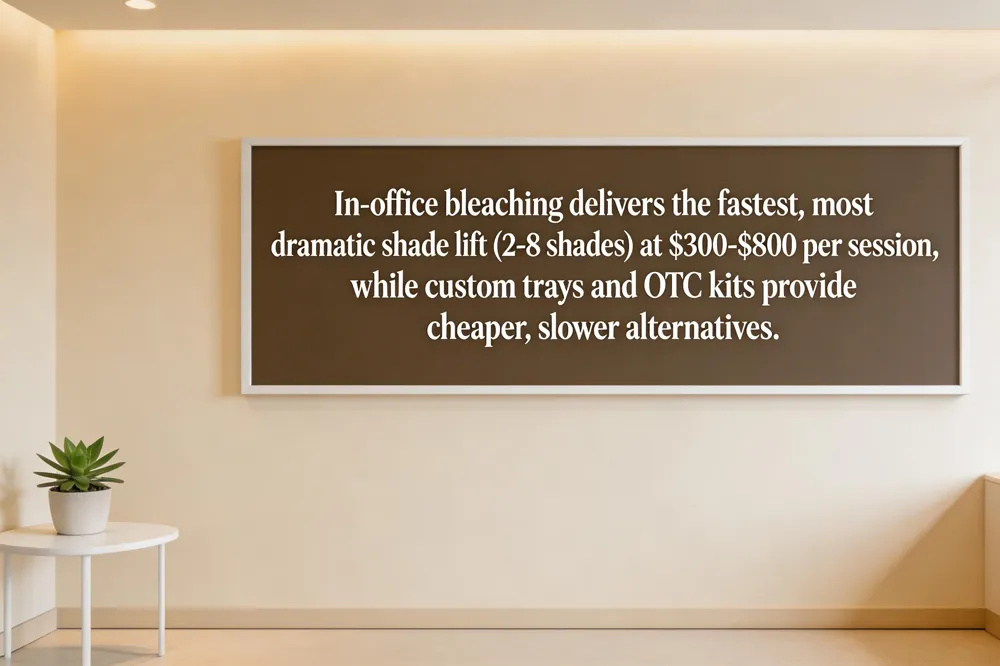
In the United States, an in‑office bleaching session typically ranges from $300‑$800 (average $450). Custom‑tray at‑home kits are $100‑$600, while OTC products are $5‑$55 but less effective. Prices vary by location and technology (LED, laser) and most insurance plans do not cover cosmetic whitening.
Types of teeth whitening at dentist
Dentists offer three main options: (1) in‑office bleaching with light‑activated high‑strength peroxide for rapid results, (2) custom‑fit take‑home trays with professional‑grade gel for gradual whitening, and (3) hybrid protocols combining a brief in‑office activation with a short course of tray use. Each can be tailored to stain type, budget, and timeline.
Best ADA approved teeth whitening
Trusted ADA‑approved at‑home options include Crest 3D Whitestrips and Opalescence Go pre‑filled trays (10‑% or 15‑% peroxide). For professional‑strength results, the ADA‑Seal‑approved Zoom! in‑office system delivers fast, dramatic shade improvement under dentist supervision.
Teeth whitening at dentist cost
A single in‑office bleaching session costs $300‑$800; take‑home tray packages range $500–$1,200 for the full treatment course. Chains like Aspen Dental average $449 per LED whitening visit. Costs depend on peroxide strength, number of sessions, and any additional lighting technology. Financing options are often offered since most insurance plans consider whitening cosmetic.
2. Post‑Treatment Secrets: Keep the Shade Alive
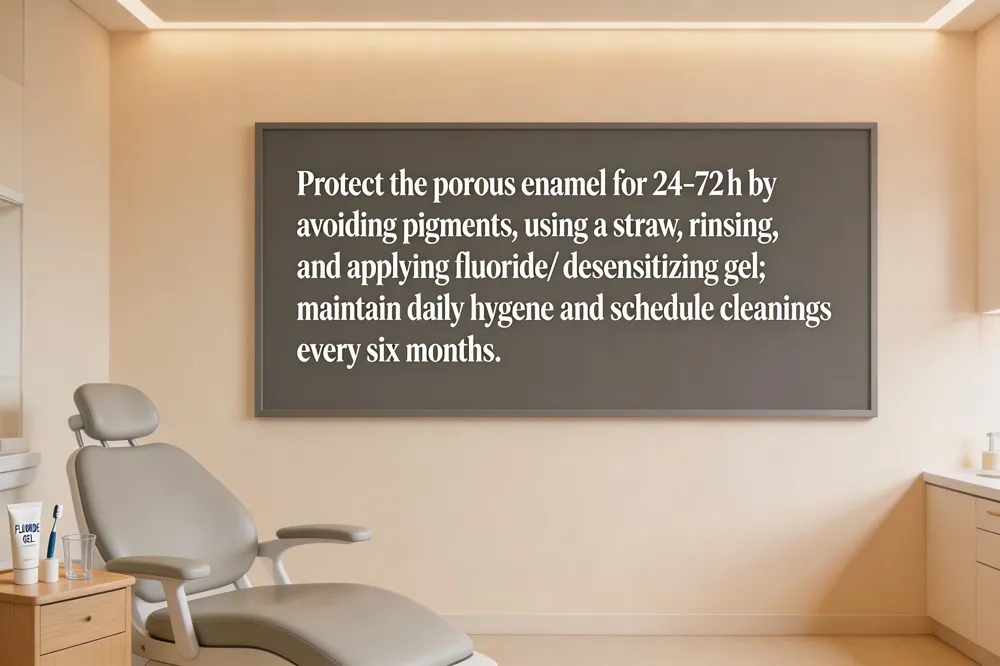 After a whitening session Enamel is more porous for 24‑72 hours after whitening, inviting new pigments. Protect it by avoiding pigmented foods and drinks for first 72 hours; if you must indulge, sip Drink through a straw to reduce contact with front teeth and rinse with water. Apply Apply protective fluoride varnish after whitening to lock in whiteness / desensitizing gel right after treatment to remineralize pores and lock in brightness.
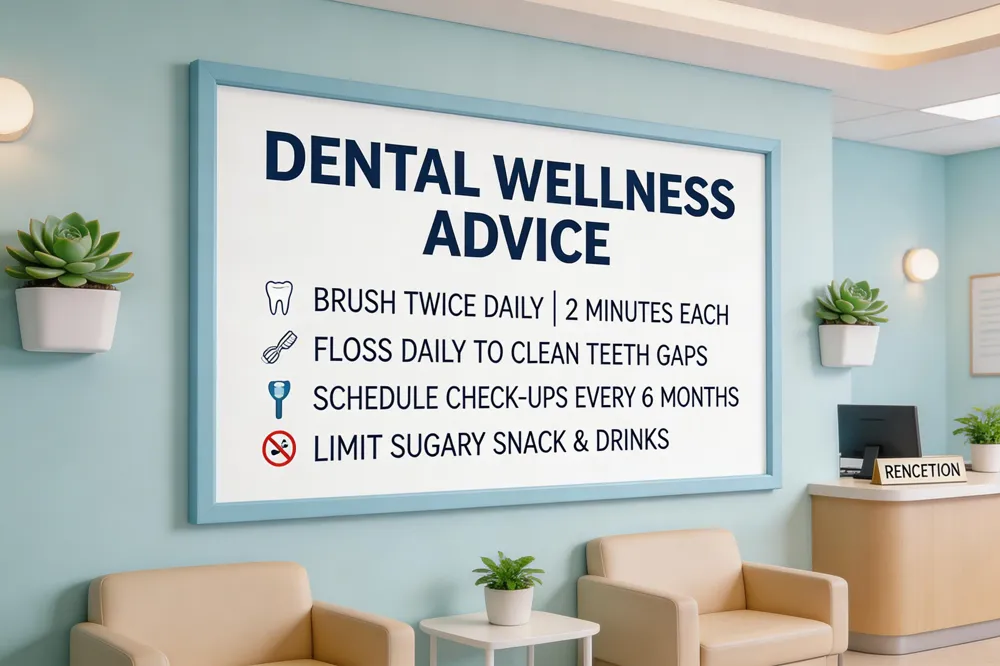
Overnight Brush twice daily for at least two minutes with a brush and Use whitening toothpaste 1‑2 times per week for maintenance; avoid dark drinks and sip water to wash away stains. Floss daily, use antibacterial mouthwash and get Get professional cleanings every six months to remove plaque.
How to make whitening last longer? Minimize stain exposure, use Drink through a straw to reduce contact with front teeth, rinse, apply fluoride/gel, maintain daily oral hygiene and schedule touch‑ups.
Teeth whitening tips overnight: Brush twice daily for at least two minutes, avoid dark drinks, use a night‑time tray if prescribed, and stay Stay well hydrated to promote saliva cleansing.
Before treatment teeth are often yellow‑brown; after a session they can be 4‑10 shades lighter, staying bright for 12‑24 months with proper care. Results aren’t permanent; upkeep with Use whitening toothpaste 1‑2 times per week for maintenance, Floss daily and Get professional cleanings every six months extends them. Taylor Swift likely combines in‑office bleaching, touch‑ups, hygiene and ultra‑thin veneers to keep her smile camera‑ready.
3. Daily Habits & Home Strategies for a Brighter Shade
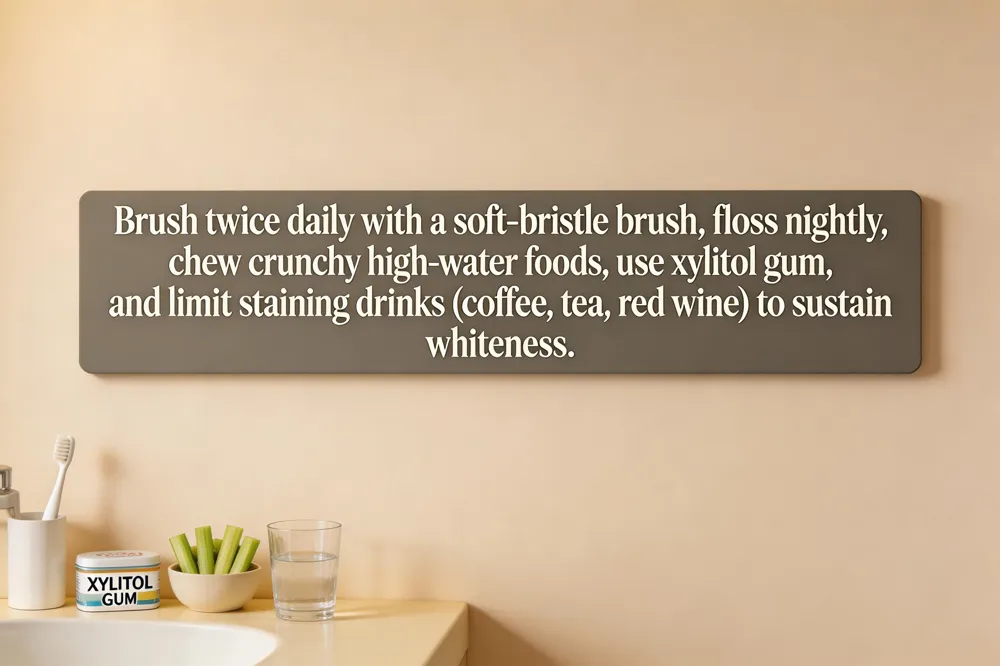 Begin with a professional whitening, then keep the shade with a fluoride‑rich, low‑dose peroxide toothpaste (e.g., Opalescence or Crest 3D White) and a soft‑bristle brush. Brush twice a day for two minutes, using gentle circular motions, and floss nightly to remove plaque that can trap pigments. Crunchy, high‑water foods—apples, carrots, celery, raw broccoli—act as natural toothbrushes, boosting saliva flow that rinses away stain particles. Chewing xylitol‑sweetened gum after meals further stimulates saliva, neutralizing acids and preventing new discoloration. For occasional extra care, a mild DIY paste of baking soda and a few drops of hydrogen peroxide can be used no more than once a week; avoid abrasive or acidic home remedies like charcoal, lemon juice, or undiluted apple‑cider vinegar, which erode enamel. Oil pulling with coconut oil (5‑10 minutes, a few times weekly) reduces plaque and bacteria, supporting a brighter appearance. Limit staining agents—coffee, tea, red wine, tobacco—by using a straw, rinsing with water, or waiting 30 minutes before brushing. Schedule professional cleanings every six months and consider a custom‑fit tray for periodic touch‑ups to lock in the whiteness.
4. Celebrity Smile Secrets & the 3‑3‑3 Rule
 Taylor Swift’s dazzling smile is built on a disciplined post‑whitening routine that mirrors the 3‑3‑3 rule. After her professional in‑office bleaching, she drinks coffee and tea through a straw to reduce contact with front teeth, rinses with water and waits three hours before bedtime to let saliva remineralize enamel. She brushes three times daily for three minutes each, using a soft‑bristled electric brush and a fluoride‑rich toothpaste that also desensitizes. Every three months she swaps her brush and keeps a protective fluoride varnish on hand for occasional post‑bleach applications. The 3‑3‑3 rule itself is straightforward: brush three times a day, replace the brush every three months, and avoid any non‑water intake for the last three hours before sleep. Coupled with flossing, a xylitol gum to boost saliva, and regular six‑month professional cleanings, this mantra locks in the newly‑whitened shade, reduces surface porosity, and minimizes stain uptake. By following these steps, the bright result can last months, even years, with minimal sensitivity. She limits red wine and berries during first 72 hours.
5. Long‑Term Maintenance: Touch‑Ups, Diet & Professional Care
 Professional in‑office whitening typically requires a single 30‑60 minute appointment; most patients notice a shade lift immediately, with the full brightness developing over the next 24‑72 hours as the enamel re‑hydrates. At‑home custom trays are worn 30‑60 minutes daily for 2‑5 weeks, while OTC strips or whitening toothpaste can take several weeks for modest results. A professional in‑office session can brighten teeth by 2‑8 shades in one 60‑90 minute visit, with many achieving a 7‑8 shade gain with systems like Zoom® and a 4‑shade gain with Opalescence® Boost. With diligent oral hygiene and lifestyle choices, the effect can last six months to three years. To sustain whiteness, use a fluoride‑rich, low‑abrasion whitening toothpaste, consider periodic touch‑up trays (1‑2 hours a week), and protect enamel with a night guard if you grind. Limit pigmented foods and drinks—coffee, tea, red wine, berries—use a straw, rinse with water, and eat crunchy, high‑water foods (apples, carrots, celery) to boost saliva and naturally cleanse teeth.
Your Bright Future Starts Today
Let’s review the six unconventional tricks that can keep your smile dazzling after a professional whitening session: sip staining drinks through a straw, rinse with water immediately after pigmented foods, chew sugar‑free xylitol gum to boost saliva, apply a fluoride varnish or desensitizing gel, incorporate crunchy calcium‑rich foods such as cheese or apples, and finish with a brief oil‑pulling routine. While each tip offers a small edge, the greatest longevity comes from pairing them with expert dental care—regular cleanings, custom‑fit trays, and proper after‑treatment remineralization. By weaving these habits into daily life, you protect the newly brightened enamel and prevent new stains from setting. Ready to experience lasting brilliance? Contact Empower Your Smile today to schedule a personalized whitening consultation. Our team tailors a plan to fit your schedule perfectly.