Introduction
In 2024 U.S. cosmetic dentistry is dominated by minimally invasive, technology‑driven solutions that prioritize natural‑looking results and patient comfort. Innovations such as LED‑activated teeth whitening, ultra‑thin no‑prep veneers, digital smile design (DSD), and laser gum contouring have become mainstream, while 3‑D printing and CAD/CAM enable same‑day restorations. Social media, celebrity smile culture, and a heightened focus on self‑image are major demand drivers, pushing patients of all ages to seek quick, aesthetic upgrades. At the same time, advances in biomimetic materials, AI‑assisted treatment planning, and eco‑friendly products reflect growing expectations for personalized, sustainable care. Together, these forces are reshaping the cosmetic dental market into a fast‑paced, patient‑centered arena where precision, convenience, and natural aesthetics are the new standards.
Hot Trends: Whitening, Minimally Invasive Procedures, and Natural Restorations
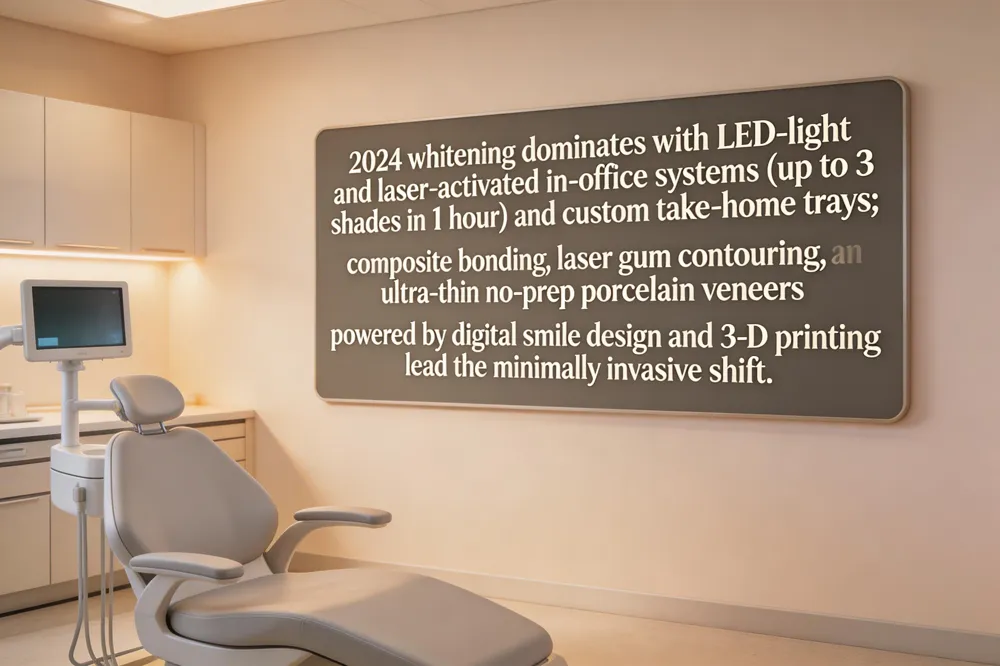 In 2024, LED‑light and laser‑activated in‑office whitening dominate the market, delivering up to three shade improvements in as little as one hour while reducing sensitivity with desensitizing agents. Take‑home kits now feature custom trays and professional‑strength gels that mimic office results with safer, gradual brightening.
Composite bonding, using nano‑filled resin, repairs chips, gaps, and discoloration in a single visit, preserving most natural tooth structure. Laser gum contouring reshapes excess tissue precisely, cutting discomfort and healing time compared with traditional surgery. Both techniques embody the minimally invasive shift that patients demand.
Natural‑looking veneer options have moved toward ultra‑thin, no‑prep porcelain shells—often fabricated with digital smile design and 3‑D printing—to achieve seamless translucency while conserving enamel.
Porcelain veneers 2024 reviews**: Patients praise the natural, stain‑resistant appearance and 10‑15‑year durability of thin, high‑strength ceramics like eMax®, despite higher cost and irreversible enamel removal.
Porcelain veneers 2024 cost**: Prices range $1,000‑$2,500 per tooth; a full‑mouth makeover of eight teeth can total $8,000‑$20,000, typically not covered by insurance but often financed.
What is the 3‑3‑3 rule for teeth?: A lay‑person guideline—brush three times daily for three minutes each and avoid eating three hours before bedtime. Evidence‑based practice recommends twice‑daily brushing for two minutes, proper flossing, and professional cleanings for optimal health.
Digital Integration: Smile Design, AI, and 3‑D Printing
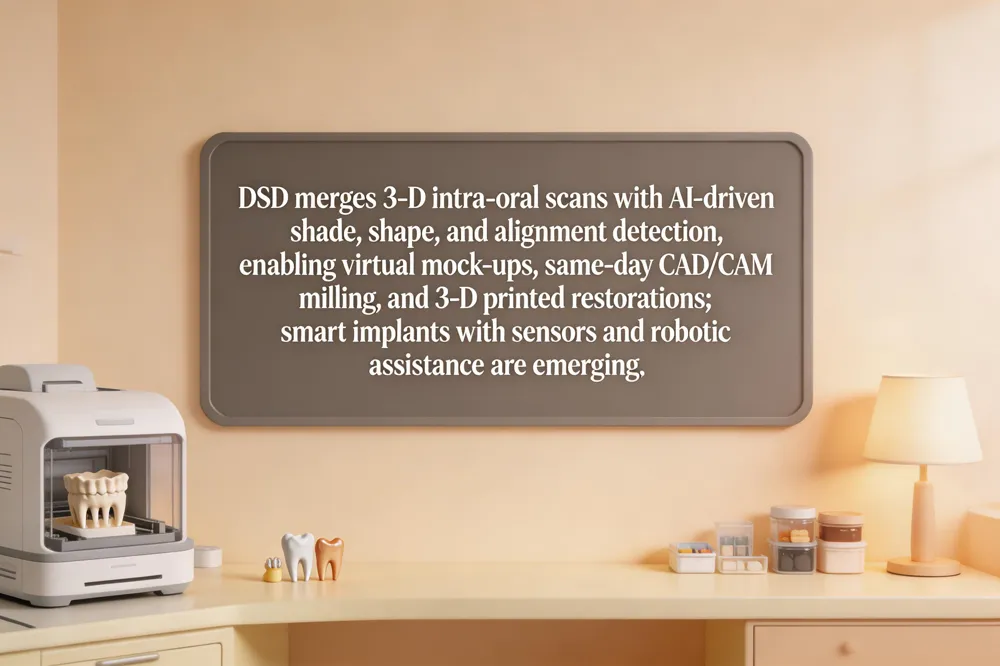 Digital Smile Design (DSD) is now a staple of U.S. cosmetic practices, using 3‑D intra‑oral scans and facial analysis to create a virtual mock‑up that lets patients preview veneers, bonding or orthodontic outcomes before any tooth is altered. Artificial intelligence enhances this workflow by auto‑detecting shade, shape, and alignment, suggesting optimal restorative designs, and even predicting long‑term stability. The same digital backbone powers same‑day CAD/CAM milling and 3‑D printed restorations, allowing clinicians to fabricate ultra‑thin porcelain veneers, crowns or provisional implants in a single appointment with sub‑millimeter accuracy.
Latest news on dental implants: early 2026 research shows mini‑implants loaded immediately under mandibular overdentures achieve survival rates comparable to standard implants, while nano‑textured, hydrophilic surfaces and 3‑D cone‑beam imaging enable same‑day placement with instant loading. Smart implants equipped with sensors and robotic‑assisted surgery are emerging, offering personalized, faster, and more comfortable solutions.
Current implant research focuses on novel surface designs—porous titanium‑hydroxyapatite composites, β‑alloys, nano‑scale modifications—to boost osseointegration, as well as guided‑surgery techniques and the impact of implant geometry on healing.
Trend highlights: nanotechnology‑based surface modifications, biomimetic calcium‑phosphate coatings, and growth‑factor‑infused implants are driving faster bone integration and longer‑lasting, natural‑looking smiles.
Veneer Landscape: Popularity, Materials, and Clinical Choices
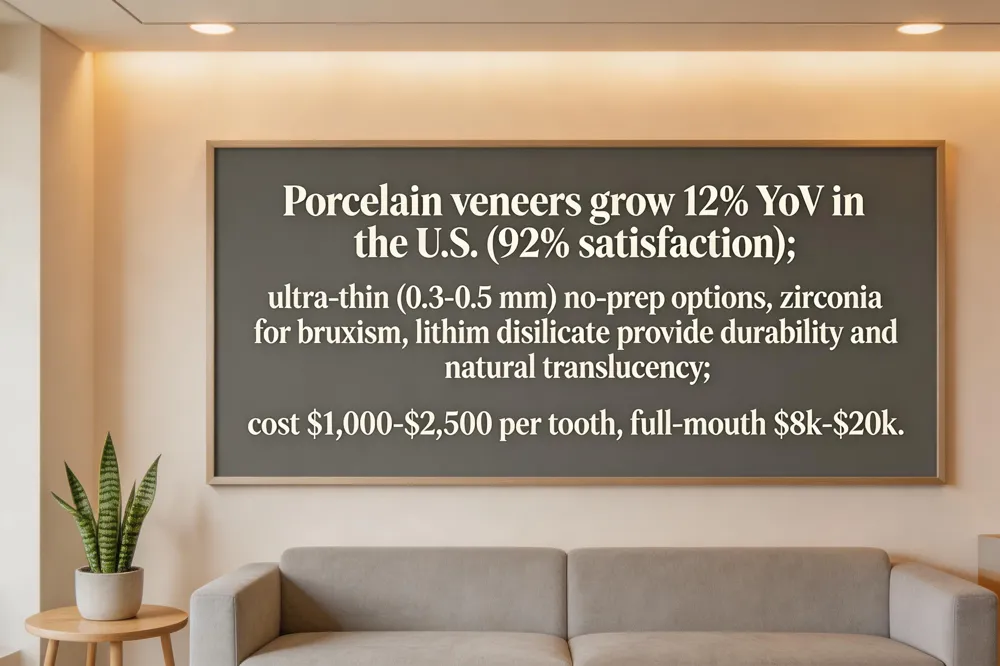 Porcelain veneers continue to dominate the cosmetic market, with a 12% U.S. growth in 2024 and a 92% patient‑satisfaction rate. Advances in material science now offer ultra‑thin shells, zirconia, and lithium disilicate options that preserve more enamel while delivering natural translucency and stain resistance. Ultra‑thin designs (0.3–0.5 mm) enable no‑prep or minimal‑prep placements, reducing chair time and postoperative sensitivity. For patients with bruxism, high‑strength zirconia veneers are preferred over traditional porcelain because they resist chipping under heavy occlusal forces, while E‑Max porcelain provides superior aesthetics for less demanding cases.
Best porcelain veneers 2024 – Porcelain remains the gold standard, offering 10‑15 years of durability, stain resistance, and enamel‑like brilliance. Digital imaging and 3‑D printing ensure precise fit and minimal tooth reduction, making it the top recommendation for a lasting, confidence‑boosting smile.
Best veneers for bruxism – Zirconia veneers provide the durability needed for grinding patients, while E‑Max porcelain offers excellent aesthetics for those with lighter bite forces.
Why dentists advise against veneers – Permanent enamel removal, potential sensitivity, and the risk of failure in patients with decay, gum disease, or bruxism make veneers unsuitable for some. Costs and limited long‑term maintenance also factor into the decision.
Implant Adoption and Statistics: From Past to Future
 Number of dental implants placed per year worldwide
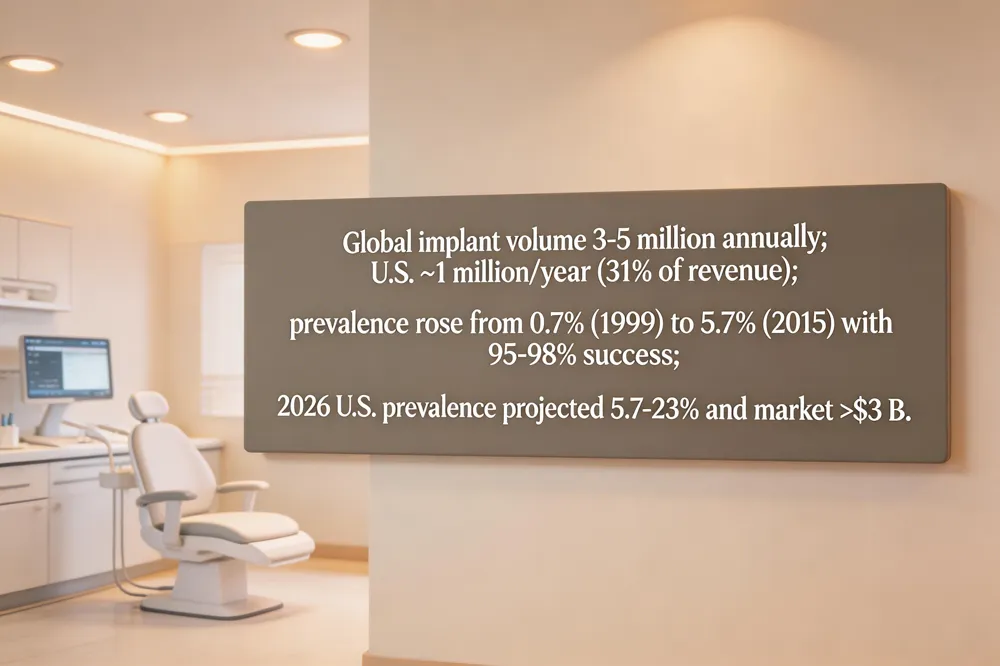
The global implant industry places roughly 3 – 5 million implants annually. This volume reflects a double‑digit annual growth rate driven by an aging population and expanding awareness of oral‑health solutions. In the United States alone, close to one million implants are placed each year, accounting for about 31 % of worldwide revenue.
Number of dental implants placed per year worldwide
The global implant industry places roughly 3 – 5 million implants annually. This volume reflects a double‑digit annual growth rate driven by an aging population and expanding awareness of oral‑health solutions. In the United States alone, close to one million implants are placed each year, accounting for about 31 % of worldwide revenue.
Dental implant statistics U.S. implant prevalence surged from 0.7 % (1999‑2000) to 5.7 % (2015‑2016) among adults with missing teeth, an average annual increase of ~14 %. Success rates now sit at 95‑98 %, with implants often lasting 25 years or more. Over 3 million implants were placed in 2019, generating $2.12 billion in revenue.
Trends in dental implant use in the US 1999‑2016 and projections to 2026 The steepest absolute gain occurred in the 65‑74 age group, while the 55‑64 cohort saw a 1,000 % relative rise. Projections for 2026 suggest prevalence could reach 5.7 %–23 %, with the market expected to exceed $3.b.billion and annual U.S. placements surpassing one million.
What percentage of people have veneers? Approximately 8 % of Americans have received dental veneers, with the highest demand among adults aged 40‑51.
Emerging Innovations: Smart, Drill‑Free, and Sustainable Solutions
 Smart dental implants
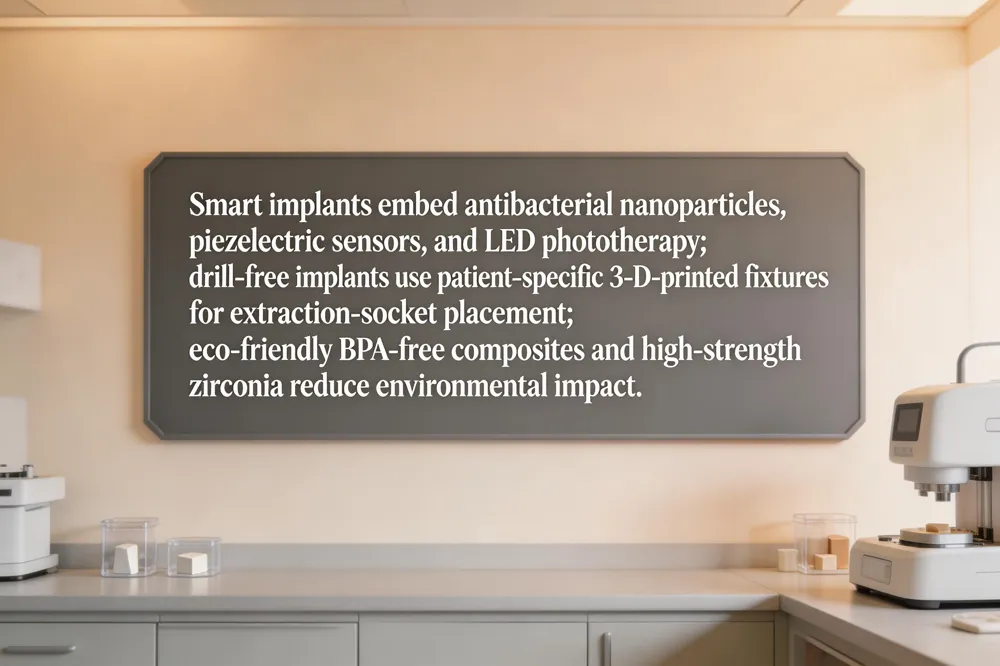
Smart implants embed antibacterial nanoparticles and piezoelectric sensors that harvest chewing energy to power LED phototherapy. Real‑time temperature, pressure, and pH data are transmitted to the dentist, enabling early infection detection and extending implant longevity.
Smart dental implants
Smart implants embed antibacterial nanoparticles and piezoelectric sensors that harvest chewing energy to power LED phototherapy. Real‑time temperature, pressure, and pH data are transmitted to the dentist, enabling early infection detection and extending implant longevity.
Drill‑free dental implants Using 3‑D imaging and a pre‑shaped, patient‑specific implant, the device is placed directly into a fresh extraction socket. This preserves natural bone, reduces trauma, shortens recovery, and allows trained general dentists to offer a faster, cost‑effective solution.
Do most Americans have veneers? No. While veneer procedures have risen (≈8%% of adults wear them, the majority of the U.S. population focuses on routine care. Veneers remain a premium, elective treatment for a small fraction of patients.
Can people with autoimmune disease get dental implants? Autoimmune conditions do not automatically disqualify patients, but careful medical evaluation, modified surgical protocols, and coordination with physicians are essential to ensure safe healing and osseointegration.
Sustainable and biocompatible materials Modern practices favor eco‑friendly, BPA‑free composites, high‑strength zirconia, and lithium disilicate ceramics that mimic natural tooth translucency while reducing environmental impact and allergic risk.
Patient Guidance, Access, and Future Outlook
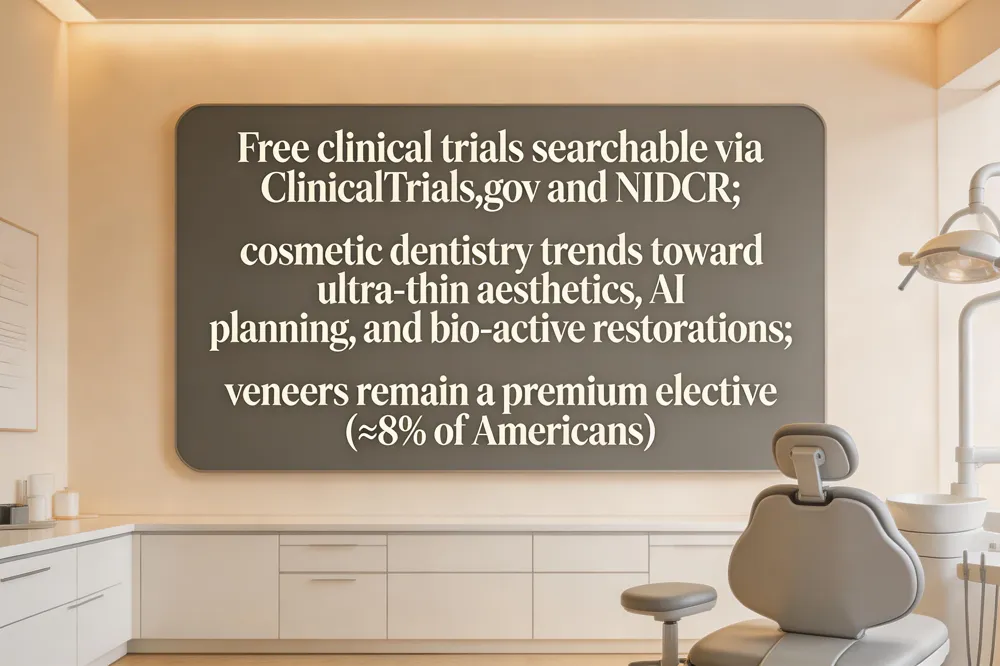 If you’re looking for free dental‑implant clinical trials, start by searching the national registry at ClinicalTrials.gov and filter for “dental implant” studies within a 25‑mile radius of New York City. The NIDCR portal also lists trials at nearby academic centers such as Columbia University College of Dental Medicine and NYU College of Dentistry. Most trials cover all procedural costs and may reimburse travel; call the study coordinator for eligibility details. Our office can help you navigate these resources.
Cosmetic dentistry is moving toward ultra‑thin, highly aesthetic materials, digital workflow integration, and bio‑active restorations that promote tissue health. Advances in bonding agents, 3‑D printing and AI‑driven treatment planning will make procedures faster, more precise, and more personalized.
No, most Americans do not have veneers. While the cosmetic‑dentistry market is expanding—driven by celebrity influence and a global veneer market worth $2.3 billion in 2022—only a small, single‑digit percentage of the U.S. population has undergone the procedure. Veneers remain a premium, elective treatment.
Conclusion
2024’s cosmetic‑dentistry landscape highlighted several hot trends—LED‑activated in‑office whitening, minimally invasive procedures such as ultra‑thin no‑prep veneers, composite bonding, and laser gum contouring, plus digital smile design and 3‑D printing that enable same‑day restorations and precise virtual mock‑ups. At the same time, older approaches are fading: traditional metal braces, overly white “Hollywood” shades, and cookie‑cutter smile designs are losing favor as patients seek natural, personalized results.
Empower Your Smile embraces these advances. The Tribeca practice integrates digital smile design, AI‑assisted treatment planning, high‑intensity LED whitening, ultra‑thin porcelain veneers, laser‑assisted gum sculpting, and clear‑aligner therapy—all delivered under a comfort‑focused, patient‑centered model that includes sedation options, virtual consultations, and flexible financing. By combining cutting‑edge technology with individualized care, Empower Your Smile ensures every smile is both beautiful and healthy. The practice also offers same‑day crowns and emergency appointments, reinforcing its dedication to timely, comprehensive smile makeovers and ongoing patient education for lasting results.