Why Wear Time Matters
Invisalign is engineered for 20‑22 hours of daily wear because continuous gentle pressure drives bone remodeling and steady tooth movement. When aligners are removed for extended periods, the force dissipates, allowing teeth to shift back toward their original positions and creating a “yo‑yo” effect. Reduced schedules—such as night‑only wear of 8‑10 hours—slow progress, increase the risk of relapse, and can extend a 12‑month plan to years, often requiring additional trays or refinements.
The Science Behind the 20‑22 Hour Rule
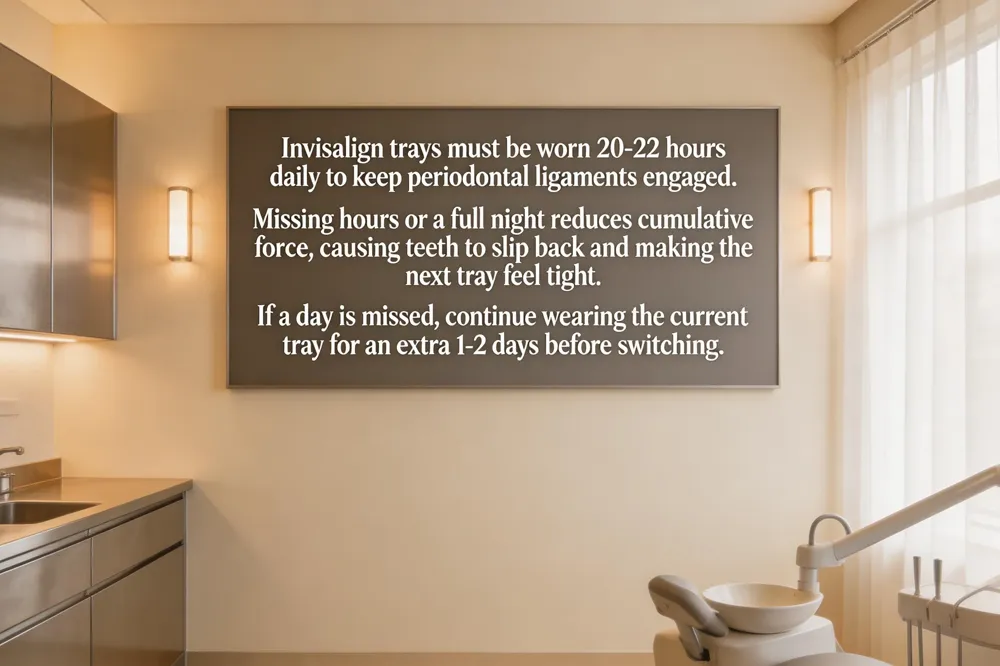 Invisalign’s clear trays work by delivering a light, continuous force that stimulates bone remodeling and gently shifts teeth toward their planned positions. This force must be applied for most of the day—20‑22 hours—to keep the periodontal ligaments engaged and prevent the teeth from slipping back. Missing even a few hours, let alone a full night, reduces the cumulative force, allowing teeth to revert toward their original alignment and making the next tray feel tight. Orthodontists therefore advise patients to wear the current set for an extra day or two if a full day is missed, rather than moving on prematurely.
I only wear my Invisalign 16 hours a day – Sixteen hours falls short of the recommended 20‑22 hours, slowing progress and increasing the chance of regression. The next tray may not fit properly, extending treatment by months or requiring refinements. Aim to increase wear time and consult your provider for strategies to stay on schedule.
Only wearing Invisalign 12 hours a day – Twelve‑hour wear dramatically slows tooth movement, often doubling the treatment length and raising relapse risk. Clinical data show less predictable outcomes with such reduced wear. Full‑day wear is essential unless a supervised, alternative plan is in place.
Is it okay to miss one night of Invisalign? – A missed night allows teeth to shift back, making the current tray feel tight. Re‑insert the tray as soon as possible and continue wearing it for the full recommended time. If the tray feels unusually tight, contact your orthodontist promptly.
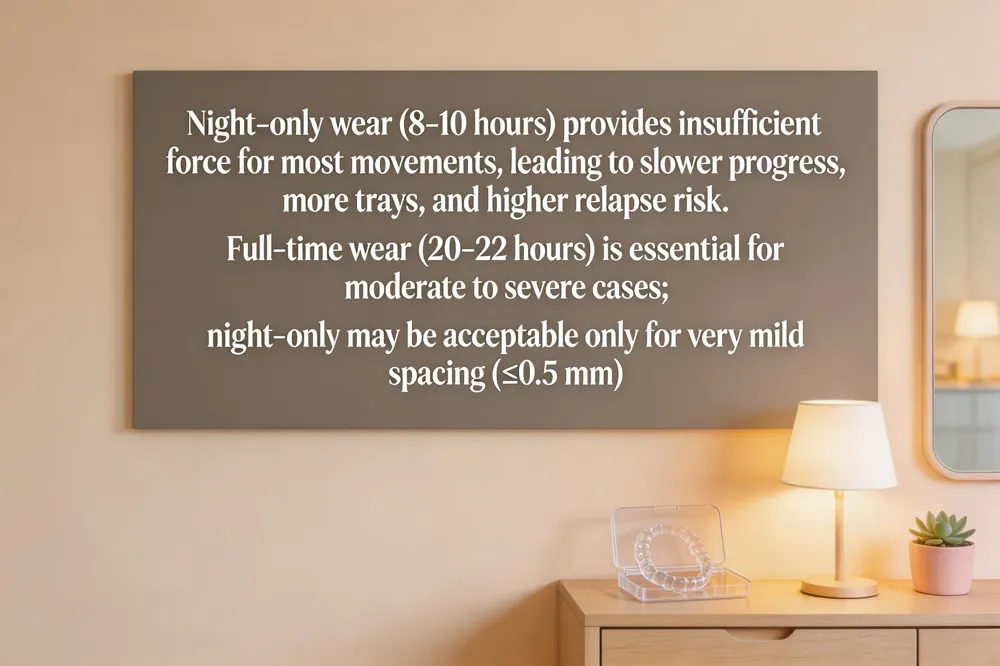
What happens if I only use Invisalign at night? – Night‑only wear (8‑10 hours) provides insufficient force for steady movement. Teeth can drift back during daytime hours, leading to longer treatment, possible setbacks, and the need for additional aligner sets. Consider full‑day wear or discuss true nighttime‑only options with your orthodontist.
Night‑Only Aligners vs. Full‑Time Invisalign
 Invisalign nighttime aligners
Invisalign aligners are designed to be worn 20 to 22 hours per day, not just while you sleep. The brand does not offer an official “night‑time only” product; those plans are usually marketed by other mail‑order aligner companies and apply less force. While a nighttime‑only schedule might work for very mild spacing or crowding, it often prolongs treatment, can cause teeth to shift back during the day, and may result in poor fit or uneven results. For most patients—especially those needing bite correction or moderate crowding—full‑time wear under a dentist’s supervision is essential for predictable, timely outcomes. Discuss any limited‑wear option with your orthodontist.
Invisalign nighttime aligners
Invisalign aligners are designed to be worn 20 to 22 hours per day, not just while you sleep. The brand does not offer an official “night‑time only” product; those plans are usually marketed by other mail‑order aligner companies and apply less force. While a nighttime‑only schedule might work for very mild spacing or crowding, it often prolongs treatment, can cause teeth to shift back during the day, and may result in poor fit or uneven results. For most patients—especially those needing bite correction or moderate crowding—full‑time wear under a dentist’s supervision is essential for predictable, timely outcomes. Discuss any limited‑wear option with your orthodontist.
Nighttime aligners review Nighttime aligners are convenient for very mild spacing or crowding (≤0.5 mm per tooth) but lack the continuous pressure needed for significant movement. Worn only 8‑10 hours a night, they progress slower, may require twice as many trays, and risk “back‑and‑forth” shifting, causing discomfort and reduced stability. Robust scientific evidence is lacking, and most orthodontists prefer full‑time aligners or braces for anything beyond the mildest cases.
Best nighttime teeth aligners If you need an aligner that works while you sleep, consider brands offering thin, comfortable trays engineered for extended wear—Invisalign SmartTrack® aligners, Byte’s Nighttime‑only option, or Reveal’s stain‑resistant trays. All require an initial dental exam and 3‑D scan; schedule a consultation with a qualified orthodontist to determine suitability.
Nighttime aligners cost Direct‑to‑consumer nighttime‑only systems typically range from $600 to $1,200 for a complete treatment, while orthodontic offices may charge $1,000–$2,000 reflecting in‑office monitoring. Financing, HSA/FSA eligibility, and insurance coverage can help offset costs.
Nighttime Invisalign cost Nighttime Invisalign (often marketed as “At‑Night”) usually costs $2,500–$3,000, compared with the $6,000 average for traditional full‑time Invisalign. Insurance, CareCredit, and HSAs can reduce out‑of‑pocket expenses. A personalized quote from your orthodontist is recommended.
What Results Can You Expect?
 Nighttime‑only aligners can deliver only modest changes—typically less than ½ mm—so before‑and‑after photos often show slight improvement, especially for very mild spacing or crowding. Because the trays provide light pressure for only 8‑10 hours while you sleep, they lack the continuous force needed for dramatic movement; most patients see subtle alignment and may require extra trays or adjustments to achieve a noticeable smile makeover. For anything beyond the mildest cases, full‑time wear (20‑22 hours daily) under professional supervision is essential for dramatic before‑and‑after results.
Invisalign can correct a single crooked tooth when the issue is minor and isolated. A short‑duration “Touch‑Up” plan using 5‑10 custom aligners often suffices, but a comprehensive exam is needed to assess bite and oral health. More complex misalignments may require a full‑arch or alternative orthodontic approach.
You may feel tighter trays at night because you are less distracted and the aligners maintain continuous pressure while you sleep, causing teeth to continue shifting.
Lingual braces, attached to the back of the teeth, offer an invisible alternative that works like traditional braces. Using CAD/CAM technology, they can be customized for comfort and precise fit, making them ideal for adults who want discreet treatment while still addressing crowding, bite issues, and other alignment problems.
Finishing Strong: Retention and Timeline
 Invisalign treatment normally lasts 6 to 18 months, depending on case complexity and how faithfully the aligner is worn (20‑22 hours per day). Mild crowding often finishes in 6‑9 months, moderate issues in 9‑15 months, and severe bite corrections may require 15 months or longer. Patients typically switch to a new tray every one to two weeks and see the orthodontist every 6‑8 weeks for progress checks.
Once the last aligner is removed, the retention phase begins. A custom clear retainer is usually prescribed to hold the teeth in their new positions. The standard protocol starts with full‑time wear for the first few weeks, then gradually tapers to nighttime‑only use over several months. Keeping the retainer clean, storing it in its case, and avoiding food or drinks (other than water) while it’s in place are essential to prevent staining or damage.
Regular follow‑up appointments after treatment allow the orthodontist to verify retainer fit and monitor any slight tooth movement. Maintaining diligent oral hygiene and attending routine dental cleanings every six months support long‑term stability and overall oral health.
Professional Oversight and Compliance Tools
 In‑person orthodontist monitoring is the cornerstone of successful Invisalign therapy. Regular office visits allow the dentist to verify that each tray fits correctly, adjust the treatment plan if teeth move unexpectedly, and catch problems such as gum irritation or poor oral hygiene before they become serious. Many providers embed compliance indicators—such as a small blue dot that fades with wear—directly into the aligner material, and they supplement these with smartphone apps that log daily wear time. These tools give both patient and clinician real‑time feedback, encouraging the recommended 20‑22 hours of wear per day.
Mail‑order or unsupervised aligner programs lack this hands‑on oversight. Without periodic evaluations, patients may continue using trays that no longer fit, leading to uneven tooth movement, extended treatment timelines, or even relapse. Such programs often market “night‑time only” aligners, which are not an official Invisalign product. They apply less force, are intended for very mild cosmetic tweaks, and can cause teeth to shift back during the day, prolonging treatment and compromising results. For most cases—especially those involving bite correction or moderate crowding—full‑time wear under a qualified orthodontist’s supervision is essential for predictable, timely outcomes.
Your Nighttime Choice Matters
Choosing to wear Invisalign only at night cuts the required 20‑22 hours of daily force to about 8‑10 hours, which can let teeth drift back, slow progress, and extend a 12‑month plan into years. While nighttime wear feels convenient, the reduced force often yields uneven movement and may need extra trays or appointments. A personalized consultation at Empower Your Smile can assess your case, set realistic goals, and design a schedule that balances lifestyle convenience with reliable orthodontic results.