Why Veneers Are on the Radar for Crooked Smiles
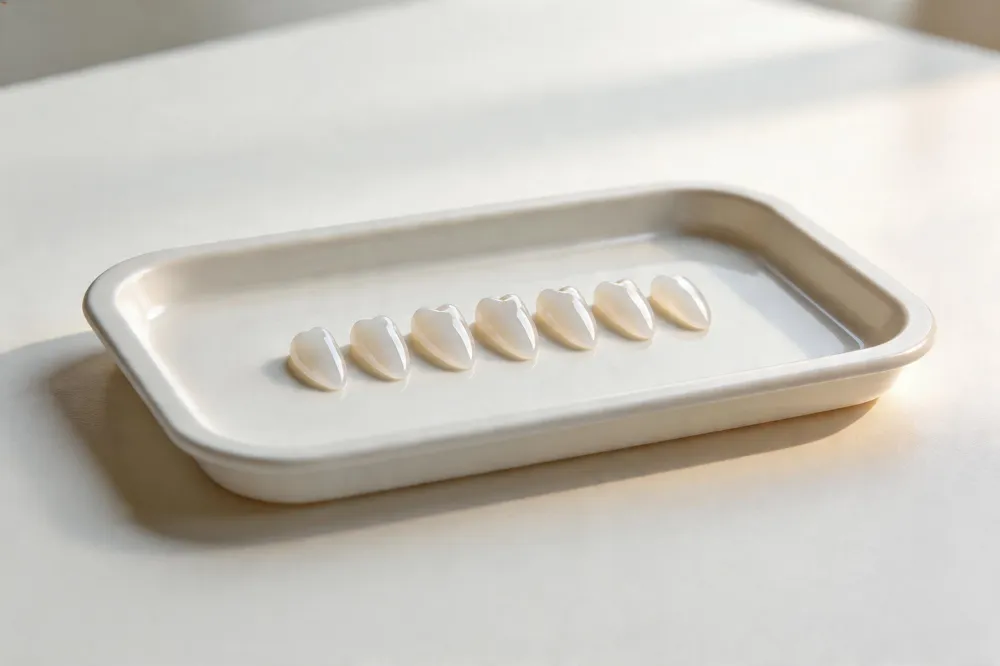
Veneers are ultra‑thin shells of porcelain or composite resin that are bonded to the front of a tooth after a minimal enamel reduction of roughly 0.3–0.7 mm. They can instantly mask mild misalignments, gaps, discoloration, and chips, giving the appearance of a straighter smile without moving the teeth. A common misconception is that veneers “straighten” teeth; in reality they only camouflage the visual problem while the underlying tooth remains in its original position. The goal of this article is to clarify how veneers work, dispel myths, and help readers decide whether this cosmetic option—or orthodontic treatment—best fits their smile goals.
Understanding Veneers for Crooked Teeth
Veneer Types & Capabilities
| Veneer Type | Enamel Removal (mm) | Corrects Mild Misalignment? | Pain Level* | Typical Cost per Tooth (US) |
|---|---|---|---|---|
| Porcelain | 0.3 – 0.7 | Yes (rotations, small gaps, minor crowding) | Low (local anesthesia) | $900 – $2,500 |
| Composite | 0.2 – 0.5 | Yes (similar mild cases) | Low (local anesthesia) | $250 – $800 |
*Pain level reflects patient‑reported discomfort during and after the procedure (usually mild sensitivity).
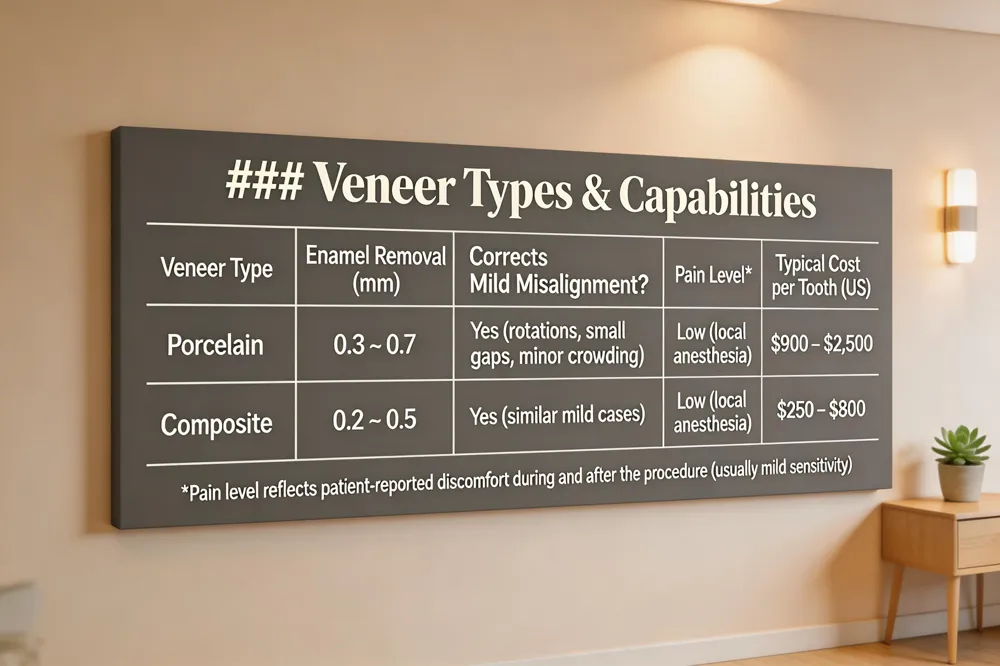 Porcelain veneers are ultra‑thin, custom‑crafted ceramic shells that are bonded to the front surface of a tooth, while composite resin veneers are a less expensive, directly removable alternative that can be placed more quickly. Both types are designed to improve shape, color, and apparent alignment without moving the underlying tooth. By adding a uniform layer of material, veneers can effectively mask mild misalignment—such as slight rotations, small gaps, or minor crowding creating the visual impression of a straight smile in just a few office visits. The process, however, is not reversible: about 0.3–0.7 mm of natural enamel is removed to allow the veneer to sit flush, and this enamel loss cannot be restored.
Can porcelain veneers correct crooked teeth? Yes. Porcelain veneers can cosmetically “straighten” mildly crooked teeth by covering the front surface and creating the illusion of a uniform, aligned smile. They work best for slight rotations, minor crowding, or small gaps where the bite is already functional. However, veneers do not actually move teeth; the underlying misalignment remains, so they are not a solution for severe crookedness or bite problems. In cases of significant misalignment, orthodontic treatment is usually recommended before placing veneers to ensure proper tooth positioning and long‑term durability.
Are veneers painful? Getting veneers is generally not painful because the dentist numbs the tooth with local anesthesia before any enamel is trimmed. The actual placement of the thin porcelain or composite shell involves only light pressure and usually requires no additional anesthesia. After the procedure, most patients experience mild sensitivity to hot or cold foods and occasional gum soreness, which typically fades within a few days to a week. Over‑the‑counter pain relievers and sensitivity toothpaste can help manage any brief discomfort. Overall, the experience is described as quick, easy, and virtually pain‑free for the majority of patients.
Cost Considerations for Veneer Treatment
Cost Comparison (US vs. NYC)
| Veneer Type | National Avg. Cost per Tooth | NYC Avg. Cost per Tooth (Empower Your Smile) | Total for 2 Front Teeth | Insurance Coverage* | Common Financing Options |
|---|---|---|---|---|---|
| Porcelain | $900 – $2,500 | $1,200 – $2,500 | $2,400 – $5,000 | 10‑30 % of prep work | CareCredit, CareSA/HSA, payment plans |
| Composite | $250 – $800 | $400 – $800 | $800 – $1,600 | 10‑30 % of prep work | CareCredit, CareSA/HSA, payment plans |
*Insurance typically covers only preparatory work, not the veneer material itself.
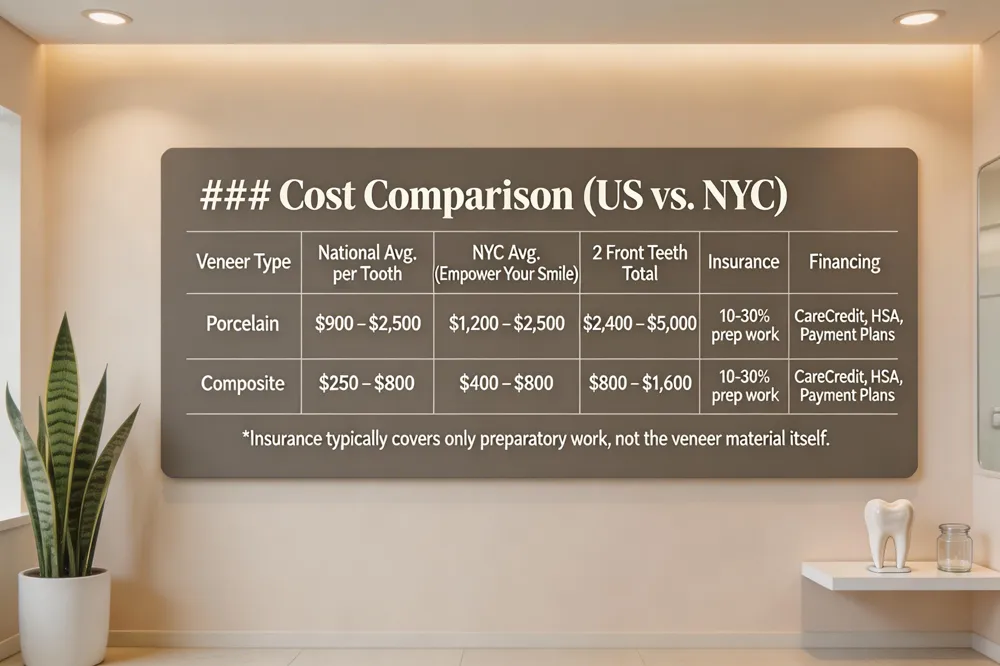 Porcelain veneers in the United States typically run $900‑$2,500 per tooth, while composite resin alternatives cost $250‑$800 per tooth. In a New York City practice such as Empower Your Smile, two front‑teeth porcelain veneers are usually $1,200‑$2,500 each (total $2,400‑$5,000) and composite veneers $400‑$800 each (total $800‑$1,600). Adding tooth‑preparation, temporary shells and a whitening session can increase the bill by $100‑$500, so patients often spend $3,000‑$6,000 for two porcelain veneers or $1,200‑$2,200 for composite ones.
Veneers are considered a cosmetic procedure so most dental insurance plans cover only a small fraction of the cost—typically 10‑30 % of preparatory work—leaving 70‑90 % out‑of‑pocket. To offset the expense, many offices offer financing, payment plans, and FSA/HSA options.
A full‑mouth makeover with porcelain veneers (10‑12 front teeth) can range from $10,000 to $20,000 or more, depending on the number of teeth, laboratory fees, and any adjunctive procedures such as gum‑contouring or orthodontic pre‑treatment.
Overall, while veneers represent a significant upfront investment, their durability (10‑15 years for porcelain) and natural aesthetics often justify the cost, especially when financing tools are available.
Choosing the Right Cosmetic Dentist
Top NYC Cosmetic Dentists (Selected)
| Dentist / Practice | Location | Key Services | Notable Features |
|---|---|---|---|
| Dr. Moezinia – Empower Your Smile | Tribeca, Manhattan | Porcelain & Composite veneers, crowns, Invisalign, sedation options | Personalized smile design, state‑of‑the‑art tech, stress‑free environment |
| Dr. Marc Lowenberg | Manhattan | Full‑mouth makeovers, veneers, implants | Celebrity clientele, high‑end lab partnerships |
| Gentle Dental | Bayside, Queens | Same‑day laser whitening, veneers, bonding | Complimentary consultations, flexible scheduling |
| Astoria Dental Group | Astoria, Queens | 3‑D imaging, on‑site lab, veneers, orthodontics | Financing via Sunbit & CareCredit |
| Family Dental Rego Park | Rego Park, Queens | Digital smile design, veneers, crowns | Emphasis on individualized care |
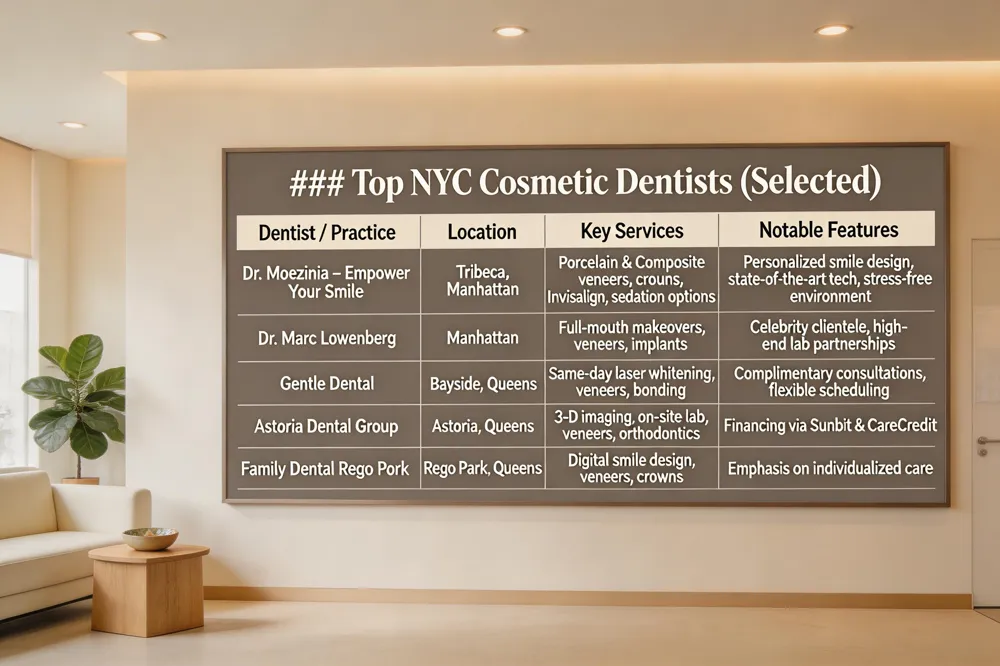 When selecting a cosmetic dentist, three factors should guide your decision: reputation and expertise, location‑specific options, and patient‑centered care.
Reputation and expertise – The best cosmetic dentist in NYC is often considered to be Dr. Moezinia, who leads Empower Your Smile in Tribeca. Her practice combines state‑of‑the‑art technology, a patient‑centered approach, and a full range of aesthetic services from porcelain veneers to implant restorations. While renowned celebrity dentists such as Dr. Marc Lowenberg, Dr. Gregg Lituchy, Dr. Brian Kantor, and Dr. Victoria Veytsman also deliver outstanding results, Dr. Moezinia’s focus on comfort and personalized smile design sets her apart for everyday patients.
Location‑specific options – If you’re looking for a cosmetic dentist in Queens, several reputable practices offer comprehensive aesthetic care. Gentle Dental in Bayside provides same‑day laser whitening and complimentary consultations; Astoria Dental Group features an on‑site lab, 3‑D imaging, and financing through Sunbit and CareCredit; Family Dental Rego Park focuses on personalized smile makeovers with digital smile design.
Patient‑centered care – In Manhattan, Empower Your Smile in Tribeca delivers a modern, stress‑free environment. Led by Dr. Moezinia, the team offers sedation options, customized treatment plans, and a full suite of services—including porcelain veneers, crowns, and Invisalign—to ensure each patient achieves a natural‑looking, confident smile without unnecessary travel.
Alternative Treatments to Veneers
Non‑Veneer Options for Crooked Teeth
| Treatment | Best Suited For | Typical Duration | Approx. Cost Range |
|---|---|---|---|
| Clear‑aligner (Invisalign) | Mild‑to‑moderate misalignment, patients desiring removable appliance | 6 – 18 months | $3,000 – $7,000 per arch |
| Traditional Braces (metal/ceramic) | Moderate‑to‑severe malocclusion, complex cases | 12 – 24 months | $4,000 – $8,000 total |
| Dental Bonding | Very minor gaps, chip repair, slight rotation | 1 – 2 appointments | $100 – $400 per tooth |
| Custom Crowns | Significant shape/color issues, after orthodontics | 2 – 3 visits | $800 – $1,500 per crown |
| Removable Retainers / Refinements | Post‑orthodontic fine‑tuning | Ongoing as needed | $150 – $500 per set |
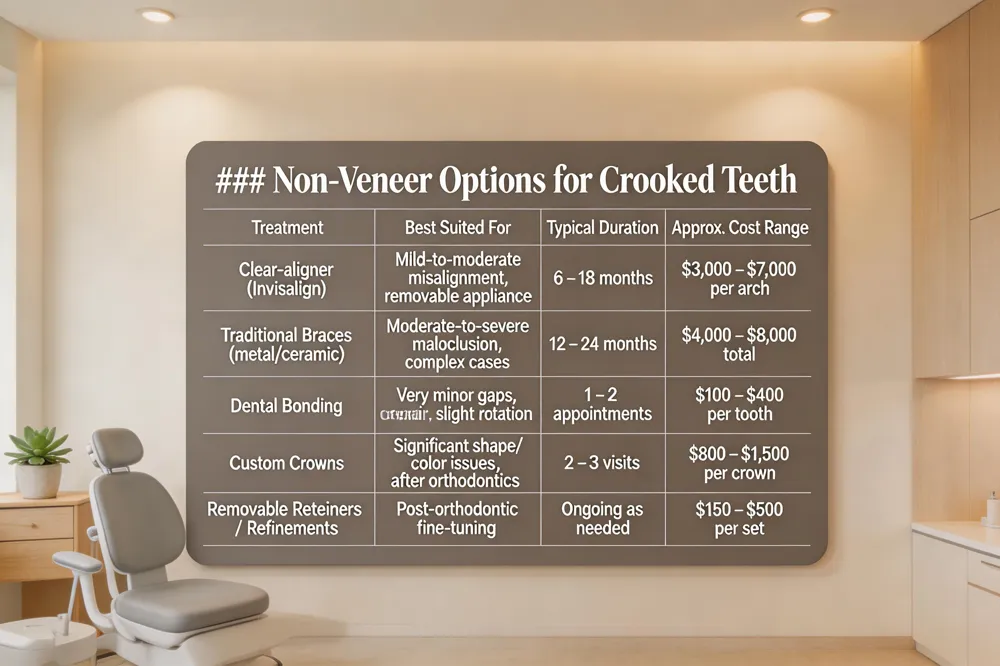 When veneers aren’t the ideal solution for crooked teeth, a range of alternative treatments can address both aesthetics and function.
Orthodontic options – Clear‑aligner systems such as Invisalign gently shift teeth with a series of virtually invisible, removable trays worn 22 hours a day. Traditional braces, metal or ceramic, remain the gold standard for severe malocclusion, providing precise control over tooth movement over 6–24 months.
Non‑surgical ways to straighten teeth – For minor mis‑alignments, cosmetic reshaping with porcelain veneers, dental bonding, or custom crowns can mask crookedness while improving smile harmony. Removable retainers or at‑aligner refinements fine‑tune tooth position after initial adjustments without brackets.
When veneers are not enough – Severe crowding, overlapping teeth, or bite abnormalities often require orthodontic intervention before any veneer placement. Veneers only cover the front surface and do not correct underlying positional issues, so a thorough dental exam is essential.
How to fix crooked teeth without braces – Clear‑aligner therapy offers a comfortable, discreet alternative to metal braces, while veneers, bonding, and crowns provide quick aesthetic fixes for mild cases. A consultation at Empower Your Smile can determine the best non‑brace approach for your smile.
Can you get veneers on overlapping teeth – Yes, mild to moderate overlap can be camouflaged with custom‑made porcelain or composite veneers that widen the tooth’s appearance. Severe crowding may still need orthodontic prep or minor tooth reduction for proper fit.
Veneers for crooked teeth cost – The national average for a single porcelain veneer is about $1,765, ranging $ $500 to $2,895 depending on material and location. Porcelain veneers typically cost $900–$2,500 per tooth; composite veneers run $250–$1,500. A full‑mouth makeover (6–8 teeth) can total $5,000–$18,000, with many practices offering financing options.
Longevity, Maintenance, and Value
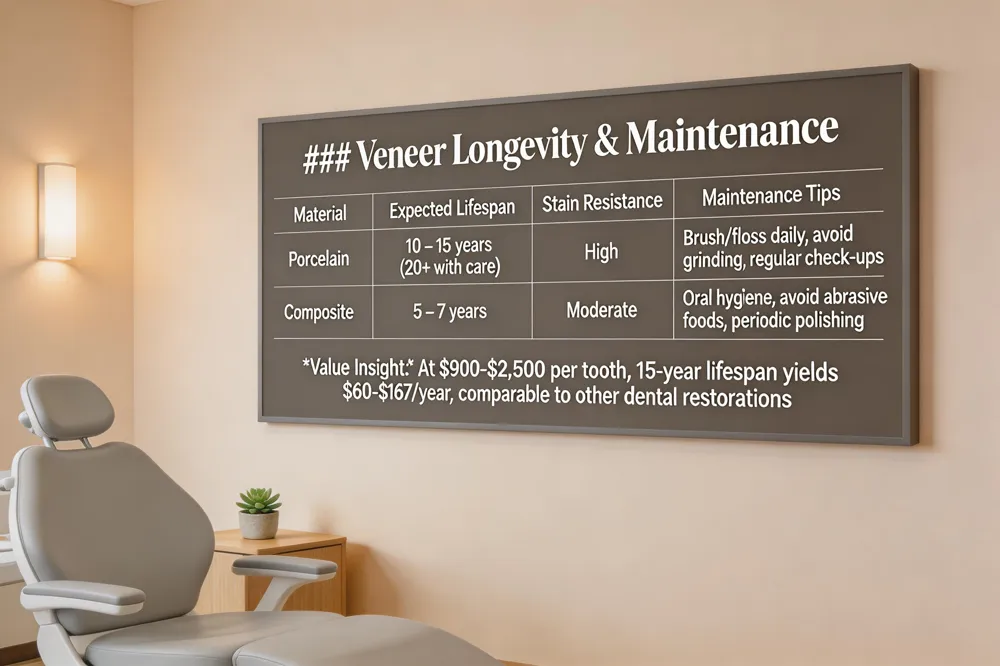
Veneer Longevity & Maintenance
| Material | Expected Lifespan | Stain Resistance | Maintenance Tips |
|---|---|---|---|
| Porcelain | 10 – 15 years (often 20+ with care) | High | Brush/floss daily, avoid grinding (nightguard), regular dental check‑ups |
| Composite | 5 – 7 years (may need earlier replacement) | Moderate | Same oral hygiene, avoid abrasive foods/drinks, periodic polishing |
Value Insight: At $900‑$2,500 per tooth, a 15‑year lifespan yields an annual cost of $60‑$167, comparable to other long‑term dental restorations.
 How long will porcelain veneers last?
Porcelain veneers are crafted for durability and typically last 10 – 15 years when cared for properly. With excellent oral hygiene, avoidance of heavy grinding, and skilled placement, many veneers extend beyond 15 years—some cases report 20‑30 years. Longevity depends on ceramic quality, bonding strength, and regular dental check‑ups. Gentle brushing, flossing, and a nightguard for bruxism protect the restoration from premature wear or chipping.
Are veneers worth it long‑term?
For most patients, veneers represent a worthwhile long‑term investment. The upfront cost—approximately $900 to $2,500 per tooth—reflects high‑quality material, custom fabrication, and the aesthetic benefit of an instant, natural‑looking smile. Porcelain veneers resist stains, require minimal tooth reduction compared to crowns, and usually last a decade or more, offsetting the expense over time. The procedure is irreversible, so patients must be comfortable with permanent enamel removal. Ongoing maintenance, good oral hygiene, and occasional replacement after the lifespan ensure lasting results. Overall, when durability, confidence boost, and aesthetic improvement are valued, veneers are generally considered a sound long‑term choice.
Patient Experience: Visual Proof and Satisfaction
Patient Satisfaction Highlights
| Metric | Typical Result |
|---|---|
| Confidence Boost | 85‑% of patients report increased self‑esteem after treatment |
| Visual Improvement | Before‑and‑after photos show 80‑95 % reduction in perceived misalignment |
| Sensitivity Post‑Procedure | Mild to moderate (hot/cold) lasting ≤ 1 week for > 90 % of patients |
| Overall Satisfaction | 4.5/5 average rating in post‑treatment surveys |
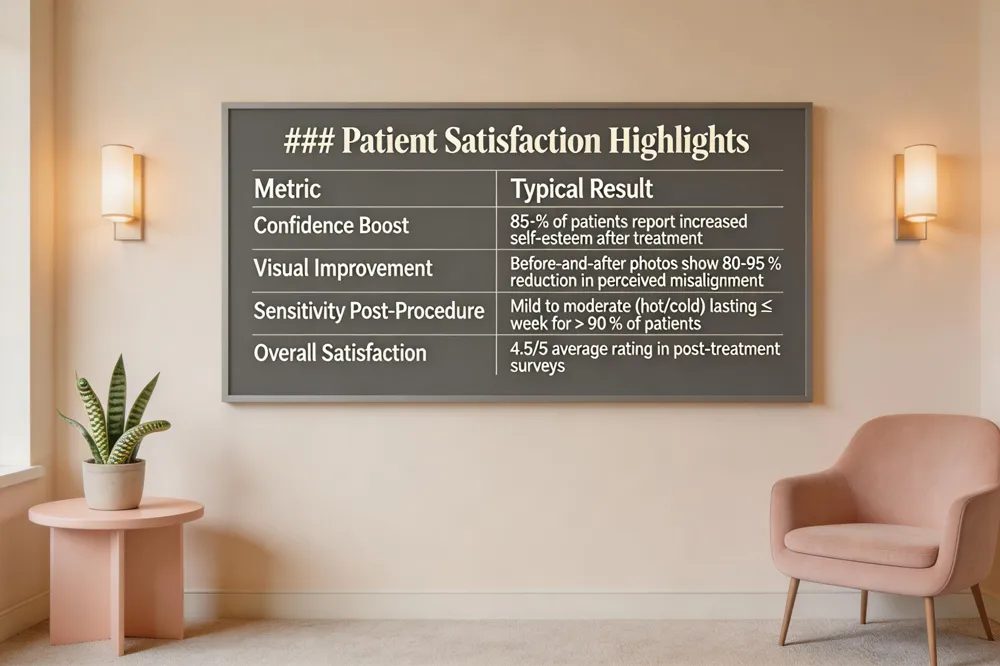 Before‑and‑after galleries from leading NYC cosmetic practices showcase how thin, custom‑shaped porcelain or composite veneers instantly mask mild to moderate misalignment, gaps, and discoloration. In the photos, uneven, crowded, or slightly rotated front teeth transform into a uniform, symmetrical smile line after just a few appointments. These visual proofs confirm that veneers can provide a natural‑looking, stain‑resistant smile without orthodontic appliances. Patient satisfaction metrics are high; most report boosted confidence and improved social or professional interactions once the aesthetic issues are resolved. While the procedure is irreversible and carries a higher upfront cost, the lasting cosmetic benefits—when oral health is sound and expectations realistic—often outweigh the drawbacks.
Final Thoughts on Porcelain Veneers for Crooked Teeth
Veneers give instant aesthetic lift, but they don’t fix bite issues. Choose veneers for mild misalignment; orthodontics for severe cases. Schedule a consultation to explore options and planning.